
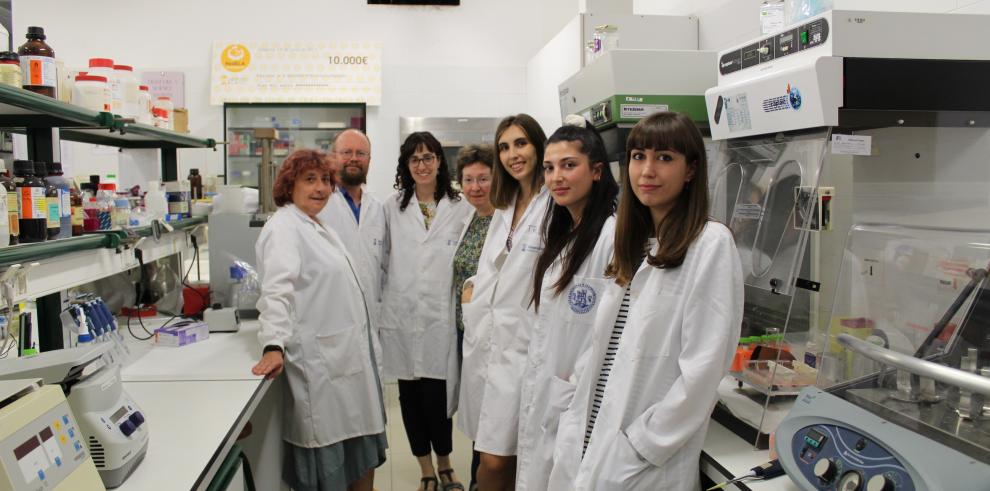
The IIS Aragón seeks biomarkers to advance the diagnosis and specify the prognosis of ALS patients
20 June, 2022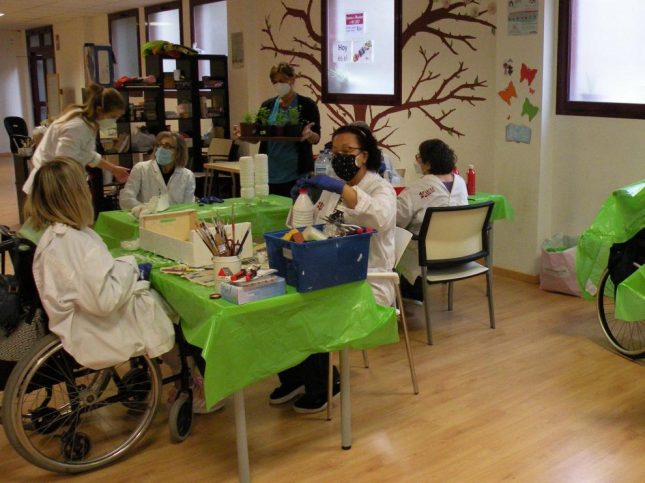
Rehabilitation, global care and cognitive therapies to stop the disease of a thousand faces
20 June, 2022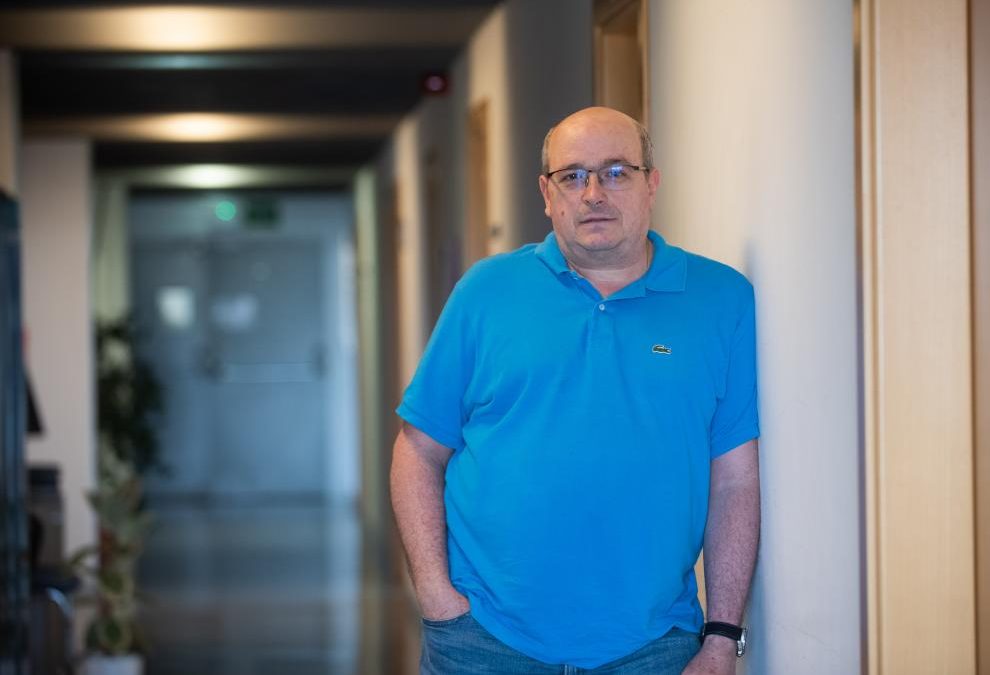
The director of the Institute of Biocomputing and Physics of Complex Systems of the University of Zaragoza coordinated the 'The science of covid' conference.
The science of Covid-19' is the title of the international conference recently held under the auspices of the Biocomputing and Physics of Complex Systems Institute (BIFI) of the University of Zaragoza. Coordinated by its director, Yamir Moreno, was attended by prominent scientists such as Luis Enjuanes, the virologist Nerea Irigoyen; Nuria Oliver, telecommunications engineer; the researcher at the Max Planck Institute VIola Priesemann, advisor to the German Government on covid-19; or the renowned data scientist Stephen Moro.
How did the idea of organizing an international conference on the science of covid-19 come about?
The inaugural conference was given by Luis Enjuanes, who develops the Spanish vaccine against covid.
Yes, and it is very different from all the current ones because it will be sterilizing, that is, it will be able to prevent transmission, not just avoid serious forms of the disease. That will completely change the scenario, because with a vaccine like Enjuanes's the disease could be eradicated.
Did you give deadlines for its achievement?
They are doing safety trials to show that it is safe in humans and at the end of this year there may be results along those lines. He didn't say when the final product would be reached, but he did show a lot of optimism.
In other countries, vaccines have been approved in record time. Is the Enjuanes vaccine a metaphor for what happens with science in Spain, there are good brains but few resources to develop ideas?
I think that in Spain we lack support for the last step. I know this because I collaborate with epidemiologists and biochemists, like Carlos Martín, who has developed the vaccine against tuberculosis, and I know the entire process they have followed to seek private financing, from Europe... and until now they have not stopped and continue doing the trials. clinical, but it is a day-to-day battle. There is a kind of valley of death where many good ideas remain that do not materialize because there is no financing. I think that many times the courage to invest is lacking.
Is there a risk of undervaluing diseases such as tuberculosis?
We did a job bringing together covid and tuberculosis in the sense of the saturation of the hospital system and the consequences of mobility restrictions, such as there being diseases that are not well diagnosed, or treatments that are abandoned. Tuberculosis requires treatments for between 6 to 12 months, and once you stop them it is like starting from scratch. Models predict that in the coming years there will be a significant rebound in tuberculosis cases. The good thing is that the same work also shows that if you increase the resources allocated to diagnosis it is possible to reverse the situation.
Has there been anything that has caught your attention in the management of the pandemic because it was different from what was expected in the models?
Yes, we were very surprised by the WHO's delay in recognizing that Covid was transmitted through the air; and in Spain it took a while to implement the use of masks indoors and ventilation. And a lot has been played with controlling mobility, which does not help as much to stop a pandemic as is thought.
Esteban Moro, a pioneer in the study of big data, was also present at the congress. Is it a powerful tool to improve people's lives?
Yes. Esteban told about a work that we have done in collaboration and has just been published in the prestigious journal of the US Academy of Sciences. We work with a company that has mobility data and developed an application that, with the consent of the users, record your GPS position. With big data and the app we could know where the interactions occurred. Thus we have been able to verify that 20% of people are responsible for 80% of infections. It was something that was more or less documented, but our model reproduces those results.
At the beginning of confinement it was said that we were going to emerge from this pandemic better... From the point of view of science, do we emerge better?
No, I don't think we're going to come out better. We have not managed to create a protocol to avoid a new pandemic. I still don't understand why it is only invested when there is no other option. In Asian countries like South Korea, Covid has not had the same impact because they were more prepared: they suffered a coronavirus outbreak in 2015 that made them change the laws and set up a specific center to prevent pandemics. Not even with Covid has the lesson been learned that prevention must be done, because since it is an invisible enemy, it is difficult to dedicate resources to it.





