

What parts of the body are most sensitive to pain?
28 February, 2022
Two million Spaniards now face persistent covid
28 February, 2022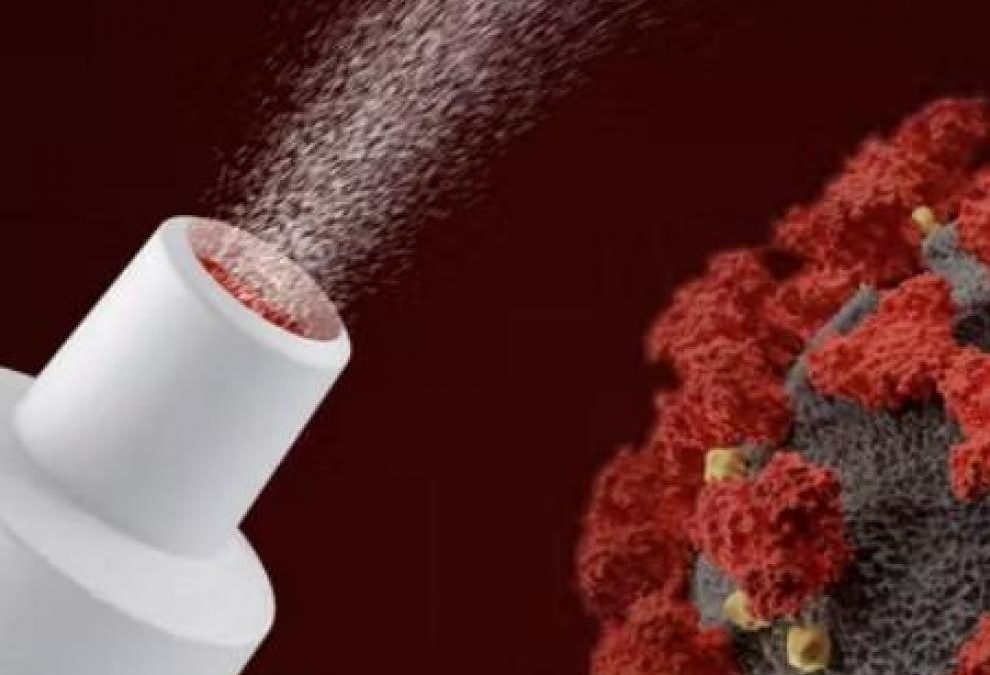
The localized action of a nasal vaccine would prevent the reproduction of the virus from the beginning of contagion.
In this new phase of the pandemic, the effectiveness of the vaccines administered continues to be analyzed and the need for booster doses for the most vulnerable people is debated. At the same time, Research continues to take another step in the fight against covid-19. Preventing the transmission of the virus with new vaccines, or reducing it more than the current ones, would reduce infections and make the KO of the coronavirus closer.
New vaccines that prevent transmission
One of the most effective defenses is usually to attack where it hurts the most, avoiding reproduction in the upper respiratory tract from the beginning. Therefore, the development of nasal vaccines becomes a route of administration with numerous advantages.
The localized action of a nasal vaccine would allow, in addition to the development of systemic (total) defenses, avoid the reproduction of the virus from the beginning of the contagion.
In order to be administered through the nasal route, Vaccines must comply with exhaustive controls due to direct contact between the nasopharyngeal cavity and the central nervous system through the olfactory and trigeminal nerves. The blood-brain barrier is an effective protection against pathogenic substances and agents.
It is necessary to penetrate it for targeted therapies, for example, when treating neurodegenerative diseases and migraines. Small molecules do it, but We must prevent anything that is not necessary from crossing it.. If they are vaccines and they are large in size, it would be enough, but it must be controlled.
The so-called 'sterilizing' vaccines generate immunity right in the place where the virus enters: the mucous membranes of the nose. We review five of them, which use different approaches to this difficult task.
The Mexican 'Patria' vaccine
The most advanced is being developed in Mexico and has already passed phase I of clinical trials.
It's based on a recombinant virus that expresses the SARS-CoV-2 spike protein. The production method is the traditional one with which the flu vaccine is produced, with embryonated eggs.
The vaccine It has been found to be safe and generates immunity when administered intramuscularly., and even better when a first dose is administered nasally and a second intramuscularly.
The other vaccines are still finalizing preclinical studies in animals.
Luis Enjuanes' Spanish vaccine
The second of the vaccines is being developed in Spain in the laboratory of Luis Enjuanes (CNB-CSIC). It is carrying out studies in macaques after successfully completing studies in mice.
Is a synthetic emulation of the SARS-CoV-2 virus which lacks the parts that confer pathogenicity, and is being tested with intramuscular and nasal administration.
The French vaccine that protects the lungs
The one developed at the Pasteur Institute in France It is proposed as a reinforcement of the intramuscular vaccine. It is a nasal vaccine based on a lentiviral vector that expresses the spike protein of the delta variant of SARS-CoV-2.
It has been administered in mice after two intramuscular doses of an RNA vaccine.
The results are very promising, with great protection observed at the mucosal level via IgA (mucosal-specific antibodies) and in the lung via resident memory B and T cells.
The vaccine against all sarbecoviruses
The fourth, developed at Yale University in the USA, consists of a nasal spray that contains the spike protein and is administered following an intramuscular vaccine.
As in the French study, in mice IgA is generated in the mucosa and B and T cells resident in the lungs. The difference is that no adjuvant or viral vector is needed and, furthermore, produces general immunity against any sarbecovirus (the family to which SARS-CoV-2 belongs).
The Texas vaccine
The fifth vaccine is being developed at the University of Houston, USA, and consists of a nasal spray containing the SARS-CoV-2 spike protein and an adjuvant.
Like the previous two, it results in protection at the level of mucous membranes and lungs in mice.
Source: Heraldo de Aragón





