

Aragón adds 8.670 cases of cancer with a rate higher than the national rate
21 March, 2022ITEMAS Innovation Support Call 2022
21 March, 2022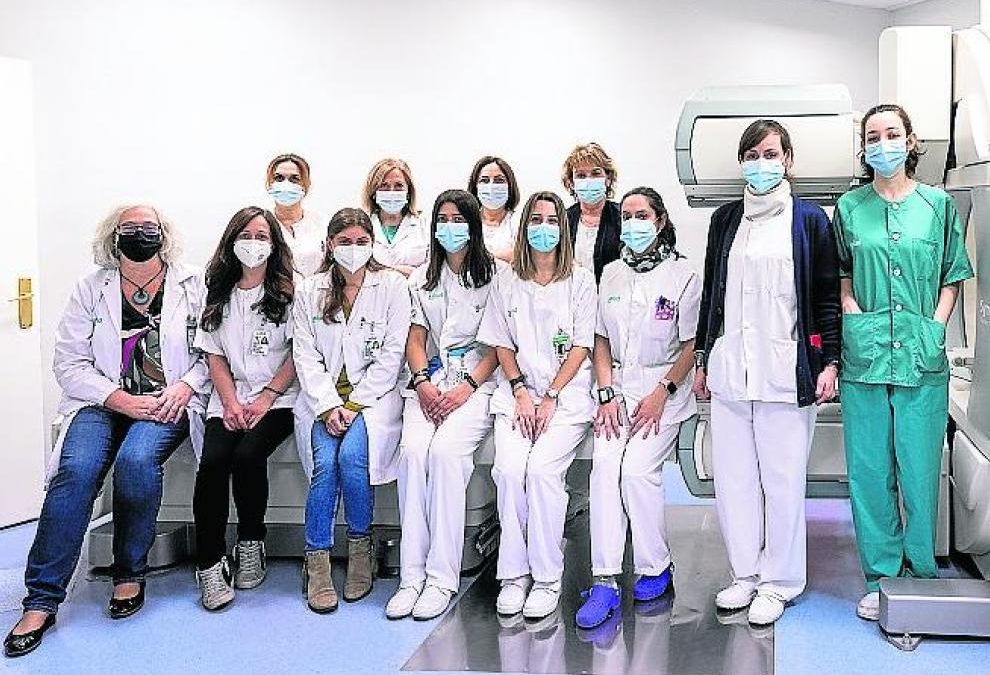
The multi-hospital clinical unit was created in November 2017 and carries out its activity in both the Miguel Servet and the Clínico to optimize resources.
The Multihospital Nuclear Medicine Clinical Unit of Aragon was created in November 2017, unifying the services that already existed both in the Michael Servetus and the Clinical, with the aim of optimizing resources, adapting personnel templates to a more rational organization in accordance with current and future needs and demands, unifying action criteria and enabling the management of a single waiting list. Every year it treats about 13.000 patients, including diagnosis, therapy, consultations and radio-guided surgery operating rooms.
Dr. Leticia de la Cueva, acting head of service at the Multihospital Nuclear Medicine Unit of Aragon, recalled that it is a medical specialty of diagnosis and also therapy: "People compare it to radiodiagnosis, but it is different. We use radiopharmaceuticals, which we usually inject intravenously, which are metabolized in different organs. We choose the radiopharmaceutical according to the organ we want to study, and the images allow us to study it and see how it works. We can study brain, heart, bones, tumors... We have many oncology patients." At the same time, as he said, They also develop therapy, "especially for tumors and endocrine diseases". The Multihospital Unit, which is made up of the Nuclear Medicine service of the Clínico and the Servet, "has a single entrance door for patients from Aragon." "Their doctors ask them for tests and we refer them based on what needs to be done to one service in the unit or another, depending on what is best for the requested test," he said.
Fundamentally, two diagnostic techniques are performed: scintigraphy and PET, the latter more aimed at Oncology and Neurology. "As right now we only have one PET - in the Clinical hospital - we direct patients to that machine." With European funds, the Aragonese Health Service is going to acquire a second, state-of-the-art equipment, which will be located in Servet, and which It will allow high-resolution images to be made and greatly improve diagnostic capacity. The forecast is for it to be installed by the end of August 2023. Now, with only one piece of equipment available, approximately 1.000 people are referred to private clinics per year to undergo a PET test. "Starting summer of next year, "We will be able to take on the entire population of Aragon with these two PET machines and we will be able to distribute patients more homogeneously within the unit.", concrete.
Dr. De la Cueva also recalled, the help that implementing an electronic request model meant for this, thanks to a project with the Center for Integrated Management of Corporate Projects (CGIPC) of Health, which allows doctors to request the necessary tests from Nuclear Medicine from the patient's electronic history.
Different profiles
Nuclear Medicine cares for neurological patients to diagnoses of cognitive impairment, cardiac with vascular problems, oncological, traumatology or rehabilitation with joint problems or who have undergone a kidney transplant. The acting head of service specified that from this unit they monitor 24 hours after the transplant "to see if there are any immediate complications."
"Depending on the type of tumor, we help carry out the extension study to find out if there is metastasis and where. And once the patient is under treatment, we do response studies, so that oncologists can assess whether to continue, change or modify the regimen. We go to almost all the tumor committees. It is a way of working that is deeply rooted in healthcare, each patient is discussed and individualized decisions are made. It is a much more personalized medicine than a few years ago.
Source: Heraldo de Aragón





