A doctor from Servet, among the 31 best in Spain, according to the 2021 Doctoralia list
27 January 2022
The parents of covid vaccines, Frontiers of Knowledge award
27 January 2022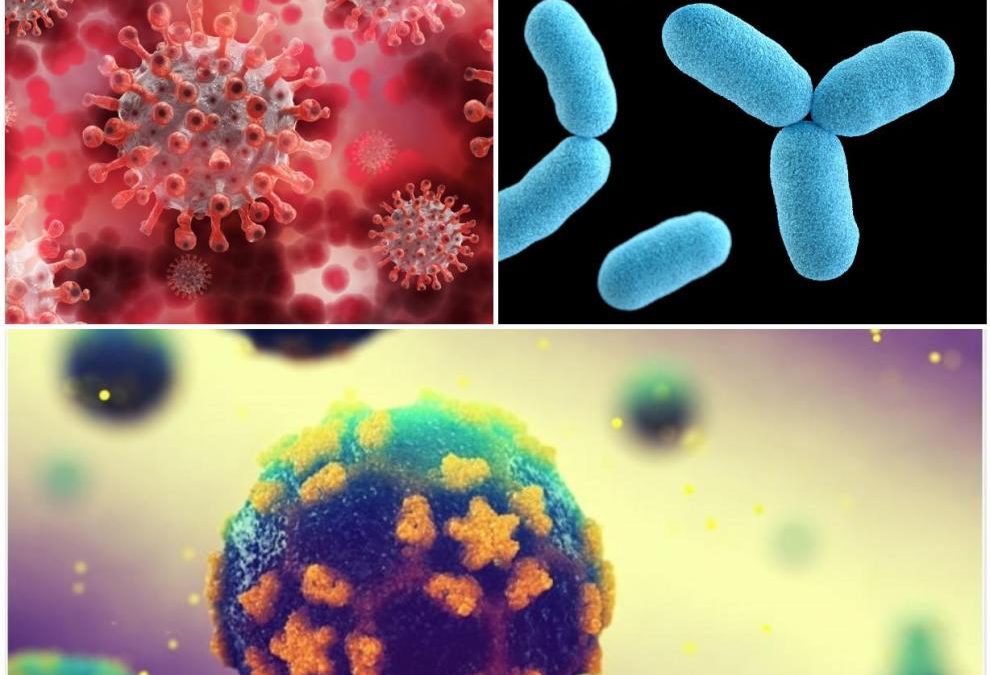
The discovery, which is published in the journal Nature and has Spanish participation, represents an increase of up to 10 times the number of viral RNA species described to date.
The virus They are the largest set of biological agents known. Now, an international team of scientists with Spanish participation has discovered more than 130.000 new RNA viruses through a new computer tool.
With it, 5,7 million biological samples collected throughout the planet during the last few years were analyzed. 15 years in the Making; the discovery, which is published in the magazine Nature, represents an increase of up to 10 times the number of viral RNA species described to date.
For this analysis, the multidisciplinary team developed Serratus, a cloud computing infrastructure (Amazon Web Services) which, using a cluster of 22.500 computer processors, enabled massive searches for viral sequences in the millions of gigabytes of sequencing data available in public databases.
At the Institute ofand Molecular and Cellular Biology of Plants of Valencia (IBMCP) used Serratus for the analysis of the virus that causes human hepatitis D, a viral agent called Delta, of minimal genomic size and unknown origin.
This allowed the CSIC researcher at IBMCP Marcos de la Peña Rivero detect similar viruses in a multitude of other animals, including not only mammals and other vertebrates, but also invertebrates.
"Surprisingly, these viruses were also found in environmental samples collected in lakes and soils around the world, and whose hosts are currently unknown."De la Peña details.
Environmental samples with viruses similar to hepatitis D revealed the presence of novel viral forms with ultra-compact and minute-sized genomes.
Both the database of all the viruses obtained in this work and the set of tools developed are freely and openly available (www.serratus.io).
This tool can be very useful to characterize the planetary diversity of all existing viruses and prepare for possible new pandemics, whose devastating consequences we suffer with emerging viral diseases such as covid-19, caused by the SARS-CoV-2 coronavirus, the CSIC points out in a statement.
The IBMCP, a joint center of the CSIC and the Polytechnic university of Valencia, It is the only Spanish scientific institution that participates in the work, where, among others, the Heidelberg Institute for Theoretical Studies and the Max Planck Institute of Biology (Germany) collaborate; the Pasteur Institute (France); and the University of California (United States).
Source: Heraldo de Aragón