
Atades and the IIS Aragón create a scholarship to promote research into autism spectrum disorder
26 January 2022Call for Lilly Foundation Biomedical Research Awards 2022
27 January 2022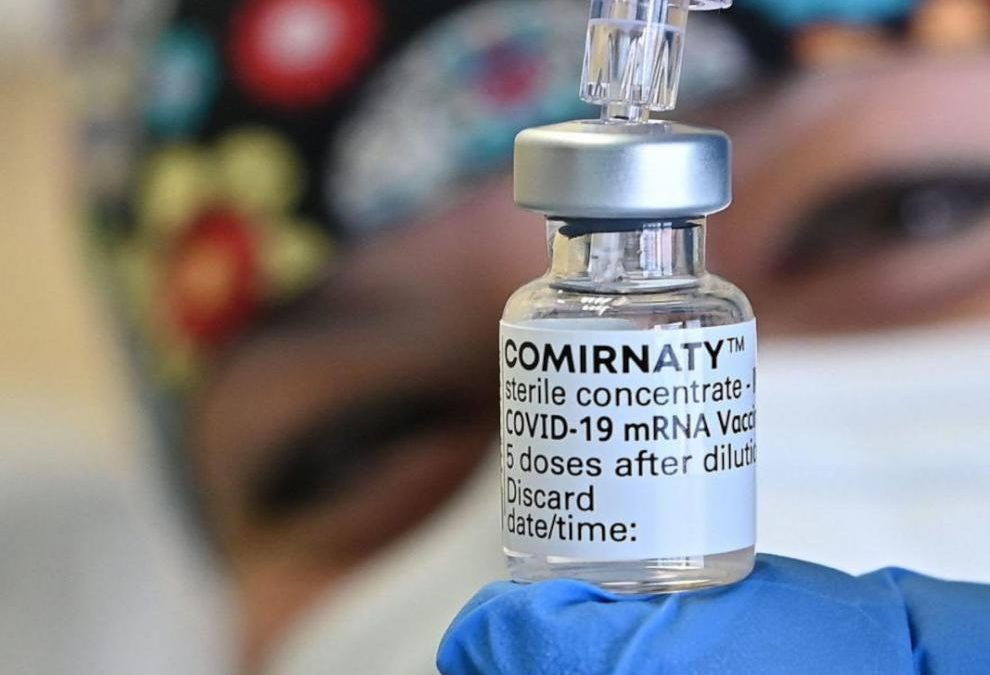
The immunosuppressed would be the main recipients of this new dose, which has raised some questions.
With his arm still warm from the third dose of covid – who has already received it – the echoes of the fourth arrive. However, before reaching it, Fernando Moraga-Llop, vice president of the Spanish Association of Vaccinology (AEV), is committed to consolidating the third. "The percentage of the population under 40 years of age vaccinated with the third dose is very low," warns Moraga-Llop.
Health has put on the table that a part of the population can receive a fourth dose of the covid-19 vaccine: specifically, group 7 of the table, that is, immunosuppressed people. "In principle, with the available data, what we see is that with three doses an adequate level of protection is achieved, except in people who have immunodeficiency," says Ángela Domínguez, coordinator of the vaccine working group of the Spanish Society of Epidemiology (SEE).
"With the information that currently exists, this fourth dose would be indicated for those people who have a low response to the vaccine," adds Domínguez. Although this strategy has been determined, Fernando Moraga-Llop makes an observation: there are some groups that, even if they are administered more doses, "are not going to respond." He exemplifies this with hepatitis B, those known as "non-responders."
"For these people (the immunocompromised) we have to wait, an interval of months to be able to apply the fourth one," determines the coordinator of the SEE vaccine working group. In principle, according to Health, it could be about five months after receiving the booster dose.
For the rest of the population, without immunosuppression problems, "Three doses would be enough", indicates Ángela Domínguez. In any case, Health He has not announced whether there will be more groups to which the fourth dose of the vaccine can begin to be administered. "It does not seem appropriate to generalize the fourth dose for the entire population -they affect from the SEE-. "If you can avoid giving more doses that it is not clear that they have an added benefit, it seems logical."
"Right now, in Spain"With the data we have, it would not be indicated to generalize the use of the fourth dose," advises Domínguez, who recalls that Decisions are adjusted according to the level of vaccination, the data, where more emphasis needs to be placed and the evolution of each country. The administration of a new dose "has to be based on the fact that some groups of the population's immunity is falling," explains Nacho de Blas, veterinary epidemiologist and professor at the University of Zaragoza.
"The problem may be In people who have a good immune system, remembering all the time can be counterproductive -explains de Blas-, because constantly vaccinating a person who is immunocompetent can generate an accumulation of antibodies that they are not using at all. "Overloading the immune system is not a good idea.". This explanation goes hand in hand with postponement of the booster dose for people who have overcome the disease naturally. The only thing that this Aragonese epidemiologist would understand is that a new one be administered for next autumn, to prevent the effects of possible winter waves.
For his part, the vice president of the AEV does not see it appropriate to administer a dose every several months, and is betting that the fourth dose be done based on two factors: the evolution of the pandemic and that the vaccine adapts to the new variants that emerge.
Another vaccine, but it is different
Nacho de Blas supports this same idea: "It makes no sense to continue vaccinating with a vaccine that is no longer adapted to that virus"But it is one that is developed from the original Wuhan virus, with some change in the structure to improve immunity."
There are studies that have determined that the fourth dose of the vaccine is "partially effective" against omicron, with a booster dose from both Pfizer and Moderna. That is, the vaccines that were more effective against previous variants are less effective with omicron.
Europe is "ready" for the fourth dose of the covid vaccine
For instance, Greece has already begun to inoculate the fourth dose to immunosuppressed people, thus, around half a million people can opt for this new dose. Stella Kyriakides, European Commissioner for Health, said that the European Union is “prepared” to administer the fourth dose if there is “scientific evidence” to support it. Kyriakides recalled that the European Center for Disease Prevention and Control and the European Medicines Agency (EMA) consider the booster dose “important” to provide adequate protection against complications.
Source: Heraldo de Aragón





