
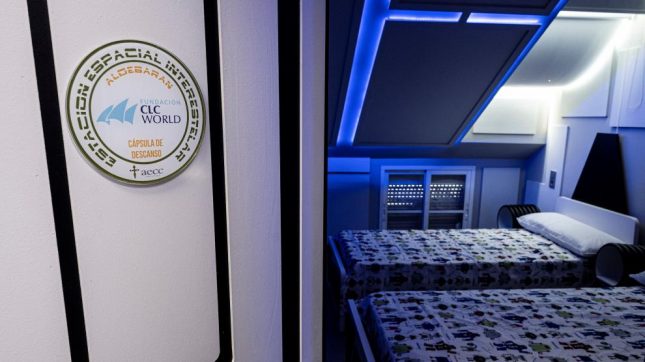
A spaceship accompanies children on their missions against cancer
27 December, 2021
Three award-winning residents at the Miguel Servet hospital
27 December, 2021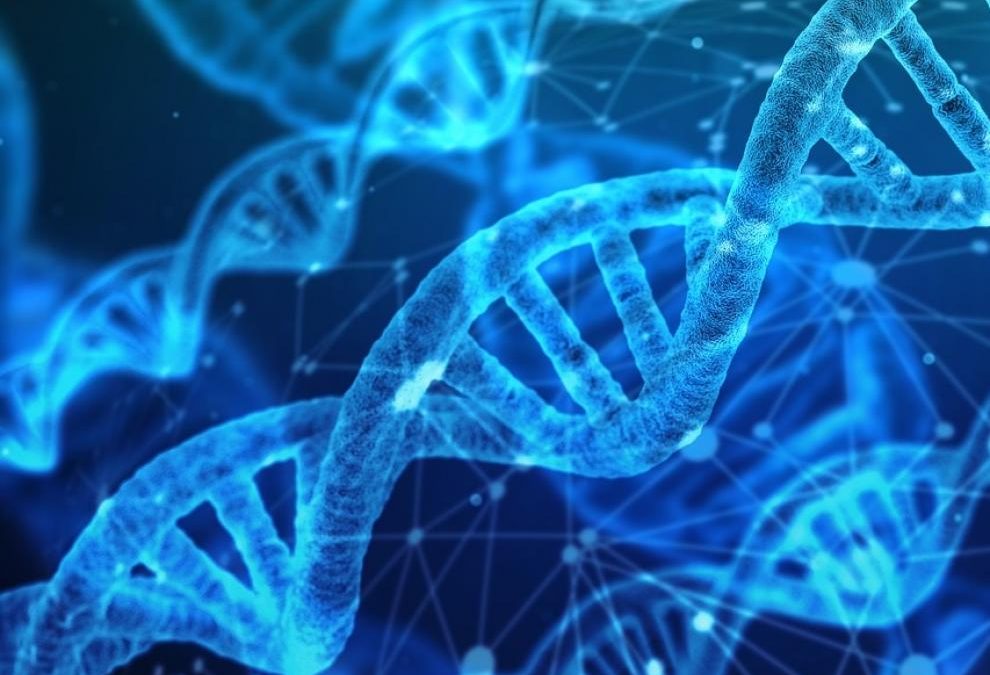
The idea, a pioneer in Spain, has been developed by a Mexican doctor and researcher based on a mathematical algorithm that translates genetic information into unique strokes and colors to create a digital image.
The Mexican doctor Juan Roldán, based in Girona since 2008, has created the Genoma23 signs to market personalized paintings made with DNA of the person who commissions the artistic work embodied with the genetic information.
La idea, pioneer in Spain, has been developed by the Mexican doctor and researcher Juan Roldán from a mathematical algorithm that translates genetic information into unique strokes and colors to create a digital image.
"Just as DNA makes people have a certain skin, hair or eye color, it also makes people brushstrokes and tones of the painting are unique and unrepeatable, like the DNA itself"says Roldán.
From a saliva sample, a non-invasive procedure, the laboratory isolates and sequences small fragments of 23 genes, which are small segments that make up DNA and that contain specific information that defines physical traits and makes each person unique.
Each cell in the body is estimated to contain between 25.000 and 30.000 genes., and the 23 used by Roldán's project are the same ones that are analyzed, for example, when paternity or medical-forensic tests are carried out.
DNA is made up of four chemical bases: adenine, thymine, guanine and cytosine., which join together and form base pairs that connect the two strands of DNA, forming a double helix.
Human genetic material has more than 3.000 billion of these letters and their combination defines DNA, which is different in each person, including identical twins, ensuring that none of the paintings from the Genoma23 project are similar to another.
The DNA sequences obtained in the laboratory from the saliva sample are entered into an algorithm based on mathematical models, which has been developed by Roldán in collaboration with the Department of Applied Mathematics of the University of Girona, and thus obtains the unique digital image.
Roldán, who was born in Mexico in 1970, has been principal investigator of different projects at the Germans Trías Hospital and the Santa Caterina Hospital in Girona, after spending several years researching molecular models of respiratory diseases in the United States, where his interest arose. concern for DNA as a form of artistic expression.
Roldán's project, however, He is not the first to unite DNA science with art, since research into genetic material for years has had a wide impact in various fields, such as lsculpture or architecture.
He "bioart", the name that this artistic movement has received, is based on the application of scientific tools and techniques to create works of art, that is, the union of art, science and life through technology.
Artists in this movement use plants, skin, insects, genes, bacteria, fungi, tissue cultures, animal blood transfusions, DNA and even their own body, and all kinds of organic elements to create their works of art.
According to the information on the website of Roldán's firm, Getting the painting through this process costs between 760 and 510 euros Depending on the model and size, the work is printed on an ecological support and sent in a packaging made of wood from sustainable forests.
The signature also guarantees the protection of user data, so it does not use names or surnames in the laboratory samples, and once the painting is obtained, it is destroyed through a process that they claim is safe.





