
The ASISA Foundation Chair of the European University _ Call for research grants
26 March, 2021
Eye surgeries, on the rise due to the use of masks?
29 March, 2021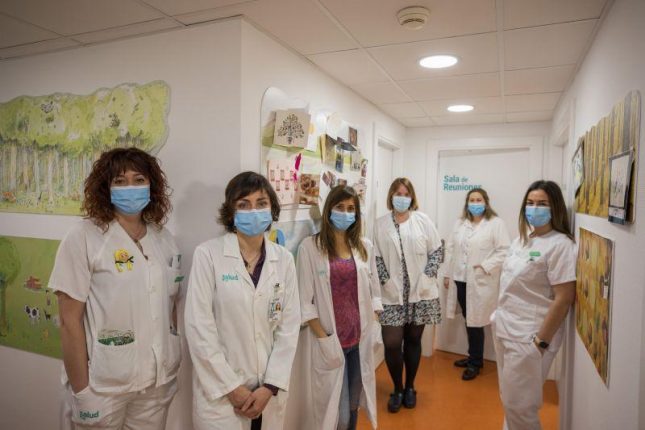
The euthanasia law reopens the debate on death, something that palliative care teams address daily / EL PERIÓDICO speaks with three teams of professionals who work with these patients
The recent approval in Spain of the euthanasia law (fifth country in the world to regulate it) has once again reopened the social debate about how to approach and what the end of the life of a sick person should be like. At the outset, something must be clear: euthanasia and palliative care are not the same. Both are applied in a terminal phase and aim to stop the patient from suffering in an irrevocable situation, but between them there is a line of separation that perhaps, for ordinary citizens, is somewhat difficult to discern.
This disagreement between palliative or terminal sedation and euthanasia is determined by the intention, the procedure and the result of both actions. The first seeks to progressively reduce the patient's consciousness once the appropriate consent is obtained, while euthanasia involves the direct administration of a substance to the patient by the professional to cause his or her own death. In palliative care there is no room for conscientious objection, while many health workers require it with euthanasia. They are against it and do not want to participate professionally in it.
The opinions, arguments and points of view among citizens, patients, families and healthcare workers are as varied as they are free. Legislatively, in Aragon it has just been 10 years since the approval of the law on dignified death which, for many, has not finished being fully developed. In this scenario where many lines are still to be defined, EL PERIÓDICO talks with professionals from three palliative care teams in Aragon who have been caring for patients in their terminal phase for years. They, beyond political and moral debates, work to alleviate pain and suffering, while, often, acting as psychologists in the environment closest to the patient. If doctors Victoria Caballero, Roberto Moreno and Alfredo Zamora agree on something, it is that it is a "very vocational" job.
Not everyone is prepared for this, but also socially "there is still a long way to go and a lot of work to be done regarding the acceptance of death," says Zamora, a specialist in Geriatrics at the Provincial Hospital of Huesca and vice president of the Aragonese Society of Palliative Care. . At the other extreme is Caballero, a specialist in Pediatrics who practices in the Pediatric Palliative Care Unit of the Children's Hospital of Zaragoza. There are minors who, due to a very shortened life prognosis, are directly cared for at home, while those treated in the hospital are also offered to go home in the acute phase.
Their care model "is based on the child", but also on their family. "We try to mitigate the suffering and, once someone dies, we accompany them in their grief. We take care of the physical sphere, but also the social, psychological and spiritual sphere. Our duty is to bring the hospital home," says Caballero. "No. It is not an easy decision for the families, since they have to carry out much more care, but the continuous contact with our unit relieves and empowers them," adds Caballero.
The home becomes a true refuge and, in Moreno's opinion, "the best place" in which a person in a terminal phase can die. «Covid has changed the way we work, but I like to serve them in their homes. After a few years, depending on the situation, many prefer to stay and there the family members, even if they are reticent, must listen to them and comply with their will," says Moreno, doctor coordinator of the Home Care Support Team (ESAD) of Salud Aragón.





