
Servet launches an electron accelerator, the sixth in Aragon
October 14, 2021
Symptoms of gastroenteritis in children
October 18, 2021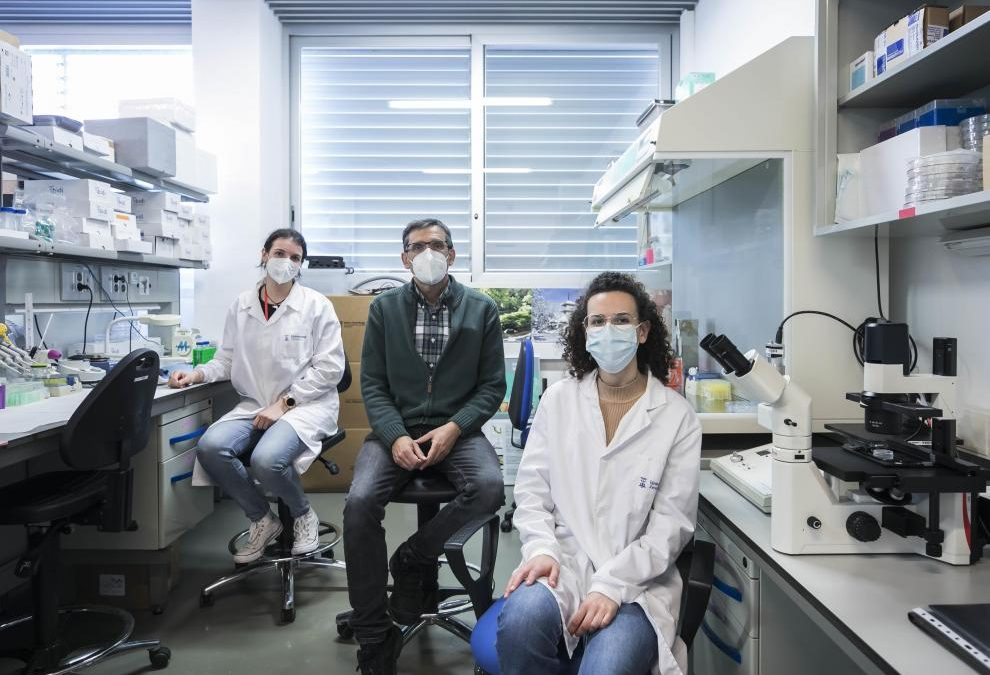
With European funding of 2,5 million euros, José Manuel García Aznar will develop a pioneering project that includes biobots, robots made of cells.
In the Mechanical Engineering department, not everything is machines, gears and motors, there are also cells. Robots made of cells are even designed: biobots. José Manuel García Aznar never thought that industrial engineering would lead him to research so closely to medicine, but he has been studying the forces and tensions suffered by living tissues for years, a hybrid field with a compound name: mechanobiology. His next challenge is "to try to design new immunotherapy strategies to attack solid tumors, one of the great challenges facing medicine today.", he assures. With funding of 2,5 million euros granted by the European Research Council (ERC) in the 'Advanced Grants' category, his team will create a predictive modeling platform and their work will be applied to three tumors of great clinical impact: lung , liver and pancreas.
Rigidities and groundbreaking ideas
The project will be developed over the next five years, in which they will begin by finding out how cells from immunotherapy treatments detect, move and interact with cancer cells and the tumor microenvironment. Although immune cells have a great capacity for movement, solid tumors do not make it easy for them. They are so dense and rigid that they don't let anything in. "They present many mechanical obstacles, such as residual stresses, that therapeutic cells have to overcome," says the researcher from the I3A (Aragon Engineering Research Institute) of the University of Zaragoza. That is why "designing and manufacturing biobots made up of cells from the immune system itself to attack tumors" is one of the novel ideas that make ICoMICS (Individual and Collective Migration of the Immune Cellular System) one of those pioneering, high-risk projects. and high potential supported by European 'Advanced grants'.
Biobots "are, basically, robots made up of cells that are designed to perform a specific action." In this case, "what we would like them to do is overcome the physical barriers generated by solid tumors so that immunotherapy is more effective." García Aznar knows that this approach using biobots is "difficult to achieve; at the moment it is basic research that may or may not work."
But generating biobots is the final part of the story. They will begin by developing a new virtual simulation platform to recreate and investigate how both immune system and cancer cells behave. To do this, they will manufacture tumor organoids, "miniature organs of solid tumors grown in the laboratory" that will grow on cell culture microfluidics chips. Afterwards, "we will make a replica, a virtual twin of the organoid"; Computer simulations of cell population behavior will be combined using artificial intelligence techniques.
With all this, it is intended to achieve another of the ambitious objectives of this project: "Open a new line of work that could be called 'mechanoimmunotherapy' and that aims to advance a better understanding of how mechanical forces regulate the effect and efficacy of different immunotherapy strategies."
New contracts and microscopes
In addition to allowing a researcher to "carry out an idea that is the result of years of work," receiving 2,5 million euros from the EU It is enough to complete the human and technical team. José Manuel García Aznar plans to dedicate "two fifths of the budget to hiring personnel, one fifth would go to purchasing new equipment, another fifth to consumable expenses and the last fifth will go to cover the general expenses of the university." They want to acquire a confocal microscope and the research team formed by María Ángeles Pérez Ansón, María José Gómez-Benito and Julián Pardo Jimeno will be complemented by two postdocs and four newly hired doctoral students.
This is the third ERC project that García Aznar has achieved. His project is one of eleven that have been awarded to researchers from Spanish centers and the only one in Aragon in the last call. Since 2009, the University of Zaragoza has obtained eleven top-level ERC projects, with a global financing of 18,8 million euros.





