

Doctor turns DNA into personalized art paintings
27 December, 2021
Sonia Laguna, biomedical engineer: "Harvard sounds very impressive, but getting here is not impossible"
28 December, 2021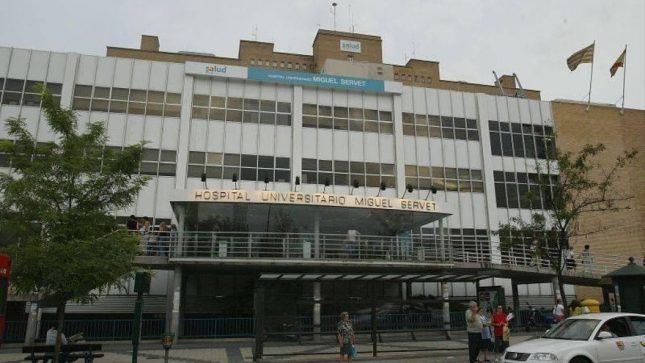
María Cerrolaza, Belén Salinas and Álvaro Tello have had their work on lung cancer, pharyngotonsillitis and fibromyalgia recognized in the category of best oral communication
Researching is important, but it is also important to know how to communicate the studies carried out. They know it well María Cerrolaza, Belén Salinas and Álvaro Tello, to whom the Michael Servetus hospital de Zaragoza has been awarded at the IV Research Conference for residents of Aragon, for his work as spokesperson in the presentation of the research of each of the teams. The first has won First Prize for the best oral communication in the Central Services category and of the day for research on lung cancer. Salinas, in the medical services category for a study on the antibiotic regimen in angina. And Tello, in surgical services, for how to help diagnose fibromyalgia through ophthalmology. For the three, The award is "an incentive" to continue with the projects and research.
Cardiac toxicity in lung cancer
Cerrolaza is a fourth-year resident of Radiation Oncology at the Miguel Servet Hospital and is currently pursuing doctoral studies in Paris. His research is titled Evaluation of cardiac toxicity in patients with locally advanced lung cancer undergoing radiotherapy. Lung cancer is "the main cause of cancer death in the world and the fourth most frequently diagnosed," says this 29-year-old from Rioja, who studied at the University of Zaragoza. Radiotherapy is the fundamental treatment to combat the tumor.
The science until now was largely unspecific in describing long-term cardiac side effects, so a team began this study. Oncology Radiotherapy when planning the treatment reviews not only the dose received in the heart as a whole volume, but also in the cavities (atria and ventricles), valves, coronary arteries and great vessels (aorta, pulmonary artery, superior and inferior vena cava). This allows «to know with great precision the dose that reaches each structure and in the future to be able to determine which substructure is more sensitive or in which we should be more restrictive in the dose to reduce cardiac suffering», explains Cerrolaza. The control carried out by the nursing staff with an electrocardiogram and an echocardiogram has allowed "closer monitoring of patients, adjusting treatments."
Regarding the preliminary results of the study, he assures that "there is a tendency towards a slight worsening in some variables that seem to be correlated with the dose received in various cardiac substructures."
Antibiotic regimen in pharyngotonsillitis
Belén Salinas is a Pediatrics resident at the Children's Hospital, although the Retrospective study on the effectiveness and safety of the antibiotic regimen reduced to 5-7 days in acute streptococcal pharyngotonsillitis in pediatric age It has been carried out with patients and pediatricians from the José Ramón Muñoz Fernández health center in Zaragoza. The research sought to "see if giving fewer days of antibiotics (the normal treatment regimen is ten days) would have the same effects on the disappearance of symptoms and, therefore, reduce adverse effects." If so, the resistance that bacteria are creating to antibiotics would be reduced, which will be "one of the main health problems in the coming years."
The field work consisted of compare the effects in children who had taken 5 or 7 days of treatment with those who had taken ten. They saw "no differences between the two guidelines, but "What caught our attention was that the percentage of adverse reactions was lower in 7-year-old children.", which makes them think that "the seven-day schedule is just as valid as the ten-day schedule," although "more studies would be needed," acknowledges this 27-year-old from Zaragoza.
Objective diagnosis of fibromyalgia
Search for objective diagnostic biomarkers in fibromyalgia using optical coherence tomography is the title of the study for which Álvaro Tello from Burgos was spokesperson. Resident of Ophthalmology at Miguel Servet, Tello, 27, explains that the work is included within the neuro-ophthalmology section of Servet, which has been "analyzing layers of certain measurements of the retina" for many years, with an OCT device, which It is "a laser that makes very detailed images of the structure of the retina", as if it were a CT scan, but without using ionizer, which allows them to be "quick, harmless tests that provide a lot of information" about the retinal structure. Tello points out that in diseases such as multiple sclerosis or Alzheimer's, the layers of the retina "reduce their thickness" and they thought it could be useful in fibromyalgia. The result was that "we found patients in whom there was some variation and the thicknesses were reduced," which would support the theory of the “neurodegenerative mechanism”, although, he acknowledges, “continued research must be done.” More than for early diagnosis, the resolution of this study will serve as "objective" support for the diagnosis, because in many cases there is no "only clinical" one and they would provide "objective proof" of the disease, also beneficial for the "treatment"..





