
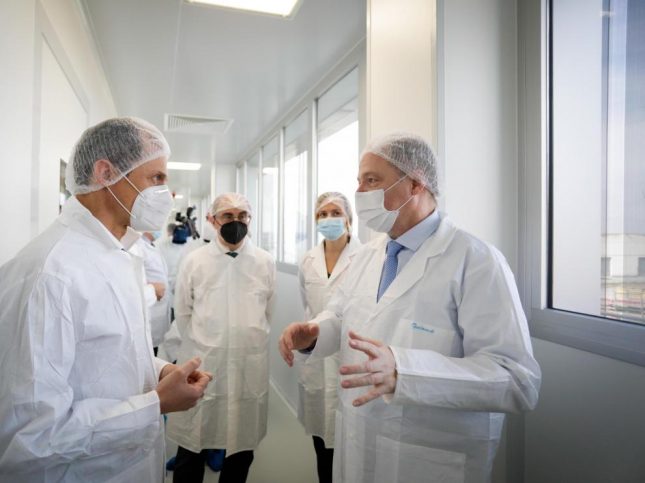
Certest is committed to achieving a messenger RNA vaccine prototype at room temperature in three years
22 February, 2021
'Big data' to improve health
22 February, 2021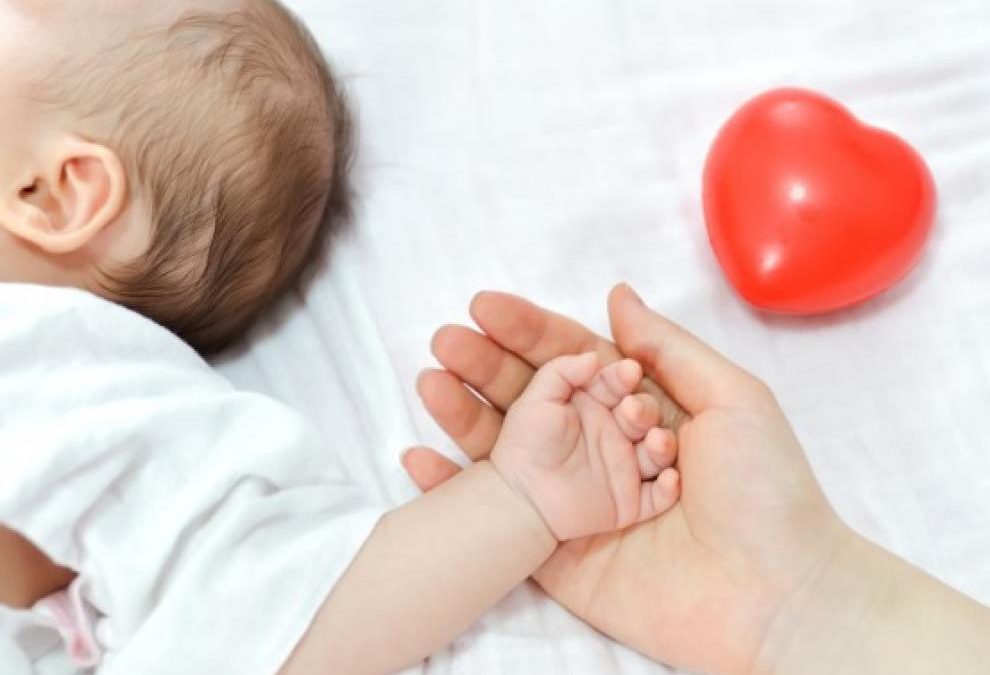
The Spanish Society of Neonatology has confirmed the benefits of continuing with 'skin to skin' and breastfeeding even if the mother is infected.
The registry of the Spanish Society of Neonatology (seNeo) has so far documented a total of 2.248 newborns of mothers who contracted the coronavirus during pregnancy and only 0,9% of these children were infected, the majority of which were asymptomatic.
These are the latest data from the Registry that SeNeo launched last April, as stated by the coordinator of this tool, the neonatologist Belén Fernández, with the information provided by 120 hospitals throughout Spain, both public and private.
Thanks to this registry, "a lot" has been learned this year about how Covid affects pregnant mothers and their babies, with the extensive data sent by Spanish health centers and which for Fernández has "a lot of value."
The first cut of data that SeNeo presented from its registry was in June and was published in the magazine 'Pediatrics', then a total of 503 newborns of mothers who had passed the coronavirus during pregnancy were documented, with the information of 79 hospitals.
Benefit of 'skin to skin' and breastfeeding
With this volume of cases, SeNeo confirmed the benefits of following its recommendations of doing 'skin to skin' after childbirth even if the mother was infected (in an isolated room and with a mask).
Also encouraging breastfeeding from the beginning - since not only is it not contraindicated, but it protects the baby - which did not cause "any problems" in the little ones, most of whom were born free of covid.
So, some of those babies, explains the president of SeNeo, Manuel Sánchez Luna, had a positive PCR as soon as they were born that practically became negative in a few hours, and some who did not do so were asymptomatic.
"Therefore, in our registry it is shown that we do not see intrauterine transmission of the virus and if there is, it is very rare," says Sánchez Luna, who argues that several recently described cases show that the placenta is "clearly a brake for the virus." .
Only 21 newborns tested positive
The SeNeo registry has been increasing the data and has already collected data from 2.248 babies who were born during the pandemic to mothers who have been infected with coronavirus and which have been reported by hospitals in practically all communities and the autonomous city of Melilla. .
Of those 2.248 registered births, only 0.9%, that is, 21 babies tested positive after delivery, of which at least 17 SeNeo estimates were not vertical contacts, that is, they were not infected in utero or intrapartum (for birth canal), explains Fernández. The majority of these babies who tested positive were asymptomatic.
The neonatologist emphasizes that now, almost a year after the pandemic began, it has been confirmed that there is no difference in positivity between babies separated from their mothers with covid and those who have not been separated, which supports that the recommendations of the Society were "correct."
The neonatologist encourages hospitals to continue sending information to the registry; To date, the community from which the most centers have sent cases is Madrid -20 hospitals-, followed by Andalusia and Catalonia.





