
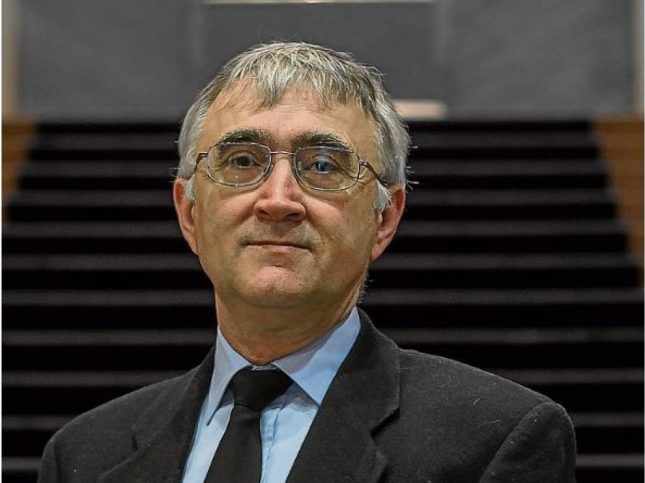
Elías Campo: «Seeing the dark areas of the genome helps slow the progression of cancer»
October 10, 2019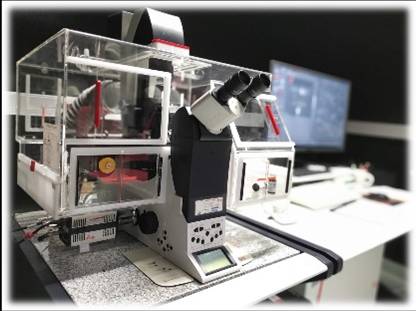
Up-grade Widefield Time-Lapse Microscopy System
October 14, 2019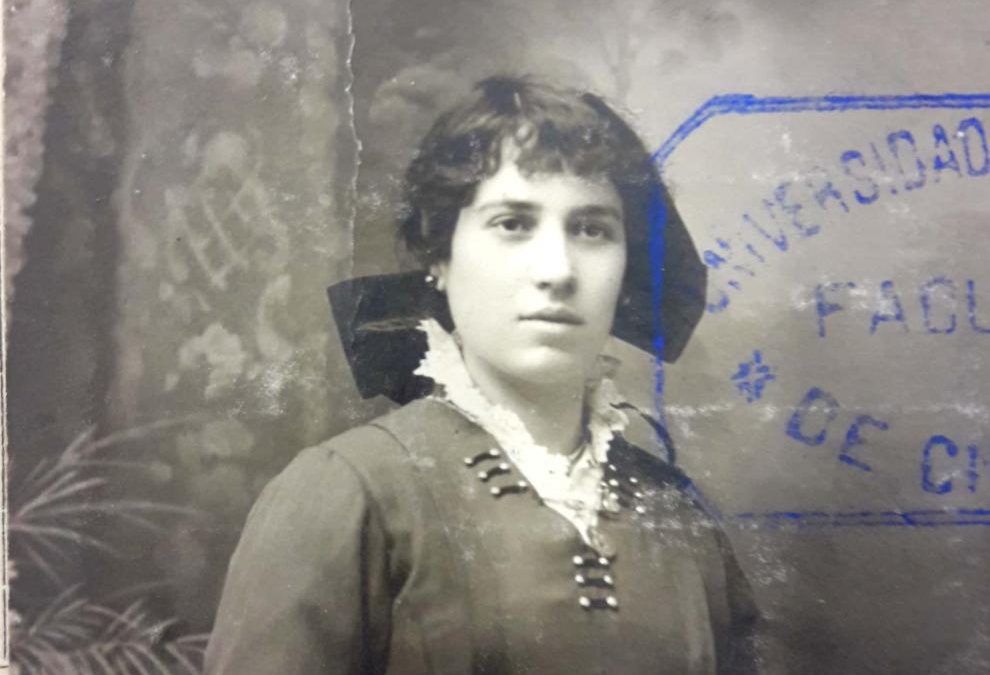
One hundred years ago, the first woman graduated in Chemistry from the Faculty of Sciences of the University of Zaragoza: Donaciana Cano Iriarte. An exhibition celebrates this anniversary.
In September 1915, Donaciana Cano Iriarte began her studies at the Faculty of Sciences of the University of Zaragoza. At that time she was the first and only student at this center. Not long ago, women had been officially allowed access to university studies, starting with the ministerial order of 1910. In June 1919, Donaciana finished her studies in Chemical Sciences and became the first graduate of the Faculty of Chemistry. Sciences. The centenary of this event is being celebrated these days at the University of Zaragoza with an exhibition that can be visited in the faculty lobby until October 26.
The exhibition that celebrates this anniversary is titled 'Women in the Faculty of Sciences, only 100 years ago (1919-2019)'. Based on some events that occurred in 1919 at the same time that this first student graduated from the Zaragoza university, the exhibition begins to present the figure of Donaciana Cano, born in Santoña (Santander) in 1897: her first studies at the School of Teachers of Huesca and Zaragoza, as well as at the General and Technical Institute of Zaragoza to obtain his high school degree, and his arrival at the university in 1915.
A protest speech
Surely because she was the only student in that course and also because of her character and merits, in February 1916 she was invited to give a speech at the inaugural session of the Zaragoza Scientific School Athenaeum: 'Scientific training of women'. This text was published in the first issue of the Ateneo magazine.
After finishing his degree in Chemistry at the Faculty of Sciences in 1919, Donaciana continued his studies at this same center with a degree in Physics in the years 1921-22 and 1922-23, although, according to his record, he did not finish it due to lack of the exams of two subjects. She would probably leave it to take her place at the Huesca high school (current Ramón y Cajal Secondary School), where she began in 1923 as interim assistant in the Science section and where she would continue as a Mathematics teacher until her retirement in 1964. However, in the early years he maintained a relationship with the university, since in 1926 he published a research work in the journal of the Academy of Sciences of Zaragoza – a copy that is also included in the exhibition – with the support of Professor Jerónimo Vecino.
Among the material exhibited in the exhibition, the archival documentation linked to his figure that is kept at the university stands out, as well as laboratory material from the first half of the 20th century, belonging to the collection of the Faculty of Sciences, similar to that which could accompany Donaciana's work.





