

The CSIC creates the Cajal International Neuroscience Center to be a reference in the study of the brain
September 10, 2021
The “15 Step Formula” to Improve Metabolic Health
September 13, 2021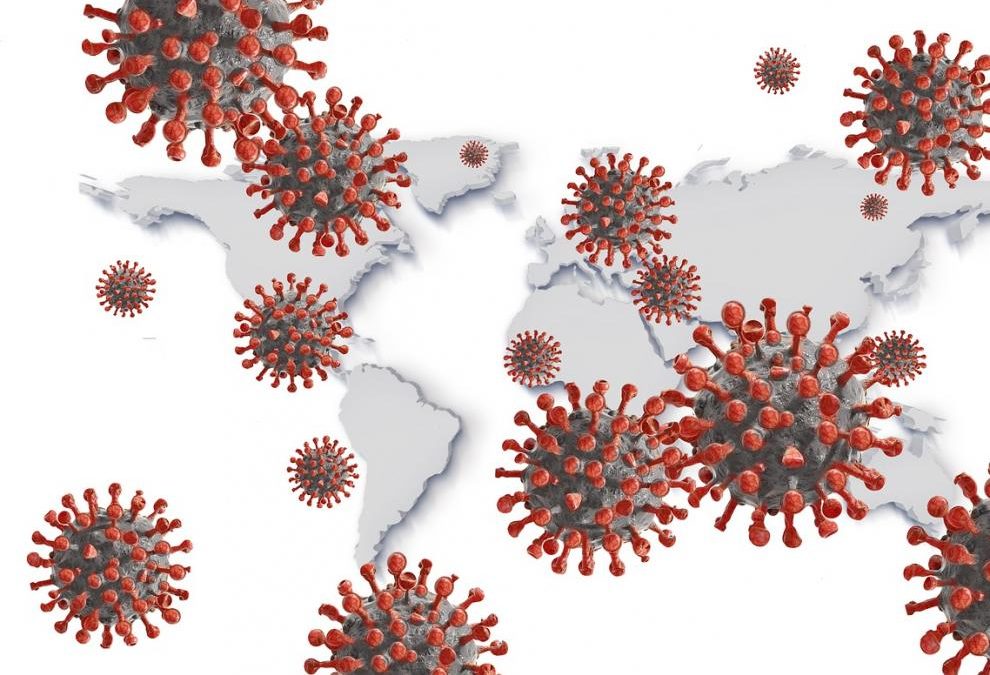
The Center for the Coordination of Health Alerts and Emergencies admits that the new Colombian strain, more contagious than the original, arrived in Spain in April but did not spread.
Mu (?) is no longer just the twelfth letter of the Greek alphabet. Since the beginning of this month of September it is also officially for the World Health Organization (WHO) a "variant of interest", that is a new mutation of the coronavirus that has to be observed very closely because it begins to have a certain "weight", at least in some countries.. The latest official Health report on the “update of the epidemiological situation of the SARS-CoV-2 variants of concern (VOC) and interest (VOI)”, dated this Monday, has admitted for the first time that the first possible cases of this new strain of Colombian origin have been sequenced, although the document, very cryptic, does not say how many infected there are or have been in Spain for this variant.
The graphics of the Health Alerts and Emergencies Coordination Center (CCAES) of Fernando Simon reveal that this new lineage It was sequenced for the first time in Spain in week 16 of this year (between April 19 and 25) and which moved in percentages always less than 5% of the total until week 22 (between May 31 and June 6). The good news - always according to the tables of Health- it would be that since then Mu only appears residually in the sequencing because Delta, the famous Indian variant that is already behind 96,5% of the cases that occur in Spain, has literally swept the rest of the mutations off the map. It has led to the virtual extinction of both previous strains - such as Alpha (the British variant that became prevalent throughout the country last spring) or Beta (the South African one) - and later ones, such as the case of Mu itself.
The Health graphs, however, are not entirely coincident with the open source database 'outbreak.info', one of the main international statistical references of this pandemic. According to this basis, andIn Spain, 512 cases of the Mu variant have been discovered so far, their number does not decrease, but is increasing with 40 more new cases in the last week and the first sequencing of this variant took place on March 6.
"Dozens"
Be that as it may in Spain - they explain from the Ccaes - and although "dozens" of cases of Mu have been sequenced, This strain has never had community spread, not even last spring before the Indian mutation swept away all the others.
Other internal documents of the Ccaes, although they recognize that Mu does not currently exceed 0,1% of cases worldwide, insist on remembering that this new strain has already been detected in 42 countries, that it is present in all states of United States (except in Nebraska) and that in countries with which Spain has a close relationship, such as Colombia or Ecuador already account for 39% and 13% of the cases, respectively. And in those two Latin American countries Mu is not being swept away by other strains, particularly the Indian strain, which in those latitudes is not as voracious as in Europe.
The Mu variant, which Technically known as B.1.621, it is actually not that new as it was first sequenced in January 2021. en Colombia. However, as recognized by the WHO, it has barely been studied despite the fact that, as Health reports admit, Three mutations are already known (R346K, E484K, N501Y), which make it potentially very dangerous. In fact, the World Health Organization has warned that Mu "has a constellation of mutations that indicate potential immune escape properties."





