

Marilourdes de Torres: «Hospital menus are a combination of science and imagination»
1 February, 2022
Parosmia: when what smelled good now smells terrible
2 February, 2022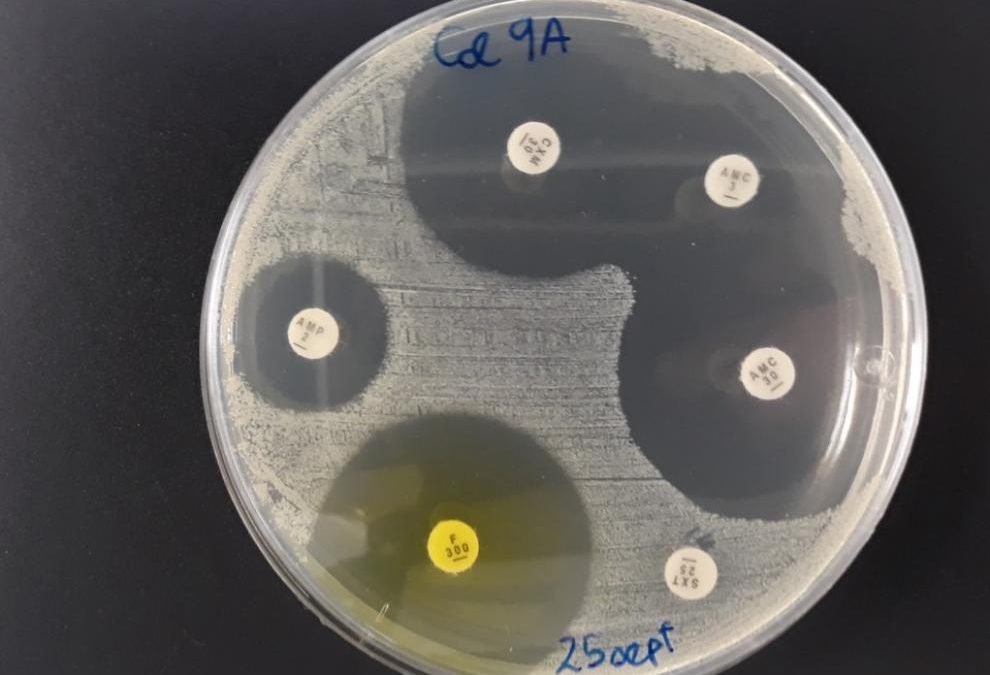
The CITA has analyzed the consumption of antibiotics in 29 pig farms in Aragon and Catalonia, as well as the antibiotic resistance of four bacteria from animals in production. By leaving us without effective treatments, this is one of the most serious threats to public health.
Every year, infections caused by antibiotic-resistant bacteria cause the death of 33.000 people in the EU (about 3.000 in Spain). Almost one hundred years after the discovery of penicillin, Excessive and inappropriate use of these drugs is reducing their effectiveness and there are more resistant bacteria every day., to the point that the WHO considers antibiotic resistance one of the main threats to global health.
Abuse in the administration of antibiotics occurs among people and also in animals, whose health is intertwined with human health and environmental health in a single 'One Health'.
Researchers from the Aragon Agri-Food Research and Technology Center (CITA) are following the trail of these multi-resistant bacteria within the framework of a broader project, funded by the State Research Agency, on microbial resistance to antibiotics in intensive livestock production. Between CREsA of Catalonia, the universities of Murcia and León and CITA, they have studied pigs, rabbits, ruminants and chickens.
The Antimicrobial Resistance Plan controls these four bacteria that are markers of antibioresistance in foods and This CITA study has shown that "this same control can also be done in live animals, obtaining the same results before"says Clara Marín, researcher responsible for the study.
Specifically, resistance to 14 antibiotics has been measured for E. coli y Salmonella; 12 for Enterococci spp. and 6 for Campylobacter, and Marín indicates that "Multiresistant bacteria were observed in the four bacterial groups studied."
This problem arises from administering antibiotics indiscriminately: "If antibiotics are given without having been prescribed, resistance to antibiotics can appear when infections arise that produce pathology (either human or animal), which can be caused by these four bacteria that appear in the study or by others." For two years now, "a veterinary prescription has been mandatory to administer antibiotics to animals." and that is why its use has also decreased in Spain", although it remains among the countries with the highest consumption of animals.
It clearly states that "We have to be aware that we have to take antibiotics – people and animals – 'by prescription'. Both doctors and veterinarians know that they are only used against bacterial infections and are useless against viral infections (such as the flu), so they should not be used in those cases." In addition, "antibiotic treatments must be supervised, "Use the indicated drug and only for the time necessary to cure the infection."
In your opinion, The abuse of veterinary antibiotics is more linked to malpractice than to the type of exploitation. "More antibiotics are used on the farm of a farmer who does not act as he should: who does not call the veterinarian when the animals get sick, who does not make a good diagnosis of the diseases they suffer, who does not have clean and conditioned facilities so that the animals animals are well housed and do not suffer stress," says Marín.
Normally, he continues, "in intensive production, if animal welfare is not monitored and biosecurity measures on farms are not controlled, animals can suffer stress. Animals that are stressed suffer more pathologies and these are the ones that are treated. ". That is why it is said that "To reduce the use of antibiotics, it is advisable to implement and influence animal welfare and biosecurity measures that reduce any stress that the animal may suffer. both in intensive and extensive livestock farms.
In figures
- The European Food Safety Authority points to campylobacteriosis (with 220.682 cases in 2019), salmonellosis (87.923 cases) and E. coli infections (7.775) as the three main zoonoses in humans in Europe.
- Although it has been significantly reduced in recent years, the use of veterinary antibiotics in Europe is very high and, according to the European Medicines Agency, Spain is among the countries with the highest consumption. In 2014, Spain used 100 times more per unit than other countries such as Norway.
- The Antimicrobial Resistance Plan has been launched voluntary reduction programs of the consumption of certain antibiotics in different species.
Resistance genes that pass from one bacteria to another
Human beings and animals share the same microbiome, that is, "we are capable of passing bacteria from one to another, either by sharing space (through the air), or by direct contact (touching each other), or through food," describes Clara Marín. Besides, "Bacteria are capable of sharing antibiotic resistance genes with each other and maintaining acquired resistance over time." That is why this phenomenon has earned the name of the silent epidemic.
The researcher from the Department of Animal Science at CITA explains that "'saprophytic' bacteria, which we all have and do not cause disease, are capable of picking up antibiotic resistance genes and sharing them with other bacteria that, at a given time, for example a surgical intervention, a stone in the gallbladder, a trauma..., produce a pathology that is very difficult to eliminate because the bacteria that causes it is resistant to many antibiotics.. As in typical persistent cystitis due to E. coli".
The CITA study tracked the four marker bacteria of antibioresistance according to European regulations. And they found that more than half of the E. coli The pigs analyzed were multiresistant to five antibiotics; for Enterococci, resistance to three antibiotics was found in more than 50% of cases; in Salmonella, to three antibiotics in more than 50%; while all with Campylobacter coli of porcine origin, resistance to five of the six antibiotics analyzed was detected in more than 70% of the bacteria isolated from farm animals.
Another conclusion of this study is that "When resistance is generated due to the misuse of antibiotics, it is not eliminated overnight", he assures. Thus, resistance to Colistin, an antibiotic banned in pigs for two years when the study was carried out, was analyzed, and resistance was still appearing in E. coli y Salmonella. This indicates that "antibiotic resistance acquired by bacteria is not eliminated quickly after stopping administering the antibiotic; to achieve this, a period of rational use of these drugs must pass."
Alternatives
The CITA study is titled 'Reduction in the use of antibiotics in intensive livestock production: comprehensive management program and application of alternative products'. What other options are there? To start, "treating with antibiotics only the animals that require it and always doing the treatments correctly (appropriate antibiotic and recommended time)," advises Clara Marín. Now, she adds, "The use of prebiotics and probiotics (saprophytic microorganisms) that favor the microbiome is also promulgated in different ecological niches (breast, digestive, respiratory) to prevent diseases".
Likewise, "they are continually testing plant extracts as food additives that promote digestion and prevent diarrhea caused by bacteria.
It is also being tested the use of bacteriophages (specific viruses that kill bacteria) to eliminate infections and "it seems that very promising results have been obtained – says Marín – in both human and cow mammary infections and they are already testing how to prevent diarrhea in chickens."
Source: Heraldo de Aragón





