
IDEA 2020 Competition
3 February, 2021
This is how we work in the CIBA satellite laboratory: "We have the capacity to detect other variants"
4 February, 2021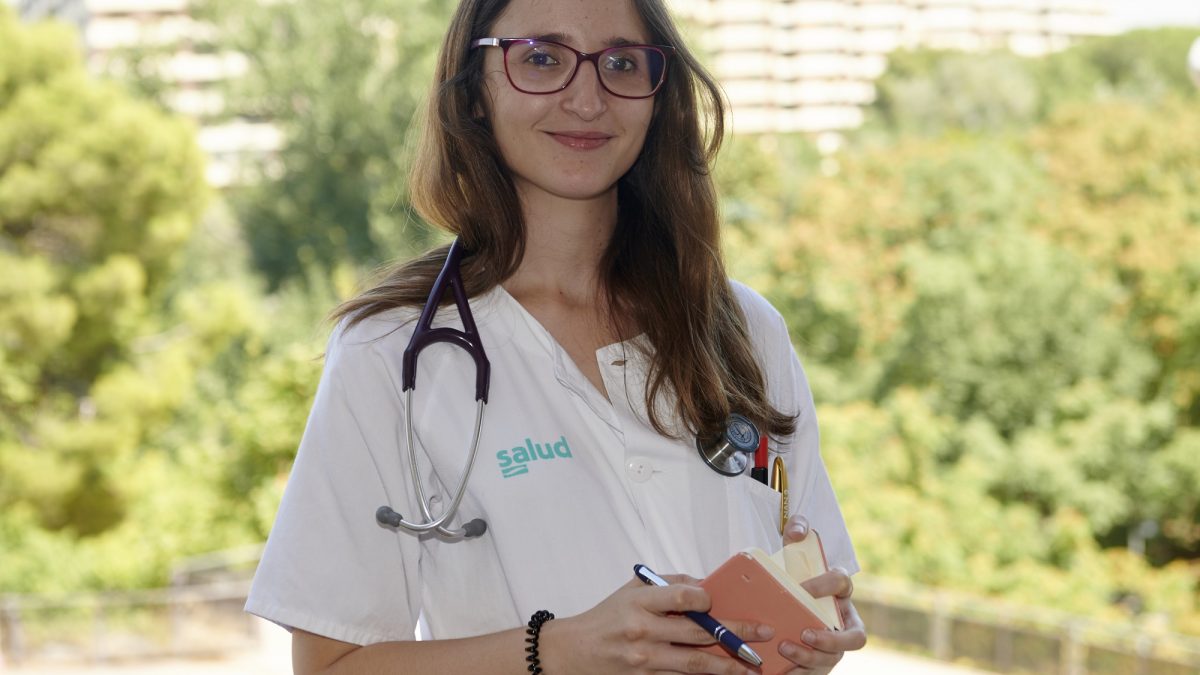
Dr. Yurena Aguilar has joined the Oncopediatrics Unit of the Children's Hospital thanks to a scholarship from Aspanoa and the IIS Aragón, endowed with 60.000 euros
Aspanoa and the Aragón Health Research Institute (IIS Aragón) have awarded a scholarship to a doctor to reinforce the care received by children with cancer in the Community and promote research against childhood cancer that has been launched in recent years.
This is the oncopediatrician Yurena Aguilar, who dedicates half of her day to healthcare at the Children's Hospital of Zaragoza - thus becoming the fifth doctor in the Oncopediatrics Unit - and the other half to coordinating the clinical part of two investigations. against childhood cancer that have been developed since 2018 at the IIS Aragón and the CSIC thanks to an investment of 200.000 euros by Aspanoa.
The scholarship that Dr. Aguilar has received began in February 2020 and reinforces both projects. It lasts two years and is endowed with 60.000 euros, financed in equal parts between Aspanoa and the IIS Aragón (30.000 euros each institution).
The first research project is led by the scientist ARAID Julián Pardo andn the IIS Aragón and seeks more successful treatments against leukemias and neuroblastoma, two of the most common childhood cancers, through new immunotherapies. Specifically, researchers are studying the state of NK cells - also called “natural killers” - in patients with the aim of determining how they are acting against cancer and whether, properly manipulating them in the laboratory and later introducing them into the patient, they could achieve more effective treatment. The goal of Julián Pardo's team is to begin clinical trials in 2022 and, in the meantime, Dr. Aguilar is in charge of recruiting patients with leukemia or neuroblastoma to manage sample collection.
The second project focuses on early diagnosis of a disease called “invasive aspergillosis”, an infection caused by a common fungus that can be lethal in patients who have very low defenses, as is the case of some immunosuppressed children with cancer. This research is coordinated by scientist Eva Gálvez from the Carbochemistry Institute of the CSIC and Dr. Aguilar is coordinating the taking of samples from children suspected of having contracted aspergillosis, separating the blood, centrifuging it and identifying it to send it to the laboratory.
Once the samples arrive at the CSIC, the researchers are analyzing a new biomarker that is expected to be more effective and earlier in the diagnosis of the disease. “In addition, the rapid analysis of the samples is allowing us to adjust the medication the child receives to obtain the best results,” explains Aguilar.
“Quality leap” for the Unit
Carlota Calvo, head of Oncopediatrics at the Children's Hospital, indicates that for the Unit it is “very important” to have a professional who can dedicate half of her day to research. “Hospitals that do a lot of research are because they have personnel specifically assigned to it,” explains Dr. Calvo. The clinical staff who care for patients full-time barely have time to investigate and, therefore, having a professional who can do so is a leap in quality for the Unit.”
“I am very grateful for the opportunity,” says Dr. Aguilar, 32, who explains that the specialty of Oncopediatrics is “very complex and intense both on a medical and personal level.” “It is a constant challenge because you need to always be up to date to give the best possible treatment,” she adds.





