
They confirm that the loss of smell and taste is a symptom of covid-19
22 June, 2020
«The secret is to block the union between the virus and the human cell»
22 June, 2020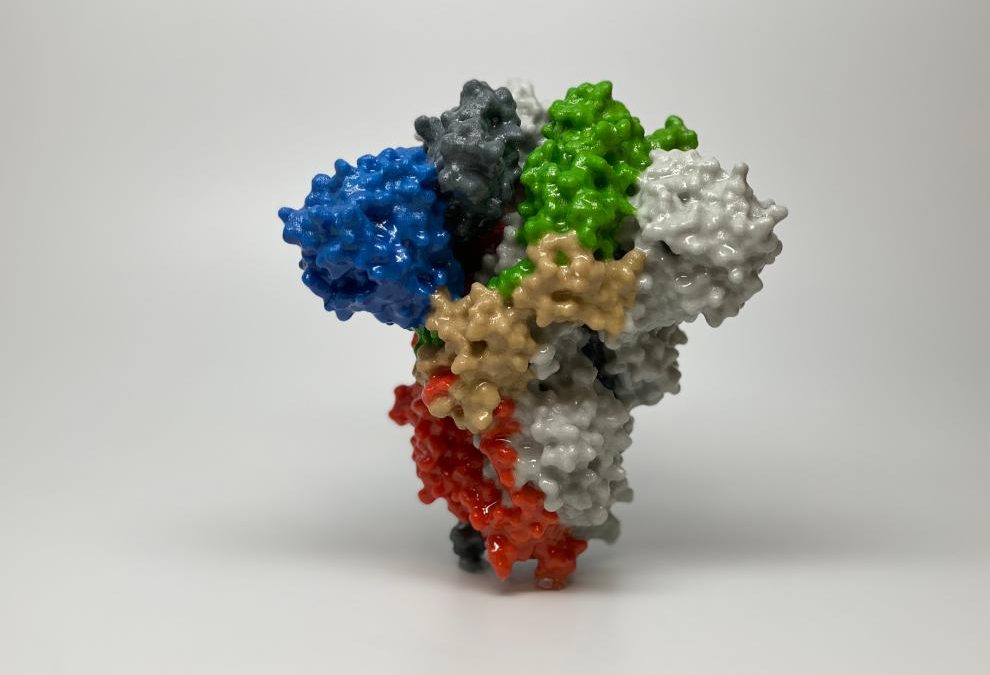
We will not forget the year 2020, we will remember it as the year of the coronavirus. Although animals (including bats) are full of microorganisms, we wonder where SARS-CoV-2 came from. Has it been created by the hand of man?
Scientists, when in doubt, never discard any hypothesis, because our job consists precisely of that: doing experiments to confirm or discard our assumptions. In the case of the origin of the new SARS-CoV-2, the hypothesis about an artificial origin of the virus is surprisingly widespread and on the street it is increasingly common to hear: "I think this bug has escaped from a laboratory."
I do not think so. I rely on the principle of Ockham's razor: between two hypotheses with the same result, the simplest explanation is usually the most correct. Let's say that hypothesis A is that the new coronavirus has been created in a laboratory, and hypothesis B is that it has been the result of natural evolution.
Hypothesis A would require long experiments, tests on animals, coordination between several people, a good handful of money... I sincerely doubt that there is a country in which a project of such magnitude can be carried out without producing a minimum leak that could warn of such a Machiavellian plan.
However, hypothesis B only requires one factor: time. More than one reader will throw up his hands when he learns that people are essentially microorganisms. And the viruses, bacteria and fungi that we carry in our bodies greatly exceed the number of our own human cells. But not only us, but also bats, flies or our beloved pets are a veritable wealth of these microorganisms. You just have to wait long enough for these microorganisms to adapt to a new lifestyle. And they do it, boy do they do it.
Let's take an example: imagine that we administered cyanide to several subjects: they would all die; In fact, I doubt that there is a single person resistant to cyanide on every planet. But microorganisms are another story. If we administer an antibiotic to a few bacteria, which for practical purposes is like cyanide to us, over time we will have bacteria resistant to that antibiotic.
Time works miracles on an evolutionary level, it's all a matter of patience. Just as a short-necked giraffe evolves over generations into a long-necked giraffe with the goal of reaching the leaves of taller trees, a coronavirus can evolve to infect new hosts with the goal of self-perpetuation. Why wouldn't it happen with SARS-CoV-2? After all, evolving to make the leap from a bat and infect the human species provides this virus with a reservoir of about 8.000 billion subjects. This is for any virus "an offer you can't refuse."
Genetic engineering, a malevolent experiment, a natural jump from animals to people... what is the origin of the coronavirus?
There will be those who think that this explanation is very far-fetched. Let's go to the scientific evidence: AIDS, Ebola, avian flu, yellow fever, SARS (2009), MERS, etc. They are recent diseases caused by viruses that initially infected animals, but over time evolved to infect humans. In other words, what happened with SARS-CoV-2 happens quite frequently, and, according to Ockham, it would be the simplest explanation.
If I were the creator of SARS-CoV-2
Scientists never rule out any possibility. Let's go back to hypothesis A, that of creation in a laboratory. Would it be possible? I will apply the Stanislavski method to get into the shoes of that supposed creator of SARS-CoV-2.
One of the methods that could be used to make this new virus is genetic manipulation. We could use, for example, a virus as a template and change a gene. Choosing the template virus would be as easy as taking the 2009 SARS-CoV, which is very similar to the current one. Now comes the question of which of its ten genes to manipulate. Here the answer is also easy: just consult the literature to realize that the 'spike' protein is responsible for the entry of the virus into human cells, so it is a good candidate. But then we find ourselves with the real dilemma: how do I manipulate the 'spike' protein? I can change each of its thousands of amino acids, each of those changes has 20 possibilities and I can also make combinations of them. Do the math, the possibilities are almost endless.
If someone had still ventured to carry out such an experiment, they should know that genetic manipulation always leaves traces, and a molecular biologist could act as a forensic expert looking for traces of such manipulation. They already did, and found no evidence of genetic manipulation in SARS-CoV-2. What they found is that this new virus is very similar to the 2009 SARS-CoV, which in turn is similar to bat coronaviruses, but its 'spike' protein also resembles that of pangolin coronaviruses. In short, we have not invented anything, everything in SARS-CoV-2 was already in nature.
Since genetic engineering does not seem responsible for the origin of the virus, we are going to propose another experiment: we can emulate nature and force the evolution of the virus so that it infects humans. This would require successive infections of some animal to select the virus variant with the best properties: the most lethal or the one that infects best. In this way we accelerate the time it takes for natural evolution.
Let's take the 2009 SARS-CoV and experiment on animals. I prefer to think that the days when people were experimented on are long gone, so we have to choose another animal. Which? Primates? We have to keep in mind that this (depraved) experiment requires infecting one animal after another, this would require a good number of primates, special and large laboratories, where to work with them, etc. No, a good (and mean) scientist would never embark on such a feat, taking into account that there are animal models such as the mouse, universally used in all laboratories. The problem is that the mouse is a bad host for this coronavirus. Then what do we do? Once again we have thousands of mammals to experiment with. If by chance someone had thought to use the shy pangolins to carry out the experiment, it would have taken years of infections from pangolin to pangolin. After all this enormous work, our evil scientist would be left with nothing, since he would have no guarantee that the virus isolated from the pangolin was capable of causing the current covid-19 in people. Once again Ockham's razor proves me right.
So, in my opinion, the answer to the question of whether SARS-CoV-2 was created in a laboratory is a resounding no. As a microbiology enthusiast, I feel a deep fascination with how such a tiny entity with such a small genome is capable of turning the world upside down. But regardless of the 'virtues' of this microorganism, we cannot be so presumptuous as to take credit for having created it with our own hands.
It is curious that until now no one has questioned the animal origin of the Ebola virus from primates, and that despite its cruel lethality: it is capable of killing half of the people it infects. But do not doubt that, if one day Ebola caused a pandemic like the one we are experiencing, many would think that it had escaped from a laboratory.
We have to know that there are thousands of viruses that we still do not know about and that are part of all living beings on the planet. Occasionally, one of those viruses will jump back into people and cause another pandemic. That day, humans will once again boast of having created a new virus.
Jesús Gonzalo Mycobacteria Genetics Group of the University of Zaragoza





