Researcher Alberto Jiménez Schuhmacher receives the 2026 Career for Life Research Award
October 30, 2026Aid for Ramón y Cajal contracts (RYC) 2026
November 4, 2026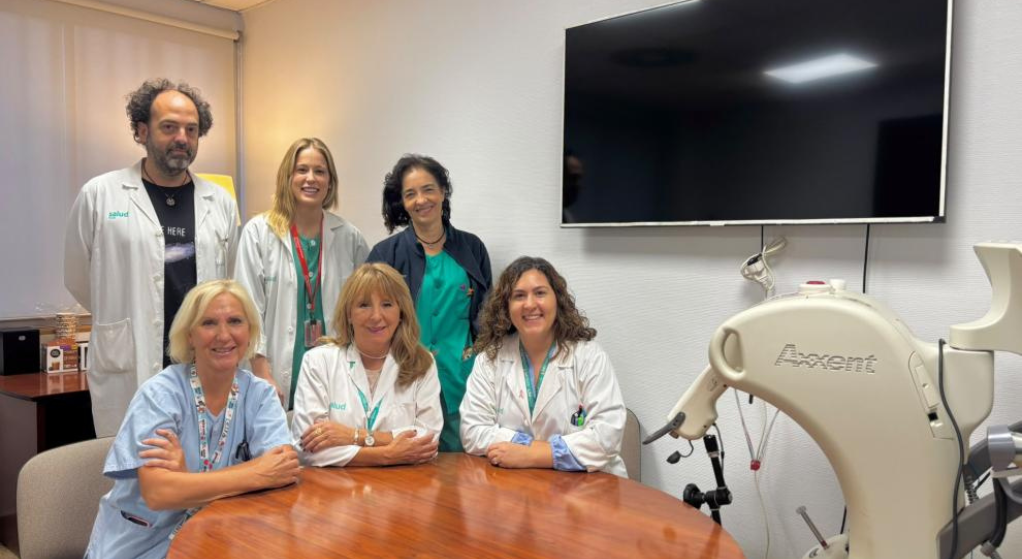
The study, which involved researchers from the Technological Innovation in Cancer group at the IIS Aragón, analyzes the results of 1.222 patients treated over ten years and was recognized at the 44th Congress of the Spanish Society of Senology and Breast Pathology.
A multidisciplinary team of professionals from Radiation Oncology and Radiophysics of Aragon, together with specialists from General Surgery y Gynecology of the Miguel Servet University Hospital of Zaragoza, has received a national award for a work of Research on intraoperative radiotherapy (IORT) in patients with low-risk early breast cancer.
The award has been given to the scientific communication presented at the 44th Congress of the Spanish Society of Senology and Breast Pathology, held in Malaga from October 22 to 24, in which the results obtained after monitoring 1.222 women treated between 2015 and 2025 are presented.
The work, entitled “Ten years of risk-adapted partial breast irradiation using intraoperative radiotherapyThis study analyzes one of the most comprehensive series collected in Spain on this technique. The experience accumulated in this work makes the Multihospital Clinical Unit of Radiation Oncology of Aragon (UCMORA) one of the groups with the greatest knowledge and follow-up of patients treated with this procedure.
Intraoperative radiation therapy (IORT) is a technique that allows for the administration of a single dose of radiation during breast cancer surgery. Once the tumor has been removed through breast-conserving surgery, the radiation is applied directly to the tumor bed—that is, the area where the lesion was located—before the incision is closed. This way, the area with the highest risk of recurrence is treated immediately, reducing or even eliminating, in most cases, the need for subsequent external beam radiation therapy sessions. If the final analysis detects additional risk factors, the treatment can be completed later with external beam radiation therapy.
Arantxa Campos Bonel, a radiation oncologist and author of the award-winning presentation, who presented the work in Málaga, explains that this strategy allows radiotherapy to be tailored to each patient's individual risk. "Our goal is to de-escalate the treatment when possible and intensify it when necessary. In patients with favorable characteristics, radiotherapy can be completed during the operation itself. If we subsequently identify additional risk factors, we can supplement the treatment with external beam radiotherapy. In this way, we can offer each woman the treatment she truly needs."
In over 75% of the women included in the study, radiotherapy was completed during the surgical procedure itself, eliminating the need for subsequent hospital visits for additional sessions. In 23% of cases, external beam radiotherapy was required to complete the treatment, allowing for individualized risk assessment and personalized radiotherapy.
The results presented show a local recurrence rate of 1,9%, similar to that obtained with other established therapeutic strategies. According to the authors, these results support the safety and efficacy of intraoperative radiotherapy in appropriately selected patients.
"Intraoperative radiotherapy is a convenient technique for patients and a pioneering one at our center. In addition to the good results obtained, it provides peace of mind because, if we identify risk factors, we can intensify the treatment with external beam radiotherapy," adds the specialist.
The patients included in the study come from all over Aragon and are mostly women over 50 or menopausal, with early low-risk breast cancer and who are candidates for breast-conserving surgery.
The award recognizes a ten-year history of multidisciplinary work in intraoperative radiotherapy for breast cancer in Aragon, involving numerous professionals from Radiation Oncology, Hospital Radiophysics, General Surgery, Gynecology, Diagnostic Radiology, Pathology, and Nursing from hospitals throughout the Aragonese Autonomous Community. Collaboration among these teams has been fundamental in consolidating this technique and advancing towards precision radiotherapy, increasingly personalized and adapted to each patient's individual risk.
Source: Aragon Today