
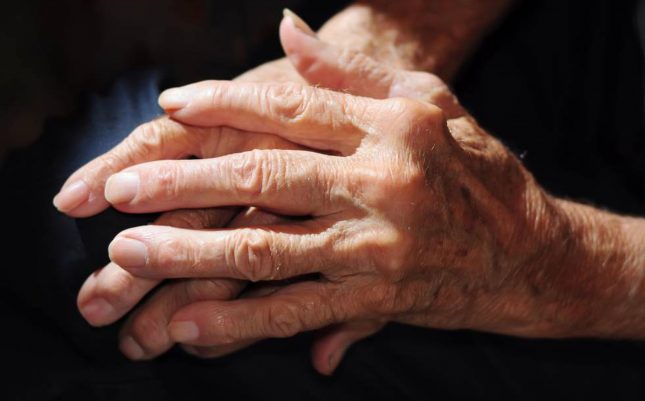
Osteoarthritis: the disease without a cure that affects the joints of 500 million people
September 12, 2022
A journey through mountains to make obsessive-compulsive disorder visible
September 12, 2022
Andrés Cervantes, who presides at the Paris Ocology Congress, believes that it is more important to offer expectations of complete healing.
In 2030 it will be possible to suffer from cancer and have a good expectation of healing with a 30% drop in mortality, the elected president of the European Society of Medical Oncology (ESMO), Andrés Cervantes, tells Efe, placing this hopeful panorama only in the countries of the UE.
Cervantes, who is head of oncology at the Valencia University Clinical Hospital and who participates as president-elect in the congress of oncologists that meets in Paris to 25.000 professionals, emphasizes that more important than reducing the incidence of cancer, which is increasing due to the aging of the population, is offer expectations of complete healing because cancer, he says, "is no longer what it was 20 years ago."
Cervantes affirms that tumors with a higher incidence such as lung, breast, digestive, gynecological or prostate cancer will benefit from this expectation of cure and, therefore, increased survival will have more effect on the global population than if they are tumors with a lower prevalence.
And the solution proposed by this oncologist and that will be debated these days at a conference with his European colleagues is advance early diagnosis so that the cancer can be treated at an early stage with less aggressive curative actions.
Universal blood tests to detect cancer
Cervantes explains that one of the conditions that has allowed progress in the survival of cancer patients is early diagnostic and emphasizes that before the imaging tests there would be these blood tests, which can detect with high reliability molecular disorders that indicate the presence of the tumor, and can help start treatment before the disease gives any type of clinical manifestation.
In this way, the treatment can be anticipated by one or two years, but more important than time, this oncologist emphasizes the importance of allowing non-aggressive curative action.
And he explains that this non-aggressive healing is what avoids surgeries that require limb or organ amputations or types of radiation therapy. "What we want," he says, "is not only that the cancer be cured but that it be cured in a way that does not represent a reduction in the patient's quality of life."
Climate change and lung cancer in non-smokers
Another new aspect to be debated at the congress will be the linking of the climate change and toxic air particles in lung cancer among the non-smoking population.
Cervantes explains that at the congress he will release a guide to How to address this exposure to toxic products in the future that cannot be eliminated and that have a clear impact on the increase in lung cancer.
And the thing is that Congress wants to present progressto change usual clinical practice and, according to this expert, the most effective approaches are cell therapy and immunotherapy.
Explains that the personalized cell therapies are very effective in blood neoplasms, leukemias and lymphomas, but very striking results are also seen in solid tumors, in different types of lung cancer, digestive system cancer and sarcomas.
Cervantes comments that in patients who receive immunotherapy the survival curve clearly improves, a situation that is also beginning to be observed in those with advanced disease who tended to zero and now have survival rates of 20 to 30%.
And with this optimal scenario for research, Cervantes considers that this year the message to convey from ESMO is that despite the pandemic, this edition will presentn important advances that will represent a change in the clinical practice of many types of cancer and it will be a significant step in improving the quality of life of cancer patients.
Source: Heraldo de Aragón





