

Health Tech Aragón is born, which seeks entrepreneurs in health technologies
5 July 2021
Magdalena Linge: "There are no patients more grateful than the elderly"
6 July 2021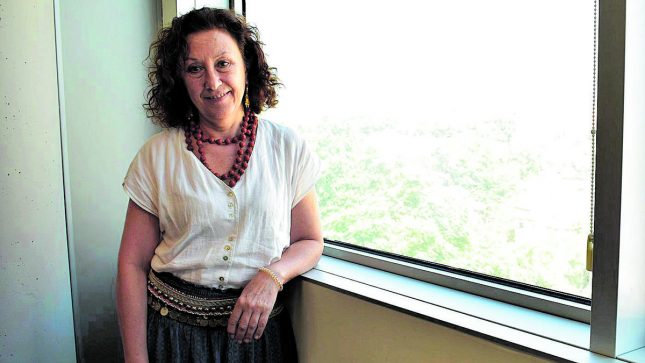
The doctor Concha Revilla, specialist in Preventive Medicine and Public Health, is in charge of the recently launched Commission for the Guarantee and Evaluation of Euthanasia in Aragon. Since October 2020, she is also the Head of Service of the General Directorate of User Rights of the Department of Health.
-I am not aware of any case, but we do know that there were people who were waiting for this law and perhaps they are thinking about it. Perhaps there has been a request, but that process begins with the doctor and it can take a month until it reaches the commission.
-What leads you to occupy this presidency?
-I have always worked in the Rights and Guarantees department, before becoming head of service, as a career civil servant. In this direction we coordinate the regulation of euthanasia at the regional level and the law indicates that the commission must be occupied by a head of service. That's where my profile comes in.
-You will have the last word on whether that right to die is granted or not. How do you address that issue?
-It is a very difficult decision and people cannot and should not think that this is coffee for everyone. There must be irreversible processes, which will be evaluated very thoroughly before guaranteeing that right. The law is very guaranteeing.
There is a part of society that will find it difficult, but I think the majority is in favor
Do you know patients who are going to request euthanasia?
-No, but I know of cases from people close to me who have considered it and if I saw myself in that situation, I would consider it.
-Do you think we are prepared as a society to talk about death and face this situation?
-I think that as a society yes, because Spain is not the first country where it is regulated. There are some other Europeans who have been with euthanasia for 20 years. There has been a great social demand in relation to this issue and as a consequence of it this right has been achieved. There is a part of society that does not admit it or that is going to cost them, but I think the majority is in favor.
-Should this law have come before?
-Yes, I would have liked it.
-Without a doubt, politics and ideology have influenced.
-Of course it is a norm that has been greatly influenced by politics. It has arrived when there has been a political consensus and this has been the best moment, so welcome.
-Many critics fear that this may be, vulgarly speaking, an open bar, but the process is very exhaustive and always with palliative care assessed beforehand.
-It is exhaustive and guarantees, because there is a responsible doctor and if the requirements are met, it is passed to a consulting doctor. Ultimately, it would come to the commission. In it we are doctors and jurists and the law sets out the criteria very clearly. There will be cases that will not enter and others that will, but that will have been checked at least three times. If there are discrepancies, there is a group of competent professionals in the commission to issue an objective opinion.
It doesn't matter if you live in the last town in the Pyrenees. The right is equal for everyone
They still do not have the register of objectors.
-I would love for the procedures to be completed as soon as possible. Statements from objectors are being recorded and received and, although there is no official record, they are taken into account.
-Do you think there will be many professional objectors in Aragon?
-I don't know what can happen. Some surveys carried out by the ethics committee indicated that there were many professionals who were in favor of euthanasia.
-And do you think there will be many Aragonese who are going to request euthanasia?
-We do not know. I know that estimates have been made that speak of a hundred people in Aragon, but that they have been made taking into account the experience of countries like Holland, which has had euthanasia for 20 years and that have nothing to do with Aragon. The assumptions have been expanding and society evolves, accepting new changes. Dutch society is not like Spanish society. Whether we have 100 or 40 patients, it will be a success for us to be able to begin the procedures to grant this right if it is founded and meets the requirements.
-Will the law reach the rural areas of Aragon under the same conditions as the urban areas?
-Yes, it doesn't matter if you live in the last town in the Pyrenees mountain because you will have a responsible doctor through whom to request the process. Euthanasia is for all Spanish citizens and must be administered under the same conditions in each case. If the professionals or the guarantee commission must travel, they will do so.
-What Ángel Fernández did with his wife is not allowed. Helping relatives die is penalized.
-That is not contemplated. The law allows euthanasia contact, but medical and sanitary. It must be applied by a professional or the patient self-administers it, under medical supervision.
-What message do you send to society regarding this issue?
That they trust the professionalism of the health workers who issue the reports. For the members of the commission this is a challenge. They are not going to charge for their work, it is something altruistic, and we do not know what is coming. There is an important personal effort of committed people who want to guarantee user rights





