

If you have coronavirus, you better have a headache
August 27, 2021
New models of mobile phones and smart watches can interfere with pacemakers and defibrillators
August 27, 2021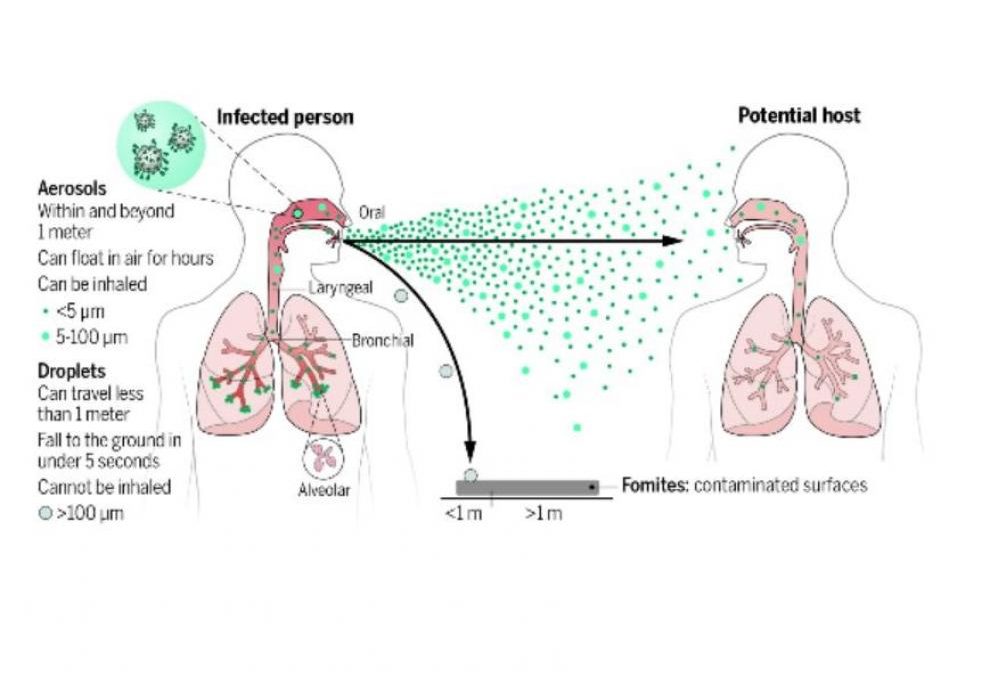
Traditional knowledge about the transmission of viral diseases needs a review, according to an international scientific team that includes José Luis Jiménez from Zaragoza.
Transmission of respiratory viruses. Respiratory aerosols are emitted when breathing, talking, singing, shouting, coughing, and sneezing. They can remain suspended in the air, travel more than one meter from the infected person and be inhaled.N. Cary / 'Science'
SARS-CoV-2, the virus that has caused the current coronavirus pandemic, spreads mainly by inhalation of aerosols over short and medium distances. But does the same happen with other respiratory viruses? After carrying out a new comprehensive evaluation of the scientific evidence on respiratory viruses, an international and interdisciplinary team of researchers, including Zaragoza scientist José Luis Jiménez, concludes that many others probably also spread this way. SARS-CoV, MERS-CoV, influenza, measles, and rhinoviruses that cause the common cold can spread through aerosols. In indoor spaces, these aerosols accumulate and remain in the air for hours, according to 'Science' magazine.
“Correctly understanding the transmission of Covid-19 and other respiratory diseases will allow people to better protect themselves in everyday situations. Those responsible for indoor spaces will be able to create better guidelines in work and leisure environments both during and after the pandemic,” says José Luis Jiménez, an Aragonese aerosol researcher at the University of Colorado in Boulder (United States).
With the increase in infections caused by the Delta variant and the increasing cases of infection in vaccinated people, many governments and national disease control agencies have renewed the rules for wearing masks in public indoor places. As the 'Science' article concludes, the universal use of masks is an effective and economical way to block aerosols that contain viruses, however, “we must use multiple simultaneous defenses against transmission, such as vaccination, masks and ventilation. “It is unlikely that a single strategy will be effective enough to eliminate the transmission of emerging SARS-CoV-2 variants,” says Seema Lakdawala, a virologist at the University of Pittsburgh in the US.
Ensuring sufficient ventilation and filtration rates and avoiding air recirculation help reduce transmission by aerosols containing infectious viruses. “Measuring CO₂ with portable sensors helps verify if ventilation is sufficient and the implementation of portable purifiers (HEPA or other lower cost ones) also helps reduce the concentrations of exhaled aerosols that may contain viruses,” adds Jiménez.





