

Antonio Muñoz: “38 seconds are to blame. I have told them many times… I hope with this I can save a life”
November 22, 2021
Children from 3 to 6 years old are wanted to participate in two childhood obesity studies that stopped the pandemic in Zaragoza
November 22, 2021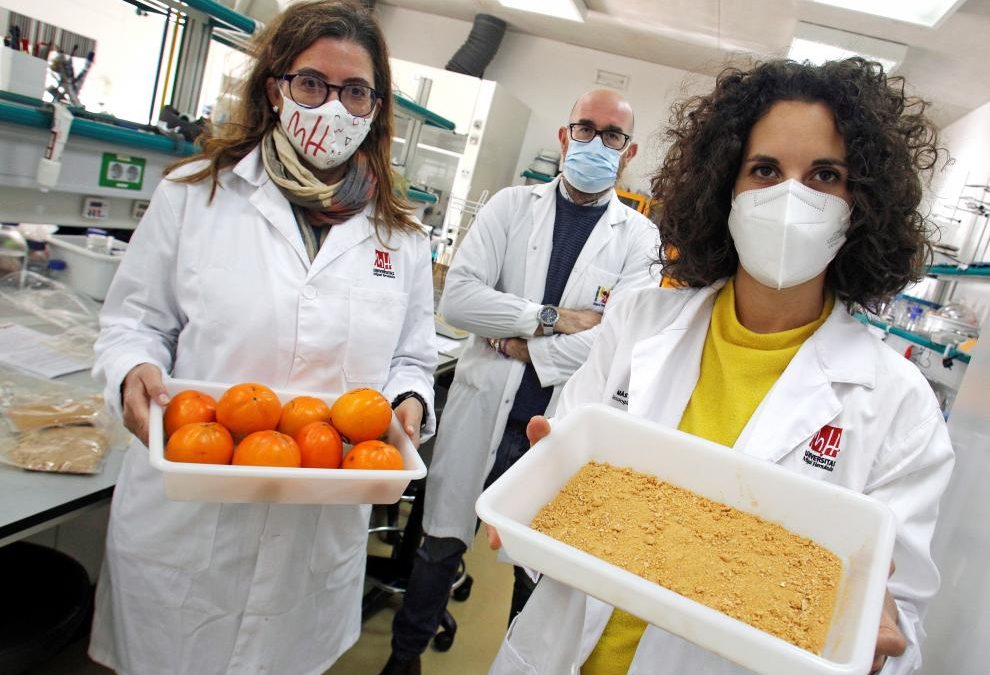
This novel flour is a source of dietary fiber and sugars of natural origin from the skin and pulp left over from the production of persimmon juice.
An new persimmon flour is incorporated into the ingredients of the food industry with antioxidant, coloring, thickening and nutritional properties for the preparation of yogurts, pâtés, sauces, pastas and even pastries.
Researchers from the Industrialization of Products of Animal Origin (IPOA) group of the Center for Research and Agri-Food and Agro-Environmental Innovation (CIAGRO) of the Miguel Hernández University (UMH) of Elche have developed this novel flour on the Desamparados campus, in Orihuela, which is a source of dietary fiber and sugars of natural origin from the skin and pulp leftovers from the production of persimmon juice.
This natural surplus is dehydrated and ground in two processes with little technological complexity and relatively low cost to obtain a powder with numerous advantages for the food industry. foods due to its "high content of bioactive compounds," as scientist Raquel Lucas González told Efe.
Persimmon flour contains a high amount of carotenes (with provitamin A activity), polyphenolic compounds (antioxidants with anti-cancer properties) and fiber, and different studies have shown that regular consumption of this fruit helps prevent diseases cardiovascular, to reduce blood cholesterol and to maintain stable glucose levels. Ciagro researchers have successfully incorporated this flour in the production of pasta and pâté.
The pasta with persimmon flour required less cooking time than traditional pasta and, in addition, its glycemic index was reduced while in the case of the pâté with persimmon its reddish color increased, which was appreciated by the consumers surveyed and the flour exerted protection to fats against oxidation.
Due to its special characteristics, It could also have application in bakery or confectionery products. as a substitute for wheat and as a source of natural sugars, or even in sauces for their thickening qualities.
Furthermore, the use of these waste or "co-products" (the skin and pulp left over from making the juice) eliminates a headache for juice manufacturers since, approximately, for every kilogram of persimmon, 500 grams end up in juice and the other half in surplus, with which one often does not know what to do.
It so happens that this leftover skin and pulp must be managed with certain urgency because it ferments and this requires transportation and storage costs in waste management centers. "The flour is obtained through a simple process that takes just over 24 hours that does not require too much investment, does not generate waste and provides economic value", highlighted Lucas González.
The persimmon has experienced a real 'boom' in Spain since the beginning of the 2000s and is normally sold both fresh and in juices, either alone or mixed with citrus fruits and mango. Since then, Spain has become the second producing country, only after China.
Under the scientific direction of Juana Fernández López and Manuel Viuda Martos, This new ingredient (persimmon flour) could be well accepted in the market both as a natural food coloring -due to its orange color similar to saffron-, as a water binder or thickener, as a natural antioxidant and even as a source of nutrients.
In the words of Juana Fernández López, this flour is compatible with a "sustainable industry" that does not emit waste and the so-called "circular economy" because it reintroduces a surplus that would end up being discarded into the food industry.
The persimmon has been one of the fruits subject to research by this IPOA-CIAGRO group, which also works on the valorization of other co-products of the agri-food industry such as citrus fruits, tiger nuts, dates and pomegranates.





