
Old normal for science
11 May 2020
Johnson & Johnson plans to produce 1.000 billion coronavirus vaccines next year
11 May 2020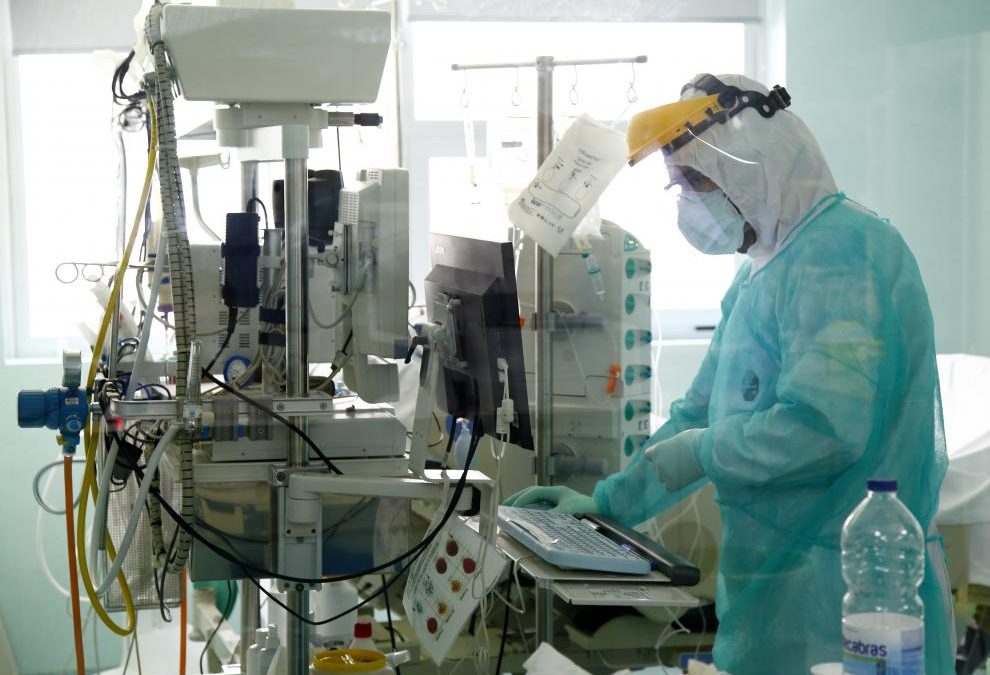
The high percentage of infected professionals represents 13% of the accumulated cases. Since the beginning of the pandemic, the unions have demanded more protection and testing materials for the entire workforce, some 21.000 people.
The coronavirus crisis has left 6.575 infections in Aragon to date, of which 866 have occurred among health personnel, which represents 13% of confirmed positives. By province, 644 correspond to Zaragoza, 94 to Huesca and 128 to Teruel. Added to the number of those infected by Covid-19 is another painful fact: the deaths of a Primary Care doctor at the San Pablo health center and a cleaning worker at the Miguel Servet hospital.
Health workers, around 21.000 in the Community, are on the front line in the fight against the pandemic, and have been the group that has endured the highest number of infections. Added to the initial uncertainty and the need to act quickly, given the unstoppable epidemiological evolution, was the lack of protective material, especially masks and PPE. The shortage was such that staff had to make gowns using garbage bags. The unions even denounced the regional Executive demanding more resources.
They also asked to expand testing to the entire group, not just those who had symptoms, a request that the Government of Aragon began to carry out a few days ago. The Health Manager, Javier Marión, explained on Friday that the tests, of a voluntary nature, are being carried out progressively.
"There has been a lot of lack of protection and it was not given the importance it had"
María Teresa Escuder, a doctor at a nursing home in Zaragoza, began to feel unwell on March 27. That same day her husband, Jesús Ángel Naudín, a family doctor, already had some cough. Even though he was virtually asymptomatic, the PCR test confirmed that he had coronavirus. He spent the illness isolated at home; María Teresa, however, was admitted to the hospital: "I spent three days quite badly, because you feel alone and your head begins to spin. The nights are eternal."
The high numbers of infections are "worrying": "There has been a great lack of protection and the seriousness of what was going to arrive was not known to be conveyed. It was not given the importance it had."
"My biggest concern was that my children would end up infected and with symptoms"
Reconciling family and work life is difficult, but doing so in the time of the pandemic is even more complicated, especially when the parents are essential workers and the children do not have school." Raquel Ridruejo is an intensivist in the ICU of the Hospital Clínico de Zaragoza Her husband fell ill and required hospital care. After seven days in isolation, she had to return to work: "It was a stressful moment, because legislation forced me to return to the hospital with my husband admitted and my two children in my care." Then she started with a fever. She faced pneumonia at home to care for the children. "We are working with this germ every day and it is impossible to know if it has affected us in the hospital, at home, in the supermarket... In the ICU. "We take all the measures to prevent contact, but when we get home we are people and we let our guard down," he says: "My children are very used to wearing a mask, but my biggest concern was that they would also end up infected and with symptoms."





