
FÉLIZ ARRIZABALAGA, MANAGER OF ATADES, ATADES, ARAGONESE GUARDIANSHIP ASSOCIATION OF INTELLECTUAL DISABILITY
28 February, 2022
What is lymphadenopathy? The most common side effect of the third dose of the covid vaccine
2 March, 2022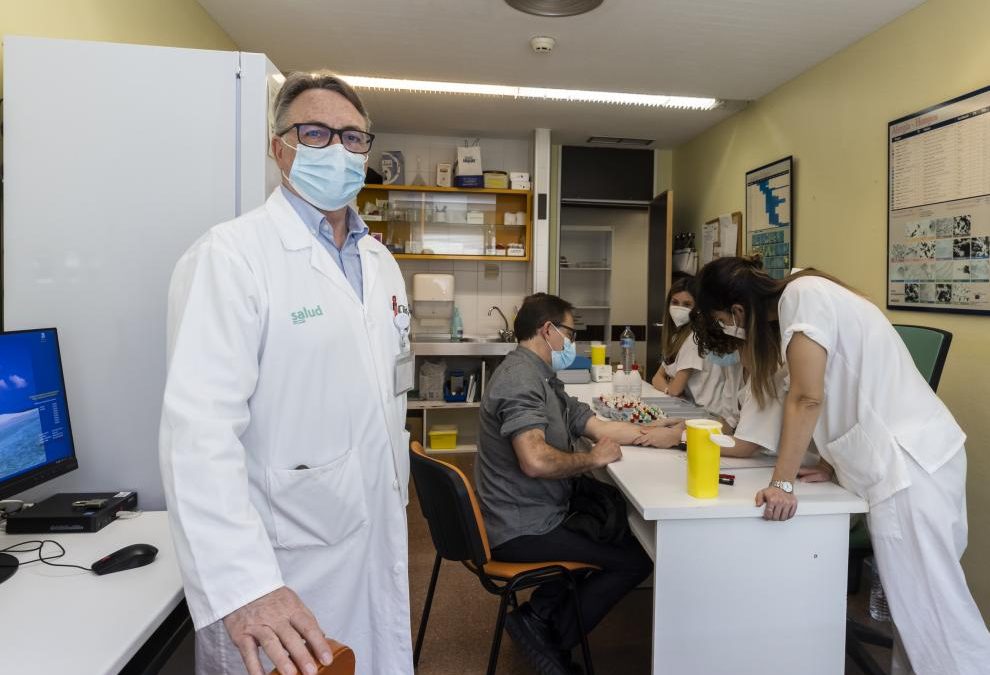
Dr. Carlos Colás, head of Allergology at the Zaragoza Clinical Hospital, warns that there are "important" alterations in the symptom schedule of allergic patients due to climate change.
meteorological alterations of recent months, mainly the lack of rain, is affecting allergic patients in a "very important" way.
"We have an abnormally long anticyclonic weather during the winter months and February, and This increase in temperature and sunshine has greatly favored the pollination of Cupressaceae, which are causing a great impact on patients allergic to these plants because very high concentrations of pollen are reached"says Dr. Carlos Colás, head of Allergology at the Hospital of Zaragoza.
This is not the case in the case of cypress or the family of Amarantaceae (popularly known in Aragon as 'capitanas'), whose pollination is favored by drought and lack of rain. "There are important changes in the timing of patients' symptoms due to weather changes, that is, climate change. And if this anticyclonic weather persists, we do not know how long the symptoms can last...", adds this specialist, who also points out another curious fact that they have observed in consultation. "The anticyclonic weather of recent months is also favoring the pollination from other plants They usually do this process later, like the salsola and other species that develop more easily in arid and dry environments. During these months of high temperatures and low rainfall, there are patients allergic to these plants who are already beginning to notice their symptoms, which It is completely anomalous, because they didn't start to notice it until May," he says.
Allergy in times of coronavirus
Among the most characteristic symptoms of pollen allergy is allergic rhinitis. In this sense, Dr. Colás highlights the benefits that the regular use of masks to avoid the spread of covid, a measure that after recently rising outdoors It is also having an impact on allergy sufferers. "This year, by relaxing the mask wearing measures a little more, especially outdoors, and having so good time, which makes us spend more time with the windows open, there is increased ventilation in buildings... All of this causes the exposure to pollen in susceptible patients to be a little higher than usual, which is why they are accusing that, On the one hand, there is a higher concentration of pollen; and on the other hand, they are exposing themselves more. The result is that patients who had had symptom softer, This season they are having quite intense ones. Many already have their medication prepared and programmed to be used if necessary, and others who debut in our consultations or who traditionally had almost gone missing are the ones who are going to start new treatments, as always. entering the system through Primary Care"explains Dr. Colás.
At this time, he points out, the waiting list for this specialty has been reduced "significantly" because they have not stopped seeing patients during the pandemic. Currently it is less than one month for preferred patients and two and a half months for those who are not.
More allergic children
Pollen allergy has skyrocketed in recent years in the child population, so much so that, according to this specialist, it is already a "classic and unstoppable trait" in children. "Practically between the 5 and 15 years the prevalence exceeds 30% of schoolchildren in that age group. If you go to a class, you almost end up counting the children who do not have allergies sooner than those who do," comments this doctor.
This does not mean that among adults the incidence that is causing the disease also draws the attention of specialists. cypress. "It is curious that this pollen allergy is appearing in people over 50 years of age., something that was not common before. The development of symptoms at an advanced age is also not a limitation for the use of Vaccines, whose results can be very good," he says.
The most important thing, in any case, is know how to recognize the symptoms to be able to treat them as soon as possible and, in the "most intense" cases, put yourself in the hands of a specialist.
Keys to differentiate allergic rhinitis from covid
The pandemic has caused some symptoms that have in common Covid and allergies can be "confused" or overlooked in cases of loss of smell or allergic rhinitis. To differentiate one pathology from another, this specialist points out what to look for:
- Pay attention to the loss of smell. La Nasal obstruction can affect patients with severe allergic symptoms and produces a significant reduction in smell, which can confuse patients. Dr. Colás emphasizes that The loss of smell, when it is partial, is not exclusive to covid, but it may be motivated by other nasal pathologies such as sinusitis, which is one more complication of its own allergic rhinitis.
- Intense itching of the nose and eyes and liquid mucous discharge. One of the most significant symptoms to differentiate an allergy from a cold or a flu infection coronavirus is the intense itching of nose and eyesTogether with tearing y very repeated sneezing. Furthermore, it is also characteristic of allergic rhinitis that mucous secretion is completely liquid (more water than mucus), "especially if it occurs in this period of time, as in previous years, or if there has already been an allergic episode, even if it is mild."
- If the patient gets worse on sunny and windy days. The weather can also give some clues. If a patient becomes worse on sunny and windy days and notice greater affection outdoors or when you open the window to ventilate indoors, "all these data also make us suspect that it is an allergic rhinitis and not a diagnosis of covid," points out this expert, who recommends that allergy sufferers continue using the mask outdoors, especially those patients who have intense symptoms or who live in garden areas, with a lot of vegetation or the presence of hedges and cypresses. "Many patients have benefited from using the mask outdoors, and It would not be outrageous to get used to those already designed for pollen allergies, with a unidirectional filter, at this time of year., which are much more comfortable," recommends this allergist.
Source: Heraldo de Aragón





