
Juan José Gómez Cadenas: "We want to electronically detect the coronavirus"
October 5, 2020
Aspanoa calls for 75.000 euros in aid for childhood cancer research
October 5, 2020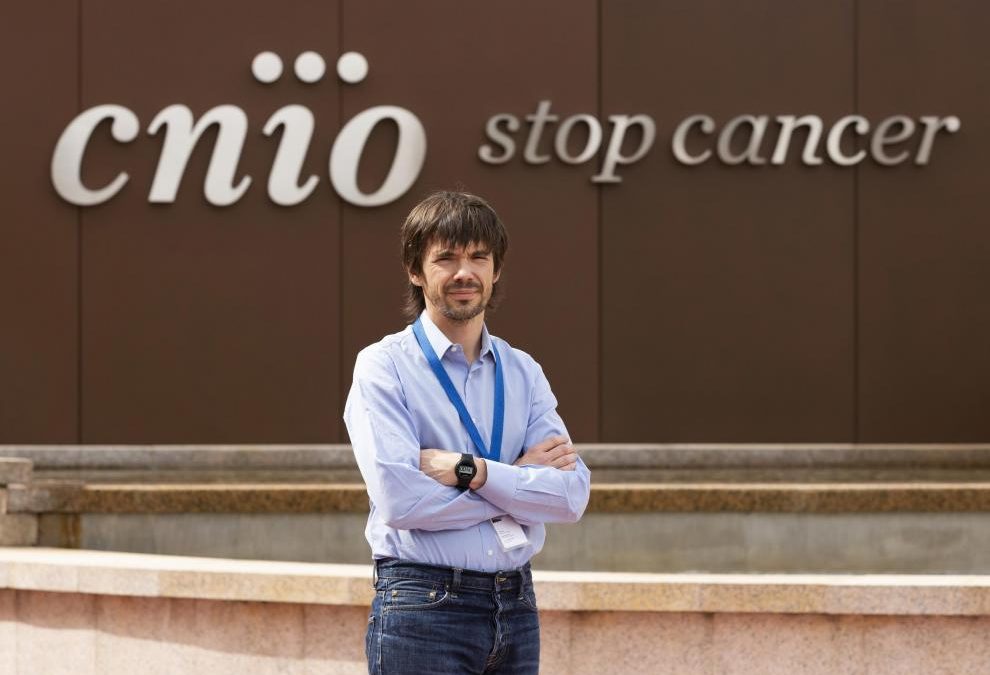
He is not yet 40 and is a world leader in the fight against oncology. Manuel Valiente (Zaragoza, 1980) explains in this interview how the pandemic has affected his research into brain metastasis.
Manuel Valiente (Zaragoza, 1980) has not suffered the effects of the coronavirus himself, but he has suffered in his experiments on brain metastasis at the National Center for Scientific Research, based in Madrid, a project for which he was awarded the Consolidator Grant. European, endowed with two million euros. From what has been experienced in these months, the impressive reaction of scientists stands out and the politicians in charge of managing the health crisis are suspended. Zaragoza's favorite son since 2015, he continues to visit his family and friends when possible. Although his time is so precious that he can save lives, he agrees to talk by phone with HERALDO.
Just before the coronavirus crisis broke out, last December, he was awarded prestigious European aid to the brain metastasis research project he directs. What has happened in these months?
The aid itself with the financial endowment began to arrive last July, but we have been working on this for a long time. The fact that the pandemic has occurred has had and has an impact on everything we are doing.
I imagine for the worse.
Clear. There is not much good for now; The only positive thing is that those who did not know what we scientists did, when this unexpected situation arises where everything is questions, has discovered that those who shed light on this are the scientists who investigate this type of topics, and in fact they had already warned that this could happen.
In recent months, has there been a setback in your research due to the effects of covid-19?
For example, since March the laboratory has been practically closed, except for essential functions, we have not been able to do any experiments on our projects. Until June we have been unemployed, we have had to reinvent ourselves. As scientists, our daily life is to be physically in the laboratory to do experiments: from growing a plasmid to detect a gene in the cells, to taking a piece of brain with a metastasis and applying a technique that allows us to see the tumor cells in green. We do all this to generate images, or make some quantifications, and analyze that data. We have had to focus on data analysis. But if you don't generate new data, there comes a time when there is nothing left to analyze.
"The only good thing about the pandemic is that society has discovered that those who shed light on the unknown are scientists"
And this is a brake.
Of course, in addition, we had to stop the experiments that were underway and could not be finished on March 13 and, therefore, they were lost. These are complicated experiments, because we work with animal models that develop metastases, so if you were studying the growth of metastasis in the brain and testing a potential therapy, or looking at genes that we believe are important, we had to stop it.
For example, in mice?
Of course, we had to sacrifice them early and, therefore, the experiment does not reach the point where you can evaluate the result, so that information is lost. This experiment must be repeated, and this implies using more animals, using more medication, or generating the cells that we inject again, in addition to the time of the person who is doing that experiment.
That is a major setback.
Another thing that has happened is that, in addition to the laboratories of each group, the CNIO has some research support units that are common areas where access by personnel had to be reduced to a minimum, including those who care for the mice in the animal facility. So it was necessary to reduce the number of mice we worked with. They are mice that have modifications in their genome because we study certain aspects. After this reduction, you have to expand that mouse colony again. All that is time and it is money. Of course it has had an impact, in fact in the laboratory we continue with strong restrictions to be able to work, between 50% of the capacity, which reduces the speed by half.
Can we talk about a setback of years?
It is not known, because in the field of research, the least expected day you can find something interesting. An a priori project can take you three years or it can take you a lifetime. It is very difficult to plan. What is objective to say is that the pandemic, as it has for the entire world, has meant a significant stop and brake for everything at the research level.
"If we want to take off as a country and not continue living off a single sector, we must invest in science"
As a graduate in Veterinary Medicine, you will have closely followed how the fight against the coronavirus has been faced. What is your assessment of how he is acting?
I think it is very remarkable, on the one hand, the absolute capacity of the scientific world to respond to a problem of global magnitude. There are many initiatives underway to try to share data as soon as possible, to get to work on different aspects. Steps have been taken in terms of treatment and, of course, the speed at which the vaccine is taking is amazing. Work has been going on for six months on a virus that was absolutely unknown until then and we are talking about the fact that in 2021 there may already be vaccines.
But…
But, on the other hand, absolute disapproval of the people who have the capacity to govern cities, countries... I'm not talking about anyone specifically, at the national and international level, there are those who have done it much better or worse. But I think there has been an absolute lack of foresight and that the rulers should be people who stand out for their ability to see and listen to people who know what they are saying at a technical level. They should have put in place other types of measures, even before the pandemic broke out.
What do you think have been the biggest mistakes, so as not to repeat them?
I think that the warnings that had been given that a pandemic was highly probable (there were diseases before that did not become a pandemic but raised the alarm) were not taken into account because it is not like an earthquake that you see, it is something silent, which suddenly is in a town in China but the following month it is already spread throughout Europe. I believe that this must be taken seriously and a health crisis system must be created that is prepared to react in a more global and consensual way to this type of problem, for me it is the fundamental thing.
-There are scientists who assure that this second wave has no justification. Do you agree?
-I want to make it clear that, on a scientific level, I am a researcher who dedicates myself to studying cancer. What I can say about epidemiology or public health or virology... well, honestly I know what I know, but I don't know everything. I am not a renaissance man, far from it.
"Many people, for the first time, are thinking that research is necessary and important"





