
Cambridge scientists rejuvenate a woman's skin by thirty years
11 April 2022
Manuel Valiente's team from Aragon finds a way to increase the effectiveness of radiotherapy against brain metastases
12 April 2022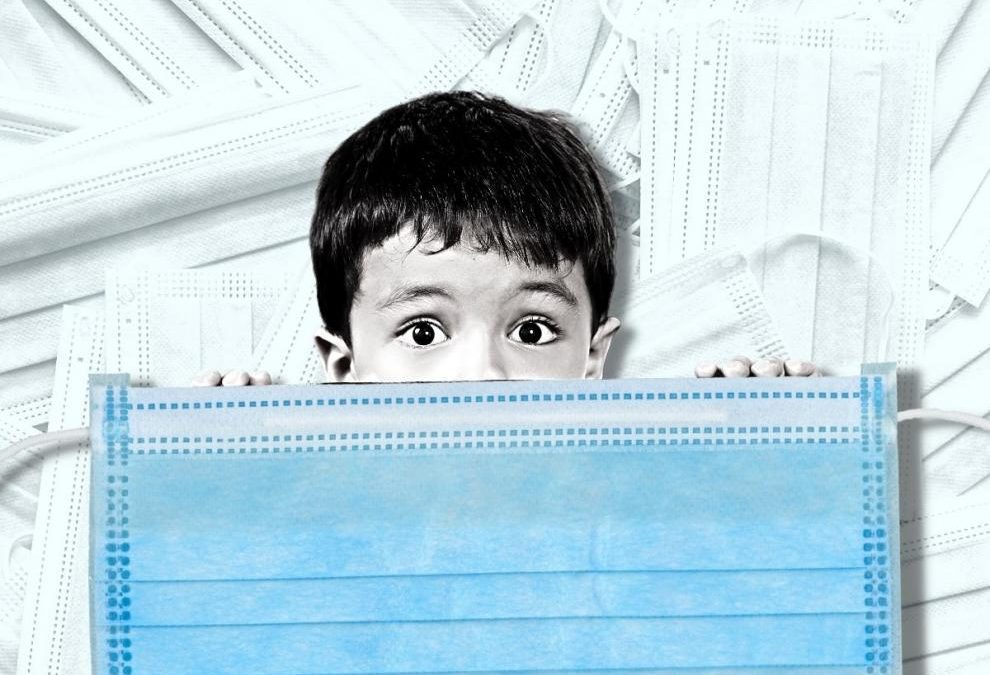
The upcoming removal of the obligation to wear this protection indoors may aggravate some kids' fears of revealing their face, especially at a time of physical changes.
masks They are on their way to remaining a residual complement for the current spring/summer season. Although the infections have not disappeared, its use is decreasing in outdoor spaces, and from next day 20 It will no longer be mandatory indoors as well. -except in public transport and health and social-health centers-. This milestone It will be a liberation for many, but for others it may be a problem.
Children and adolescents, like the rest of the population, have had their faces semi-covered by masks almost permanently for two years now in the spaces they share with each other. This element has acted as a 'protector' for some kids with self-esteem problems, or for those who are not satisfied with their physical appearance. Although removing the mask (obviously) is not mandatory for anyone, the fact that its use decreases can cause - in fact, it is already doing so - a feeling of 'nakedness' in some children and young people.
Antonio Reloba, social educator and member of the board of directors of the Aragonese Association of Psychopedagogy, confirms that “The fear of showing one's face is already being detected among adolescents”. “During this time they have had it covered, and they have been able to hide those usual imperfections on her face, such as the pimples typical of that age,” she points out. According to her, these reluctance are accentuated “in those who have low self-esteem, or who are not comfortable with their body.” “They prefer to be with the mask because they are safer. Taking it off is a kind of nudity. Now, with the good weather, parts of the body are being shown, but with the mask there is reluctance because the face is a delicate aspect,” she points out.
In schools and institutes they have detected these fears and insecurities. Especially in secondary schools. Eva Bajén, president of the Association of Directors of Institutes of Aragon, points out that she hopes it is not widespread, but adds that they will be “very expectant” about the reaction of the kids, because “this type of fear is common among adolescents.” ”. “A year ago, when we asked them to record videos at home for some subject, there were students who did them with a mask. "That's for a reason.", Add. In the courtyards, where they have not been mandatory for two months, masks are still seen covering faces “in a general way,” he points out.
For his part, Ricardo Civera, president of the Association of Early Childhood and Primary Management Teams of Aragon, also observes that the mask survives in the playgrounds, although in his case he attributes it to the fact that “it has taken root as a prevention tool” against covid. . “There are social and family conditions, there may be children who have suffered the death of a family member, or who have had the disease... They have become accustomed to wearing them, they don't even think about it anymore. Sometimes they even take it to their own home.” Sandra Sánchez points out that It has been studied that habits for almost anything “are acquired after 28 consecutive days of something.” “We have been with this for two years”, he points out, and also “for many children their concept of life is already with a mask.”
The fear of infections... and physical contact
The fear of uncovering one's face for aesthetic reasons is combined with the fear of contagion. This psychologist observes that there is “fear and insecurity.” “Interestingly, the things that give us security also generate a lack of confidence in us. When we are secure with something external, we have less confidence in our health,” she explains.
“We have placed so much emphasis on the mask from the educational world and from homes that we have created a kind of programmed hypochondria, a small 'psychosis' (so, in quotes) with this matter," adds Antonio Reloba.
The psychopedagogue also adds another change that with the return to normality may be worrying: “The return to personal contact may be for some even worse than the removal of masks.” As he points out, “we are social beings” and “we need personal contact with others,” but the return of kisses and hugs “at these ages, when groups and friendships are created, is especially important.” . “For adults it is easy because we have done it all our lives, but For people who are in training, it is two years in which avoiding that contact has become a habit”, Sentence.
Source: Heraldo de Aragón





