A new computer tool uncovers 130.000 unknown viruses
27 January 2022
Moderna begins human trials of an HIV vaccine
28 January 2022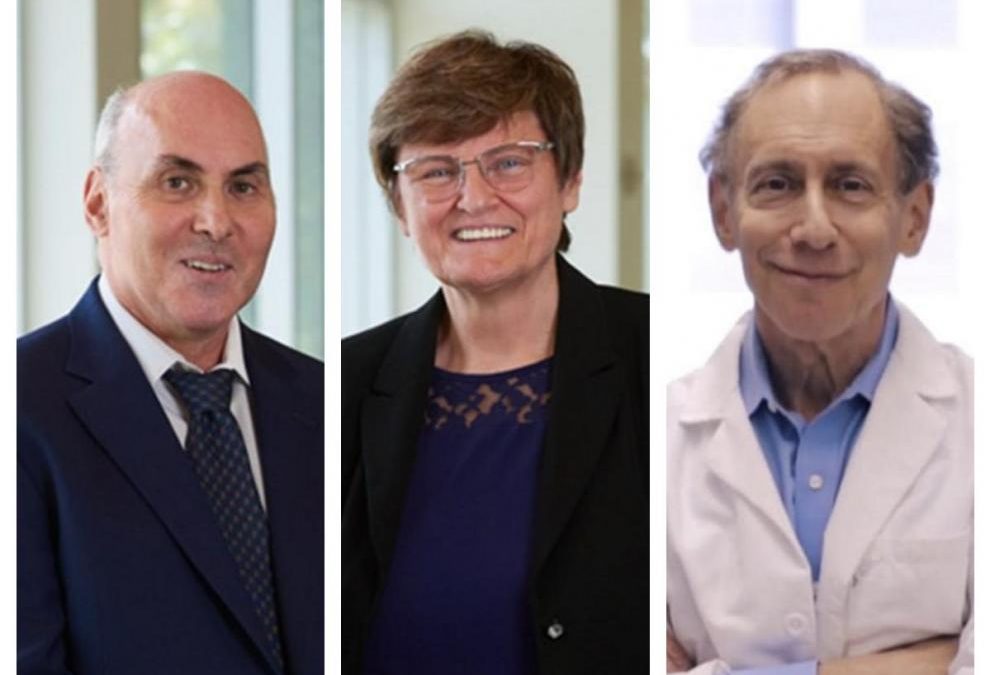
Katalin Karikó, Drew Weissman and Robert Langer discovered the therapeutic potential of messenger RNA and how to transfer it to the body.
The BBVA Foundation has awarded Katalin Karikó, Robert Langer and Drew Weissman for creating two technologies that, combined, have made messenger RNA (mRNA) therapies possible, a technology that causes the body's cells to produce proteins to prevent and treat diseases.
Although the most immediate and outstanding application derived from the work of the winners has been the "timely and rapid" development of vaccines against the SARS-CoV-2 virus, the jury has highlighted that vaccines are just the beginning of a technology "called to extend to other therapeutic areas, such as autoimmune diseases, cancer, neurodegenerative disorders, enzyme deficiencies and other viral infections," the minutes underline.
The first step towards the creation of messenger RNA therapies was taken by Langer, a professor at the Massachusetts Institute of Technology (MIT), by demonstrating that it was possible encapsulate nucleic acid molecules in nanoparticles -like RNA, acronym for ribonucleic acid-, and transfer them into the body.
Later, Karikó and Weissman, professors at the University of Pennsylvania (United States), discovered how to modify mRNA molecules to use them as therapeutic agent without the human immune system destroying them.
Karikó and Weissman discovered how to modify the mRNA molecules for use as a therapeutic agent, and Langer came up with the safe carrier. "The two advances are essential", summarizes Óscar Marín, director of the Center for Neurodevelopmental Disorders at King's College London (United Kingdom) and secretary of the jury.
The concept of RNA therapy is based on the fact that it is possible to design RNA 'on demand' in the laboratory, so that it contains the information necessary to manufacture any protein, either a therapeutic compound or a fragment of a virus, as happens in vaccines for Covid-19.
In the case of mRNA vaccines against the coronavirus, they contain RNA with instructions to make the S protein of SARS-CoV-2, which is what acts as a key to enter human cells. When injected, it induces a defensive response in the body like the one the body generates naturally to protect us from an infection.
These vaccines are not only produced faster than traditional ones, but they can adapt more easily to virus mutations and are theoretically safer, since no live virus is involved in the process, and no genetic material enters the nucleus of the human cell.
After hearing the jury's ruling, Katalin Karikó recalled that "for 40 years not only did I not receive any award, but I did not receive any financial support for my research, so this recognition is a great honor", and has encouraged young people to dedicate themselves to science "because it is exciting".
Karikó began working with synthetic RNA in the late 1970s at the Szeged Biological Research Center in Hungary, his native country, and in 1985 he emigrated to the United States, where he continued his research at the University of Pennsylvania.
Years later, he began collaborating with immunologist Drew Weissman, from the same university, and in 2005 they both achieved their first breakthrough: discovering how to modify RNA so that the human immune system cannot detect it.
And although the most immediate therapeutic result has been the vaccine against covid-19, Karikó is convinced that "soon" this technique will allow the treatment of cardiovascular or autoimmune diseases, or make vaccines against HIV, malaria or cancer, areas where clinical trials are already being carried out.
Furthermore, "it is a therapy especially cheap Because medicine is produced in your own body, you yourself become the medicine factory. The applications are endless," highlights the researcher.
Weissman, in fact, is already working on the possible development of gene therapies for sickle cell anemia, a disorder with which 200.000 people are born each year. "We hope to be able to treat them with a single injection of mRNA that will act on the bone marrow stem cells, repairing their genetic defect and curing the disease. This will transform medicine."
For his part, Langer recalled that when he demonstrated that it was possible to encapsulate large molecules, no one thought it was possible, so much so that "the first nine research projects I applied for were rejected, and I couldn't get a job in a chemical engineering department." , which is my discipline."
Over time, Langer's technology has proven to be "absolutely critical" for mRNA therapies and today he is one of the most cited scientists in the world and one of the founders of the Moderna company.
Source: Heraldo de Aragón