Midwives and families, on extending leave for the loss of a baby: "It would be a very great advance for women"
October 26, 2021
ADHD goes unnoticed in girls and is overdiagnosed in boys: "The sad thing is that we depend on the teacher on duty"
October 27, 2021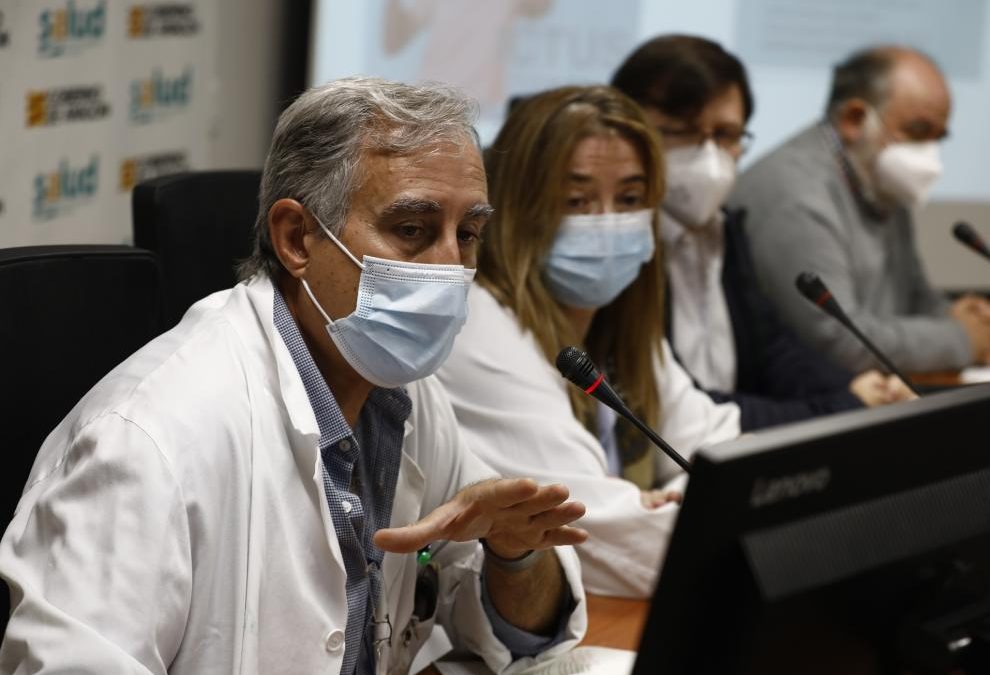
The Aragon Stroke Association (Aida) has carried out 10.441 treatments in its neurorehabilitation center, almost 2.000 more than in 2020.
In Aragon, a total of 2020 strokes occurred during 2.070 and the objective of neurologists is to reduce them by 20%. "90% could be avoided if no one had hypertension, nor smoked, nor were sedentary... Therefore, with 20% we consider that a great job would be done," said Javier Marta, coordinator of the Hospital's stroke unit. Miguel Servet University of Zaragoza. In this sense, he has emphasized that while mortality from this cause in people over 70 years of age is decreasing, In the population from 50 to 70 it does not decrease, and even increases. "One of our priorities is to work on stroke at a young age and in the middle ages of life," he explained.
Taking into account that age is the main risk factor and that it is not avoidable, we will work especially on two of the avoidable elements: hypertension and atrial fibrillation; since smoking is indeed on the decline. "Older people age more healthily than the average age," has pointed out, in relation to the fact that the people who now They are 50 years old, they are more sedentary, obese and have less perception that "what they sow now, they will reap in 70 years". "We want to avoid that wave of strokes that will arrive in 15 or 20 years," he concluded.
The coordinator of the stroke unit at the Lozano Blesa University Clinical Hospital, Carlos Tejero, has pointed out that the important thing is to act quickly and, therefore, he has placed emphasis on advances in new diagnostic tools "that through clinical, analytical or imaging markers allow us to more reliably detect patients with stroke or risk of suffering from it." The future, he stated, also lies in genetic studies. Regarding resources, Dr. Marta has indicated that they are pending an expansion of the Servet stroke unit, which was inaugurated in 2007 with five beds and would now need between three and five more. "Now there are more treatments and patients than then," she explained.
Until September of this year, the Aragon Stroke Association (Aida) has carried out 10.441 care in its neurorehabilitation center, which is 1.847 more than in 2020; a complicated year due to the pandemic. In fact, Tejero recalled that during confinement there was a "very significant" decrease in acute strokes. Besides, The risk of contagion forced us to "modify" the way we act in these centers, However, he has pointed out that currently Pre-pandemic attention has been recovered.
Since 2009, Aragón has had a Stroke Care Plan (PAIA) with the aim of improving care in cases of acute stroke. However, Aida insists that to avoid premature deaths and consequences that generate situations of dependency, it is essential to disseminate its information among the population. First manifestations: alterations in speech, loss of strength in the extremities or loss of vision in one or both eyes are warning signs that should lead the patient or those around him to seek urgent care.