

Is the dreaded anisakis easy to avoid?
28 June, 2021
A mask can detect covid-19 infection in 90 minutes
29 June, 2021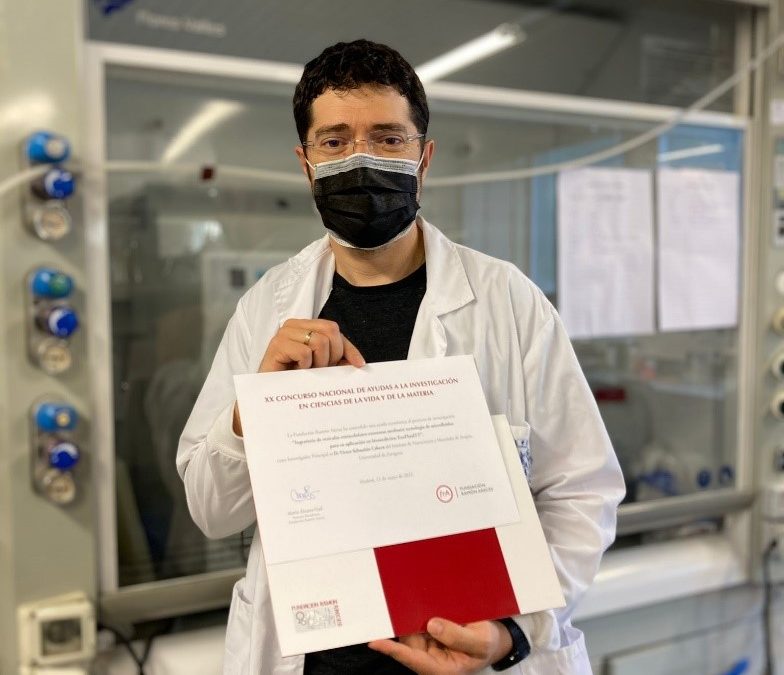
- The researcher, Víctor Sebastián, from INMA and Ciber-BBN, leads the ExoFLuidTT project, based on microfluidics technology, which seeks to design microfactories capable of generating nanovehicles, which allow the administration of drugs in a targeted manner.
- The project has obtained a grant of 112.000 euros from the Ramón Areces Foundation for its development in three years
Victor Sebastian Cabeza, researcher at the Institute of Nanoscience and Materials of Aragon, INMA, a joint center of the CSIC and the University of Zaragoza, and the Ciber-BBN, has obtained a aid to research in the XX National Competition of the Ramón Areces Foundation in the category of Life and Material Sciences, which the institution calls for with the aim of promoting the Spanish scientific research of excellence on topics of special social relevance. Sebastián has received funding from €112.000 for the development in 3 years of nanovehicles of interest in Biomedicine.
The project titled “Exosome-extracellular vesicle engineering using microfluidic technology for application in biomedicine: ExoFluidTT” aims to development of new procedures that allow improving the selectivity and efficiency of therapeutic treatments, such as, for example, cancer. The nanovehicles considered in ExoFluidTT are called exosomes and are nanometric-sized extracellular vesicles, produced by the patient's own cells and whose structure and composition is so complex that their production by synthetic procedures is not possible. The application of these vesicles is creating a revolution in cellular treatments, since they make it possible to address the problems in which artificial nanovehicles fail. However, its clinical use is complex, due to the difficulty of its production, isolation and reconfiguration for the treatment of diseases.
The ExoFLuidTT project aims design an innovative platform based on the use of exosomes for application in targeted therapies. The basis of this innovative platform is based on the use of microfluidic technology to obtain exosomes from the patient's cells.. These exosomes would be isolated for reconfiguration aimed at obtaining nanovehicles that allow targeted drug administration. This microfluidic technology consists of a complex system of pipes and micrometer-scale reactors (similar to the dimensions of a human hair) that mimic the efficient network of blood capillaries that the human body has, so that, in an efficient way, they can be manipulate fluid volumes on the picoliter scale (one millionth of a drop).
This project is based on the Víctor Sebastián Cabeza's previous experience in the development of microfluidic technology for multiple uses in Catalysis, Materials Engineering and Nanobiomedicine, as well as the experience of his work team, ExoFLuidTT, in the use of exosomes as therapeutic nanovehicles. This team has recently published a study where they were successfully able to develop exosomes modified with palladium nanosheets for the selective activation of prodrugs in-vitro and selectively treat tumor cells. The results of this work were published in the prestigious journals Nature Catalysis and Nature Protocols and open a therapeutic avenue that can have a great social impact.
As Víctor Sebastián tells us, the support received by the Ramón Areces Foundation allows us to finance projects that, although they are very complex, have great social significance.
The project work team, led by Víctor Sebastián, is made up of Manuel Arruebo and Jesús Santamaría, all professors at the Department of Chemical Engineering and Environmental Technologies at UNIZAR, and researchers at INMA, IISAragón and Ciber-BBN. Collaborating with this team are researchers Silvia Irusta (INMA/CiberBBN/ IIS Aragón) and Pilar Martín Duque (ARAID/IACS/IISAragón).
About INMA
The Institute of Nanoscience and Materials of Aragon (INMA) is a research institute created in 2020 by an agreement between the Higher Council for Scientific Research (CSIC) and the University of Zaragoza (UNIZAR) as a Joint Institute dependent on both institutions, as result of the merger of the Institute of Materials Science of Aragon, ICMA, (founded in 1985, the first research institute of the University of Zaragoza (UNIZAR) and the first Institute of Materials Science of the Higher Council for Scientific Research (CSIC) ) and the Nanoscience Institute of Aragon, INA, (founded in 2003 by UNIZAR, which houses a unique set of instruments for the characterization and manufacturing of materials at a molecular scale). With around 300 members, INMA is organized into 6 research areas, two of them dedicated to “enabling research” (synthesis, processing and scaling of functional materials, and unique experimental technologies) and four to “key research topics” (materials for energy and the environment, materials for biomedicine, materials for information technologies and new phenomena at the nanoscale). INMA has extensive experience in participating in and managing national and international research projects (more than 30 EU projects underway) and works closely with industry through private contracts.
About CIBER-BBN
The CIBER (Networked Biomedical Research Center Consortium, MP) depends on the Carlos III Health Institute – Ministry of Science and Innovation – and is co-financed by the European Regional Development Fund (ERDF). The CIBER of Bioengineering, Biomaterials and Nanomedicine (CIBER-BBN) is made up of 46 research groups, selected on the basis of their scientific excellence, which work mainly within three scientific programs: Bioengineering and Biomedical Imaging, Biomaterials and Tissue Engineering and Nanomedicine . His research is aimed both at the development of prevention, diagnosis and monitoring systems as well as technologies related to specific therapies such as Regenerative Medicine and Nanotherapies.





