
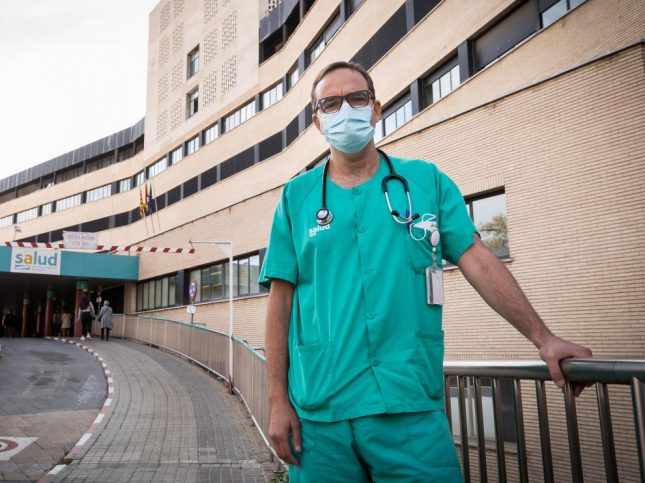
"There is a risk that those infected will transmit the infection to people around them, even if they are vaccinated"
13 July 2021Call DGA_ Predoctoral Researcher Personnel in training
13 July 2021
This is phase 3 of the research and the dose efficacy analyzes will be carried out on 7.000 newborns in endemic areas of sub-Saharan Africa.
The tuberculosis vaccine called MTBVAC, designed in the University of Zaragoza, will start in the second quarter of 2022 Efficacy trials on 7.000 newborns in endemic areas in Africa Sub-Saharan. This was announced this Monday by the professor and researcher at the Aragonese campus, Carlos Martín, who leads this project. The announcement coincides with the 25th anniversary of this initiative, which seeks to obtain a more effective dose in collaboration with the Pasteur Institute and the biopharmaceutical company Biofabri (Zendal).
The new MTBVAC vaccine seems more effective against respiratory forms of the disease and a candidate to replace the current. The new step in the research consists of addressing phase 3 of this project and will last for 5 years. The project is led by Martín and the Mycobacterial Genetics Group, made up of Jesús Gonzalo-Asensio, Nacho Aguiló and Dessislava Marinova.
The current vaccine was called BCG and it aspires to replace the MTBVAC created in Aragon. According to what was recently published in the scientific journal Vaccine, the Aragonese vaccine is considered "a live vaccine against tuberculosis ready to begin efficacy trials 100 years after BCG," he says. At the moment There are a total of 14 tuberculosis vaccine candidates in clinical development and MTBVAC is one of them. MTBVAC contains a repertoire of antigens absent in BCG. After almost a decade in clinical evaluation, in 2022 the Aragonese candidate will begin efficacy trials.
Long endorsed clinical career
Before reaching the effectiveness evaluation phase, Any vaccine must undergo several separate two-phase clinical trials to determine safety and immunogenicity of the vaccine. In the case of MTBVAC, following the successful completion of its first-in-human Phase 1a trial in adults in Switzerland (2012-2014), it was successfully evaluated in a phase 1b at different increasing doses in South Africa, in healthy newborns not exposed to HIV.
The trial in newborns confirmed the safety of the vaccine and greater immunogenicity compared to BCG, suggesting that it is due to the broader antigenic content of MTBVAC. Currently, MTBVAC is completing two phase 2 dose-finding trials in South Africa, using BCG as a reference comparator: one in adolescents and adults vaccinated with BCG with and without previous tuberculosis infection and another in newborns.





