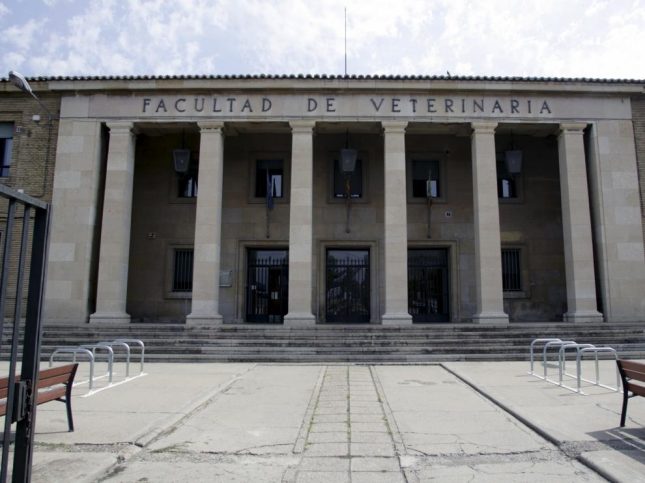
The UZ, among the 100 best in the world in Food Science, Veterinary Medicine and Automation and Control
27 May 2021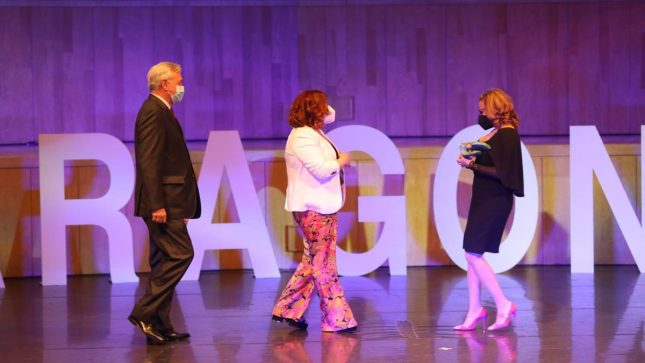
The nurses of the Servet ICU are the winners of the Aragonese of the Year award
27 May 2021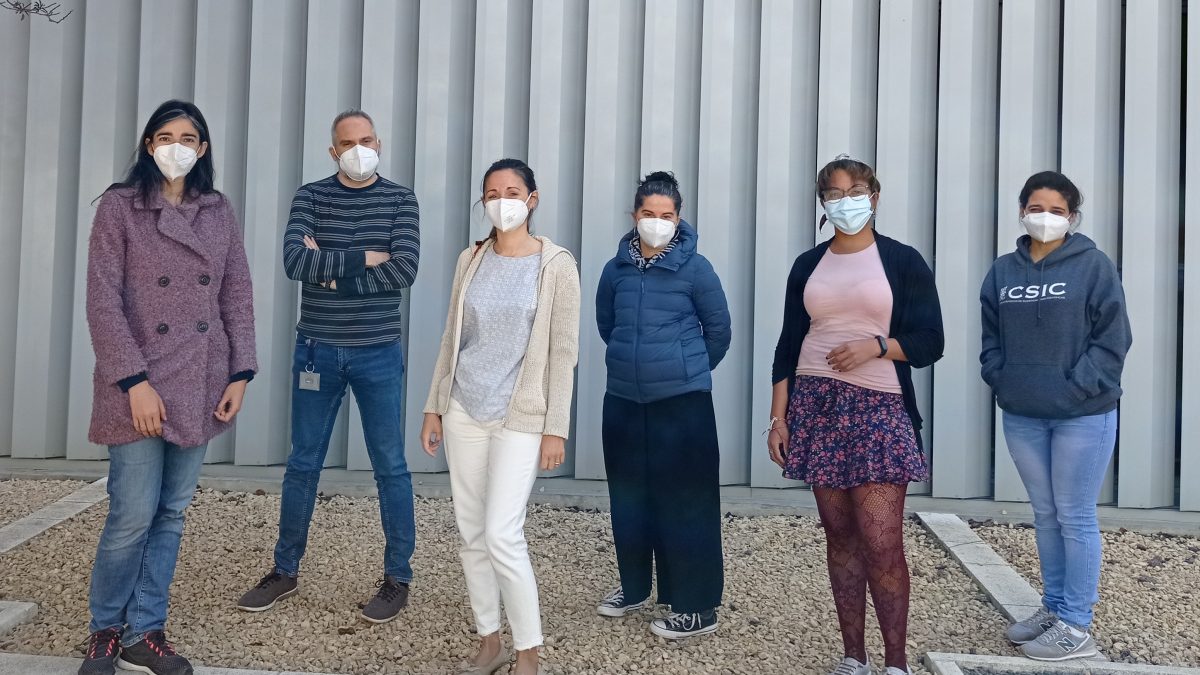
- The study analyzes the effectiveness of applying, directly to the tumor, magnetic nanoparticles that generate heat when exposed to an external magnetic field.
- Pancreatic cancer presents a very dense extra tumor matrix that makes it difficult for conventional treatment drugs to reach
- The results of the study, carried out in mice, have been published in the journal 'ACS Applied Materials and Interfaces'
La magnetic hyperthermia it's a treatment experimental antitumoral which could be useful for pancreatic cancer. It consists of the use of magnetic nanoparticles that generate heat when exposed to an external alternating magnetic field. harmless to tissues. To advance along this line, researchers from Institute of Nanoscience and Materials of Aragon (INMA), center mixed of the Higher Council for Scientific Research (CSIC) And University of Zaragoza, and the CIBER of Bioengineering, Biomaterials and Nanomedicine (CIBER-BBN), have studied several critical parameters in its effectiveness, and have detected a increased immune response in animal models and greater inhibition of tumor growth.
In this work, published in the magazine ACS Applied Materials and Interfaces, se studied the effect of magnetic hyperthermia on pancreatic cancer given the peculiarity of this type of cancer of having a very dense extra tumor matrix, which makes it difficult for drugs to reach conventional treatments.
“Magnetic hyperthermia is of special interest in this type of tumors because it can have a dual effect, helping the extracellular matrix to be more permeable, and causing the death of tumor cells. The synergy of this treatment with conventional therapies could be of great relevance", explains Laura Asín, researcher from the Institute of Nanoscience and Materials of Aragon (INMA, CSIC-UNIZAR) and the CIBER-BBN.
During the experiments, they used different types of biological models. Using 3D cell models based on collagen gels, where pancreatic cancer cells are housed, the conditions of the alternating magnetic field were optimized to obtain the maximum possible cell death. Next, experiments were carried out in a mouse pancreatic cancer model, which preliminarily demonstrated that magnetic hyperthermia treatment is capable of stimulating the production of molecules related to the activation of the immune response.
"The activation of the individual's own defenses treated with magnetic hyperthermia could be a great advantage since it would provide an extra antitumor response with which to combat tumor cells."", Add Valeria Grazú, researcher at INMA and CIBER-BBN.
Unpredictable and heterogeneous distribution
In this treatment, magnetic nanoparticles are injected directly into the tumor, to ensure their presence in greater quantities in that area, and obtain a better response. In this sense, one of the most novel and relevant advances of this work is that magnetic nanoparticles present an unpredictable and heterogeneous bio-distribution in animals.
In some mice, the presence of these nanoparticles was detected in organs such as the spleen and liver, while in other cases the levels were undetectable and remained mainly in the tumor. The difference in bio-distribution could be related to the effectiveness of the treatment, since in the animals that had a greater load of nanoparticles in the tumor, it grew less.
About INMA
The Institute of Nanoscience and Materials of Aragon (INMA) is a research institute created in 2020 by an agreement between the Higher Council for Scientific Research (CSIC) and the University of Zaragoza (UNIZAR) as a Joint Institute dependent on both institutions, as result of the merger of the Institute of Materials Science of Aragon, ICMA, (founded in 1985, the first research institute of the University of Zaragoza (UNIZAR) and the first Institute of Materials Science of the Higher Council for Scientific Research (CSIC) ) and the Nanoscience Institute of Aragon, INA, (founded in 2003 by UNIZAR, which houses a unique set of instruments for the characterization and manufacturing of materials at a molecular scale). With around 300 members, INMA is organized into 6 research areas, two of them dedicated to “enabling research” (synthesis, processing and scaling of functional materials, and unique experimental technologies) and four to “key research topics” (materials for energy and the environment, materials for biomedicine, materials for information technologies and new phenomena at the nanoscale). INMA has extensive experience in participating in and managing national and international research projects (more than 30 EU projects underway) and works closely with industry through private contracts.
About CIBER-BBN
The CIBER (Networked Biomedical Research Center Consortium, MP) depends on the Carlos III Health Institute – Ministry of Science and Innovation – and is co-financed by the European Regional Development Fund (ERDF). The CIBER of Bioengineering, Biomaterials and Nanomedicine (CIBER-BBN) is made up of 46 research groups, selected on the basis of their scientific excellence, which work mainly within three scientific programs: Bioengineering and Biomedical Imaging, Biomaterials and Tissue Engineering and Nanomedicine . His research is aimed both at the development of prevention, diagnosis and monitoring systems as well as technologies related to specific therapies such as Regenerative Medicine and Nanotherapies.