

Experts warn of the consequences of physical distancing on the development of adolescents
17 June, 2020
The WHO sees a coronavirus vaccine as feasible for early 2021
18 June, 2020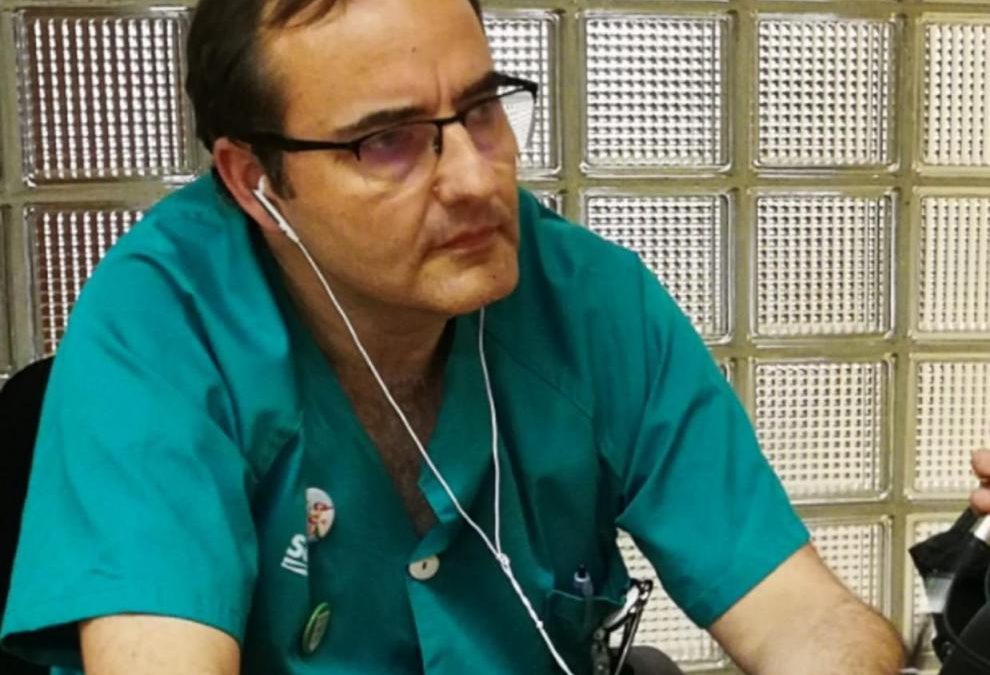
"Of all the lessons obtained, one stands out: We were not prepared for a threat like this. And now we have to prepare thoroughly," says infectious disease specialist José Ramón Paño.
Three months ago, at the beginning of the state of alarm, the saturated Spanish hospitals were trying to combat an unprecedented disease with hardly any therapeutic weapons. Today, the knowledge acquired and clinical research on Covid-19 helps healthcare professionals prepare for a possible second wave.
"Of all the lessons obtained, one stands out: We were not prepared for a threat like this. And now we have to prepare thoroughly not only for new outbreaks, but for a second wave of the pandemic, whether it happens or not," says infectious disease specialist José Ramon Cloth.
The alert remains in place because Covid-19 is still a little-known disease, caused by SARS-COV-2, a new coronavirus that is disconcerting the medical community as it works against the clock to draw clinical conclusions and scientific evidence.
"We have been learning progressively. By appearing in an explosive way, as the patients evolved we have discovered complications. Every week it surprised us in some way," acknowledges the spokesperson for the Spanish Society of Infectious Diseases and Clinical Microbiology (SEIMC).
When daily infections grew exponentially in Spain last March, the first reality was to assume that this virus does not have a defined pattern of action.
Although older people and those with previous pathologies are vulnerable groups, it has not stopped attacking young and healthy people, while children have been the least affected sector of the population.
In these months of the pandemic, it has been confirmed that 80% of the population experiences Covid-19 in a mild, but totally unequal way: some people are asymptomatic and others suffer from a kind of flu that leaves them "as if it had happened to them." a truck above," according to the doctor.
And the symptoms are so heterogeneous that almost every week we discovered a new one. Fever, headache and muscle pain, dry cough, feeling of tiredness, even diarrhea and something still inexplicable, a marked loss of smell and taste that has served as an alarm signal to detect the presence of the virus.
This is how the first phase of covid-19 progresses, which stops in "mild" patients when their immune system manages to control the pathogen on its own.
These patients, during the height of the pandemic, stayed at home, monitored by their health centers with antipyretic and analgesic medications.
But in the other 20% of patients, the disease, instead of remitting, progresses. The high fever persists and respiratory problems begin to appear, in the form of pneumonia, which frequently require hospitalization.
"At the beginning we learned that seriously ill patients evolved very quickly towards respiratory failure and that it was not easy to identify who reached that situation, or when. We had to be very attentive to be able to provide them with the respiratory support they needed," says the Service doctor. of Infectious Diseases at the Clinical Hospital of Zaragoza.
It was then that it was known that the immune response of each patient played a fundamental asset.
The most severely affected are unable to control the virus and their uncontrolled immune reaction contributes to damage to their organs and tissues, mainly the lung.
In some people, a "cytokine storm" occurs, cellular substances that generate inflammation in the respiratory tract and also in other organs with a risk of multiple organ failure.
With these critical cases, the intensive care units were overflowing in the hardest weeks of the epidemic, doubling and tripling the care capacity.
Despite this, in different hospitals there was a lack of beds and critical resources, such as mechanical ventilation devices and respirators.
"But, in addition, we learned that patients who did not improve or who worsened was because they had thrombi in the lung, this was not described at the beginning. Breathing worsened, which forced the blood to be anticoagulated, with the consequent risk of bleeding, we had to balance "", points out the infectious disease specialist.
Complications arose on the fly and health workers were trying to combat an unknown infectious disease without therapeutic weapons but also without personal protective equipment, so the coronavirus casualties among professionals made the situation even more difficult.
"We had the feeling of fighting empty-handed. What could we offer these patients with such a serious infection?" he asks.
"The need to treat - says the doctor - led us to an inevitable situation, to use medicines that had less scientific support than in other circumstances, they were drugs used in other pathologies," he points out in reference to the combination of certain antivirals, anti-inflammatory or modulators of the immune response.
"As it is a new disease, the treatments we have had to choose are those that in theory could work: antivirals that were tested in previous epidemics due to other coronaviruses, such as MERS or SARS-COV-1, or others after seeing the evidence that were done in laboratories with cell cultures of the virus," he explains.
A therapeutic arsenal that open multinational clinical trials now seek to limit. Know which of them have worked in order to establish an action protocol.
"The speed has been brutal, seeing how a new disease has made it possible to design and launch clinical trials based on real clinical practice, at a time of stress in the health system," highlights the doctor.
Although some lessons have been learned, there are still aspects to verify and to know and for this it is necessary, according to José Ramón Paño, that the health system supports clinical research and the figure of the doctor-researcher.





