Walking again after a spinal cord injury: "It is a promising development, but it must be taken with caution"
10 February, 2022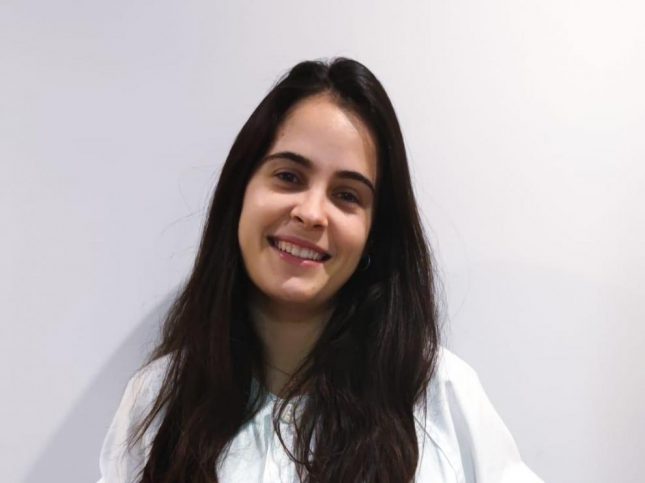
Paula Betés, from Tauste, national Nursing award: "It is gratifying to improve people's quality of life"
11 February, 2022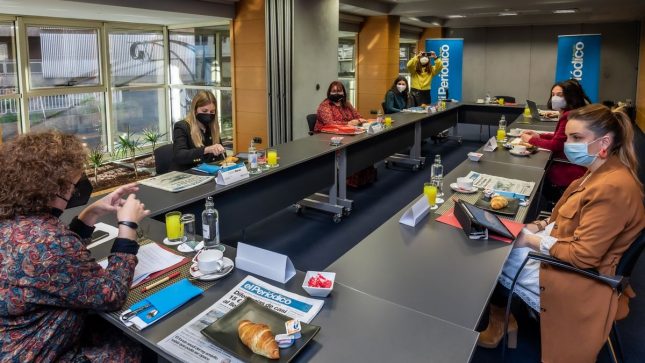
The current role of women in the scientific field, the gender gap, motherhood and the role of the media in making this reality visible were some of the topics discussed at the breakfast organized by EL PERIÓDICO DE ARAGÓN, which brought together to leaders in this field who offered their vision to make this sector more egalitarian
Aragón is the second autonomous community with the highest percentage of women in the field of research, with almost 47% compared to 53% of men. However, the numbers go down if we climb to leadership positions, where only one in four projects are led by women.
This was one of the topics to be discussed at the breakfast on Women and Science organized by EL PERIÓDICO DE ARAGÓN, on the occasion of the International Day of Women and Girls in Science which is celebrated today, February 11, and which was moderated by the journalist Marian Navarcorena.
For Maru Díaz, Minister of Science, University and Knowledge Society of the Government of Aragon, this gap is not only present in the field of research, but is a "real problem in many areas of science", especially in STEM careers (Science, Technology, Engineering and Mathematics). «In these careers there is a gap not only in access to studies, where we find careers such as computer engineering where only 25% are women; but also later when it comes to leading groups or being references. And this is something that happens in many other areas, that when women access higher levels, more glass ceilings appear," said Díaz.
Likewise, María Bernechea, ARAID INMA researcher, pointed to a broader problem. «I believe that much more is needed than just increasing the number of women in science careers, because in scientific careers that are feminized such as biomedicine, those who end up being hospital directors and professors are them. That is to say, they are mostly women studying but then when it comes to accessing positions of responsibility, those few boys who have studied are the ones who end up leading the teams.
For its part, Maria Jesus Lazaro, researcher, president of AMIT Aragón and CSIC delegate in Aragón, appealed to the work of the institutions, where «there is still a lot to do». Currently, the preliminary draft of the Science Law, and from AMIT (Association of Women Researchers and Technologists) they have wanted to make a series of points "because gender many times it is not included. People must be trained in gender because many times they do not know how to apply gender to our work, and doing so is essential. Then, from the institutions they have to encourage equality plans. The CSIC is a pioneer in equality plans, we are already on the third, and that is where you see where changes can be seen. We do not have differences in research and technical support personnel, the lowest scales, but we do have differences in researchers and, of course, in the positions above. Not so much at the level of appointment, it is true that since the president of the CSIC is a woman she has done a lot to equalize them, but in numbers, since we still have only around 20% of female directors. "It's very little, so something happens there and we have to work a lot on those aspects."
For its part, Maria Jesus Lazaro, researcher, president of AMIT Aragón and CSIC delegate in Aragón, appealed to the work of the institutions, where «there is still a lot to do». Currently, the preliminary draft of the Science Law, and from AMIT (Association of Women Researchers and Technologists) they have wanted to make a series of points "because gender many times it is not included. People must be trained in gender because many times they do not know how to apply gender to our work, and doing so is essential. Then, from the institutions they have to encourage equality plans. The CSIC is a pioneer in equality plans, we are already on the third, and that is where you see where changes can be seen. We do not have differences in research and technical support personnel, the lowest scales, but we do have differences in researchers and, of course, in the positions above. Not so much at the level of appointment, it is true that since the president of the CSIC is a woman she has done a lot to equalize them, but in numbers, since we still have only around 20% of female directors. "It's very little, so something happens there and we have to work a lot on those aspects."
Source: El Periódico de Aragón