
Trial with Holland to see if the Aragonese vaccine against tuberculosis protects against covid-19
8 June, 2020
Spain, third country in the world with the most patients in drug trials against coronavirus
8 June, 2020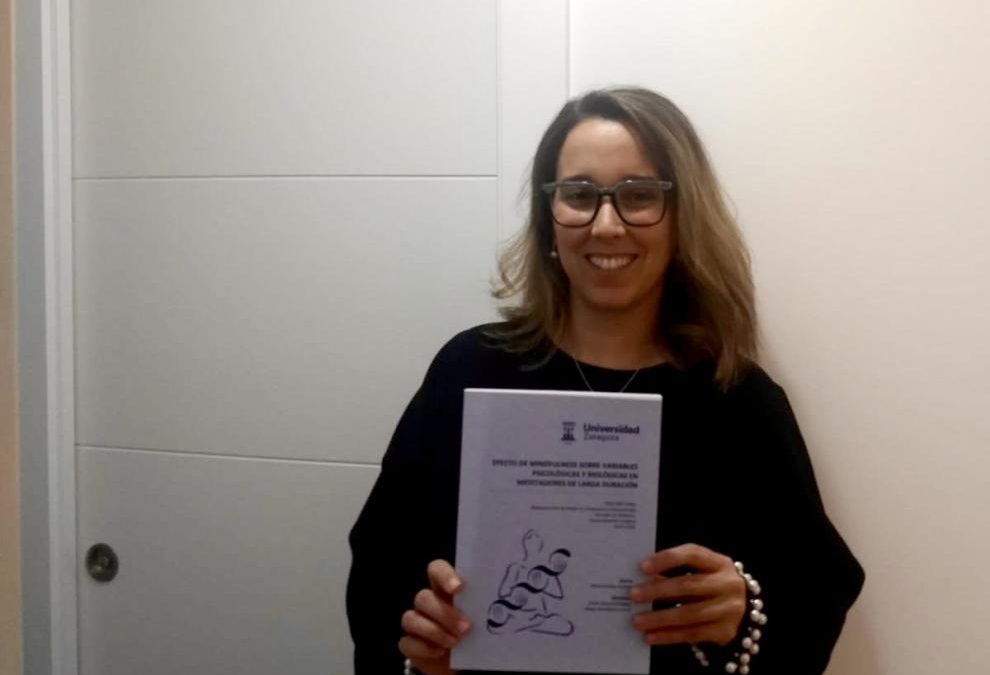
Five others are going to defend the thesis in these weeks. The majority of doctoral students wait for in-person attendance.
The decree of the state of alarm surprised many doctoral students with the thesis reading process begun, and even with a specific date. Since then, eleven doctors have graduated online at the University of Zaragoza and although there are another five who plan to do so in the coming weeks, the majority will wait for in-person attendance to be restored.
"The most important thing is not to harm them. Some had already planned to present it and others also had commitments such as a contract abroad," explains Ana Isabel Escalona, secretary professor at the Doctoral School of the University of Zaragoza. For this reason, the public campus established a series of procedures through which the student could promote the defense of her thesis. "They have to ask that the suspension of both the deadline and the public exhibition be lifted," she points out. This document, which will include the motivations, must be presented in writing. The rest of the procedure will be carried out with the usual procedures, as well as with the planned members.
While the suspension of face-to-face activities at the University of Zaragoza is maintained, the only option will be the 'online' defense, where deadlines such as public presentation, defense authorization and selection of the tribunal are maintained. The presentation of the thesis will be 'online' and the doctoral student will be recorded at all times, although not those around him.
Up to eleven doctoral students have followed all the steps, one of them, Alex Eduardo Salazar, came to defend his thesis from Ecuador. Among the members of the tribunal there have also been professors from Italy, the United Kingdom, Portugal and France, which has highlighted the importance of new technologies in times like these.
In general terms, remember, the deadline for submitting a thesis has been suspended, which will be extended during the period that the state of alarm is maintained. The annual evaluation of the research plan and the activities document for the 2019-2020 academic year is maintained, which must be presented, along with the directors' report, before this Monday.
"I minimized all the screens and tried to make it like a rehearsal"
More calmly, but in solitude. This is how Dr. Marta Puebla faced the first defense of her doctoral thesis that the University of Zaragoza carried out electronically. "It was different. I was alone in the office I have at home. So once we made the presentations I minimized all the screens and only saw the power point. I tried to make it like a rehearsal," she said after graduating as a doctor 'cum laude' by the Faculty of Medicine. Puebla emphasized the involvement demonstrated by the public campus and she regretted not having been able to enjoy that moment with her family, since it was at the beginning of the pandemic. Her husband and her son, just over a year old, were in another room to avoid distracting her. Her friends and family were waiting on the other side of the screen for the presentation and the corresponding question time to end. "It was a joy because when it finished, everyone connected," she explained excitedly.
«Shortly before the state of alarm decree, the University of Zaragoza asked me if I had a plan b, since a member of the tribunal was from outside Spain. At that moment it seemed crazy to me," he admitted. Still, he began to contact everyone to find out the possibilities. After the first border closures, movement restrictions arrived at Spanish universities. Another member of the court was from Catalonia. The limitations increased. "It would be done in person, with online participation and a maximum of ten people," they explained on March 13. On Monday the campus was closed and the only solution was the Internet.
The steps for her were simple. "They made it very easy for me," she emphasized. Two days before the defense, participants connected to the application to check that it was working correctly. From the campus they stressed that it was a "complex management." Her thesis focused on the effect of 'mindfulness' on psychological and biological variables in long-term meditators and was directed by Javier García Campayo and Maite Mendioroz.
Online congresses
New technologies are also allowing participation in international conferences. Carlos Marañes, a researcher at the University of Zaragoza, was thus able to attend a very important event: the Virtual Reality Conference (IEEE VR) that was held at the end of March in Atlanta (USA). "They had very little time, but they organized themselves really well," he stressed. The project, which he devised together with Diego Gutiérrez and Ana Serrano, was chosen from around 500 proposals and focused on how to improve the experience for filming virtual reality films. "The objective is to make the viewer know where to look and not get lost since they have 360º of the image at their disposal," he explained.
This proposal was the one he defended in a virtual room from his home. "The only problem with this solution is that you miss being able to see your audience and see how they react to what you say," she explained. The interaction between the participants, she stressed, is also more complicated. This young man from Zaragoza is confident that, after this health crisis, he will be able to attend in person a conference similar to the one held in Atlanta, where companies such as Amazon or Microsoft participated. He already had the tickets and accommodation to be part of this event in person. Luckily, in these extraordinary times, technology has become the perfect ally.





