
They study whether the Aragonese vaccine against tuberculosis also protects against coronavirus
16 April 2020
Research in Aragon at the pace of the pandemic
19 April 2020
This study seeks to identify for one year molecules that inhibit the activity of two viral proteins that are essential for the virus.
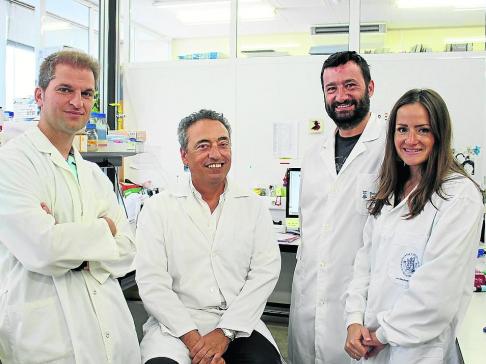
Searching for drugs quickly and agilely against the SARS-Cov-2 virus, which caused the covid-19 pandemic, is the objective of the research project that has just been launched at the Institute of Biocomputing and Physics of Complex Systems (BIFI) from the University of Zaragoza, led by Adrián Velázquez Campoy, researcher at the Aragonese Agency for Research and Development (ARAID) of the Government of Aragon to attract talent.
"With this project we are going to try to identify molecules that inhibit the activity of two viral proteins -PLpro and 3CLpro-, which are essential for the virus," says Adrián Velázquez, who has already researched AIDS and SARS (a virus similar to SARS). -Cov-2) during his postdoctoral stage in the United States (1998-2003). Subsequently, since his return to Spain in 2003, he has worked at the University of Zaragoza in the search for drugs against hepatitis C, gastric ulcer, phenylketonuria, pancreatic cancer, colon cancer and Rett syndrome, among other diseases.
This research has emerged thanks to the collaboration agreement between two non-profit entities: On the one hand, the hna Foundation, established by the National Brotherhood of Superior Architects and Chemists in 2017, which establishes collaborations in research activities in the fields of medicine and health. On the other hand, the ARAID Foundation, with a staff of more than 50 researchers, established by the Government of Aragon in 2007 to promote research, development and innovation in Aragon.
Olga Abián (Aragonese Institute of Health Sciences (IACS) and the Health Research Institute Foundation (IIS) of Aragon, Sonia Vega (BIFI Institute - University of Zaragoza), and post- and predoctoral researchers also participate in this project: David Ortega, Ana Jiménez, Laura Ceballos, Violeta Morcuende and Sonia Hermoso.
'Drugs against sars-cov-2: A rapid and agile platform for searching for drugs against human coronaviruses and other future threats' is the specific name of this study that will be developed for one year using the experimental resources of the Advanced Screening and Interactions Laboratory Molecules of Aragón (LACRIMA) at the BIFI.
In addition to identifying molecules that block two key proteins of the SARS-Cov-2 virus, this study seeks to create an experimental validation infrastructure for the selected molecules that is adaptable to similar viruses and future threats.
“If we achieve our objectives, we would obtain molecules that interfere with the viral replication cycle through two different mechanisms: competitive mechanism and allosteric mechanism,” says Adrián Velázquez.
In his opinion, although the current clinical trials launched lead to an effective antiviral therapy for clinical application in the short term, in the long term it will be necessary to have an arsenal of drugs that act according to various mechanisms of action and minimize the possibility of appearance of drug resistance due to the therapeutic treatment itself, or to the probable natural evolution of the virus, as has occurred with other viral diseases.
And he adds that he is convinced that “the experimental tools developed will allow rapid action in the face of future emergencies caused by viruses similar to SARS-CoV-2.”
Precisely, this scientist works on the structural and functional biophysical study of pharmacological targets and on the application of this knowledge to the discovery of drugs against infectious, congenital diseases and cancer.
For Adrián Velázquez, the development of this project represents “one more contribution to the collective effort of science for the development of effective therapeutic tools, and a way to demonstrate that our work over the years has a useful and direct application in complicated and difficult times.” uncertain.”
Likewise, he points out that in the face of this covid-19 pandemic, staying at home during quarantine “is an effective and necessary tool” to contain the epidemic that everyone is accepting and carrying out responsibly, but insists that “it is necessary develop active modes of containment: drugs and vaccines.”





