

The pandemic enters year 3: new times, old threats
14 March, 2022
They develop smart shuttles to destroy tumor cells from the inside using heat and without drugs
14 March, 2022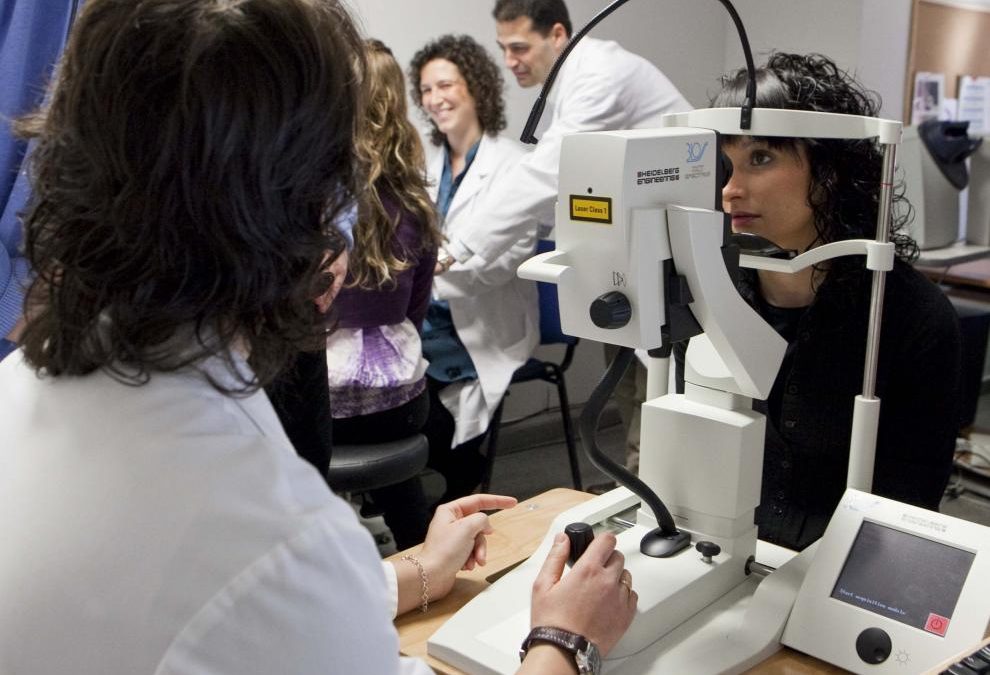
Today in Mallorca, those responsible for the Aragon Health Research Institute (IIS Aragón) receive a distinction for the promising advances of their work.
El Miguel Servet Ophthalmology Research and Innovation Group (GIMSO) of Aragon Health Research Institute (IIS Aragón) today collects the first prize for the best publication on glaucoma published in 2021 awarded by the Spanish Glaucoma Society for developing a chronic, progressive animal model maintained over time with characteristics similar to those of humans.
Glaucoma is a multifactorial pathology that causes damage to the optic nerve, in part, due to an increase in intraocular pressure, which involves the progressive loss of peripheral vision and which, in most cases, patients do not perceive as it is a gradual and painless alteration until it is permanent and irreversible.
This produces a progressive increase in intraocular pressure and damages the retina and optic nerve. In this sense, the first researcher of the award-winning publication to develop her work in the Ophthalmology service of the Miguel Servet hospital in Zaragoza, María Jesús Rodrigo, has assured that, thanks to this study, it has been possible to “reduce the procedure to just two injections” waiting for the “promising” results with a single injection.
This chronic model, for which they have already applied for a European and international patent, “allows, on an animal model of glaucoma that simulates human conditions, to evaluate new neuroprotective formulations over a prolonged period, with a view to treat in the near future glaucoma or other types of damage to the optic nerve that currently have no effective treatment and they lead the patient who suffers from it to blindness,” explained Rodrigo.
The researcher has emphasized the well-being of the animal on which they try to reduce the intervention to a minimum with results of up to six months, unlike previous models that “required repeated injections or much shorter times and which made testing of formulations impossible. long-term protective measures potentially transferable to the clinic.”
At the same time, María Jesús Rodrigo has highlighted that, during the process, Other results related to immunity have been obtained that “open the possibility of analyzing glaucoma from another perspective.”
“We have observed using OCT technology that a minimal or subclinical inflammatory reaction occurs, that is, almost imperceptible, but which influences the death of the cells of the retina and the optic nerve,” he indicated.
Likewise, the IIS Aragón aims to achieve collaboration with companies interested in evaluating possible solutions for glaucoma and other optic neuropathies, since "it is a versatile, economical and reproducible model" that makes it possible to test the efficiency of therapies in these pathologies. .
Source: Heraldo de Aragón





