

Multiple myeloma: 14 years of surviving thanks to the 'rescue' of advanced therapies
September 12, 2022
World Suicide Prevention Day | The objective? Understanding what hurts young people
September 12, 2022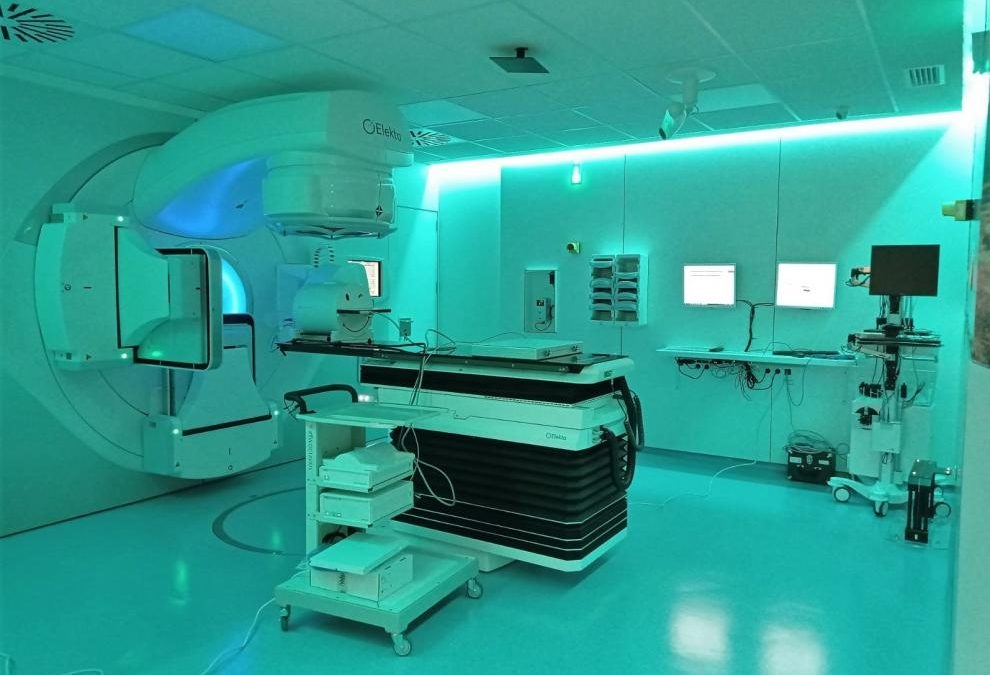
Aragonese public health will have two robotic surgery systems next year.
Robotics also works at the service of health, and specifically, surgery. Robots capable of operating are a true work of engineering. While one of the arms of the machine holds the camera, the other three focus on the surgical intervention using different instruments. Behind, sitting in front of a console, The surgeon guides the movements that the four limbs have to make. This is how the two state-of-the-art surgery systems that the Aragonese public health system will have next year work. These advances will allow operating with greater "precision" and "visibility" and will be used mainly in oncological patients and in some complex benign pathologies.
"The operations will be more thorough and with greater precision. There will be less risk of bleeding and infection. In addition, the post-surgical recovery will be much better," says the head of the Urology service at the Miguel Servet University Hospital, María Jesús Gil Sanz, who insists that all the professionals at the hospital center are "very happy" about the upcoming acquisitions. who have been requesting it for "many years" and "it was already necessary."
Huesca will have a linear accelerator
In September 2023, according to the conditions included in the Inveat Plan of the Ministry of Health, Huesca It will have its first linear accelerator. In addition, the Lozano Blesa Clinical Hospital in Zaragoza will replace its two most obsolete machines with the latest technology (and will have a total of three) and Servet will also change one of these (it has a total of three). So, within a year, Aragón will have a total of seven machines. Teruel will also count "in the future" (and outside the Inveat Plan) with this system in the new hospital, according to the heads of the Servet Radiation Oncology section, Reyes Ibáñez and Manuela Lanzuela.
"Linear accelerators are the machines we use for radiotherapy and it is a fundamental treatment for cancer patients," assures Ibáñez, while explaining that it is used in breast, prostate, head, neck and digestive system cancer, among many others. "Radiotherapy has a different role in each of the tumors", Anade.
With the new devices that are going to be installed, "Aragon will be a leading Community", says Lanzazuela. "The stipulated ratio of inhabitants per machine will be optimal and waiting lists will be reduced," she adds. In the last year, 3.500 patients were treated with linear accelerators in Aragon. "Everyone who suffers from cancer has to be certain that they will be treated with the most optimal treatment and with the latest technology that exists," she says.
In this last decade, specialists maintain, there have been technological advances that have allowed us to improve the effectiveness of treatments and precision. "The patient and their safety is the most important thing for us," they argue.
Ibáñez assures that the reality is that more and more tumors are being diagnosed. "The incidence has increased, but so has the survival of patients. In fact, the forecast is that in 2030 one in every two or three Europeans will have cancer. That is why it is very important to bet on technology," recognize.
Source: Heraldo de Aragón





