
An Aragonese scientist receives 2,5 million euros from Europe to advance cancer treatments
30 April 2021
Women with obesity and a diet high in salt have a higher cardiovascular risk than men
3 May 2021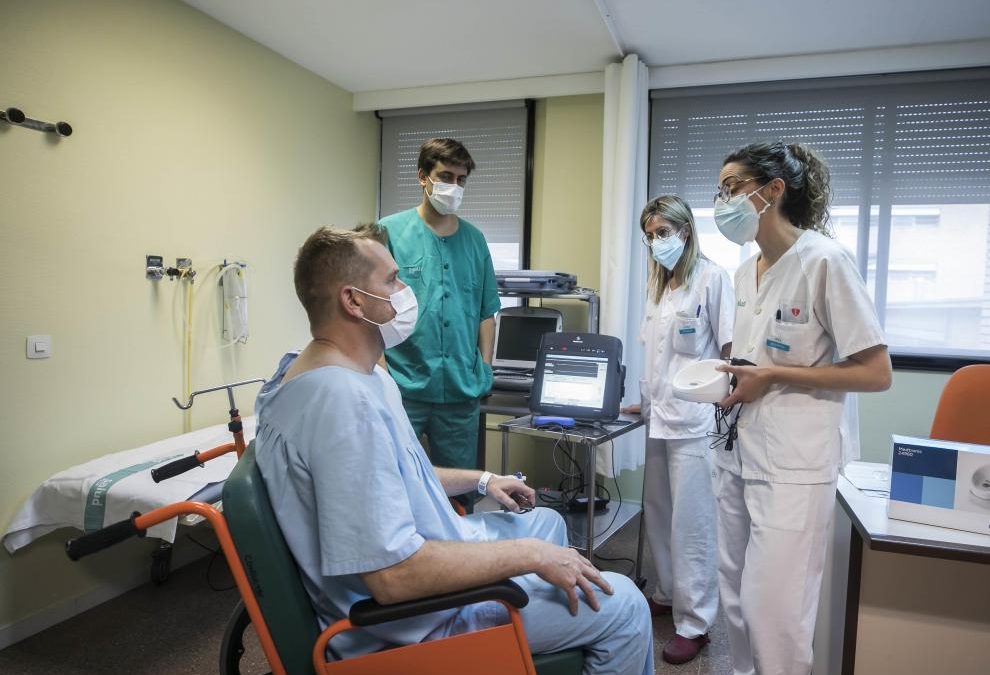
The Clinic's Arrhythmia Unit monitors almost 2.000 patients with this novel telemedicine technique.
At the beginning of 2020, the Lozano Blesa University Clinical Hospital in Zaragoza implemented a new tool in the Arrhythmia Unit that allows pacemakers to be monitored remotely effectively and safely and with a continuous monitoring system that immediately sends an alarm to professionals. in case of registering any error in the operation of the device. This system also offers greater comfort to the patient, since it avoids in-person consultations with high-risk patients in times of pandemic, thus reducing the possibility of Covid infection.
This unit has made an enormous effort so that patients could access this technology in times of coronavirus. After a renovation, it has gone from controlling only around 20 devices to almost 2.000 in just under a year. Dr. Javier Ramos Maqueda, current head of the Clinic's Arrhythmia Unit, explains that the project began after he joined this service, and was able to be launched months before the health crisis broke out, so that during the last year "the workflow was perfectly established" and made it possible to "provide this technology to patients who could benefit from it to prevent them from going to the hospital in the middle of the pandemic."
Remote device monitoring has changed the dynamics of the service: previously the patient had to go for a hospital check-up once every three months, if they had a defibrillator, and annually if they had a conventional pacemaker. Now, after the implant, he no longer has to return to the center, because he is monitored by remote technology. You are informed every six months that the device is working and if there is a fault you are summoned immediately the same day it is detected. "Every time a pacemaker is implanted, we provide a device, similar to a Wi-Fi router, with 4G technology, which daily sends all the information about the device and the status of the patient's heart to an 'online' platform that can be reviewed from any computer with internet access," he mentions.
Those in charge of executing this project are two advanced practice nurses in arrhythmias, Inés Julián and Laura Sorinas. Every morning they deliver new devices and carry out health education for patients who have had a pacemaker implanted, while reviewing all scheduled transmissions of the almost 2.000 patients already monitored. The system sends an alert if there is a problem: "It is as if the patient came to the hospital every day to have his pacemaker checked." Furthermore, this monitoring makes it possible to anticipate the diagnosis in patients with pacemakers by detecting arrhythmias or heart failure, and can notify professionals to prescribe treatment early, thus preventing them from having a major impact on the patient. If they were not monitored remotely, these pathologies would not be detected until months or even a year after their onset, so "this technology substantially improves the quality of life and survival of these patients," she indicates.
"In times of pandemic, what this technique does is avoid 1.900 consultations this year for at-risk patients, greatly reducing hospital pressure," he summarizes. Since the spring of 2020, taking advantage of the breaks between the epidemic waves, the hospital provided the people who serve in this service with many of the monitors that allow remote control of the pacemaker: "The acceptance among our population has been spectacular, no patient has refused to be monitored with this technology. At the same time, the person in charge of the Arrhythmia Unit recalls that this initiative "has been able to be carried out thanks to the push of Dr. Ruiz Arroyo, head of the Cardiology service, and the center's management. It has been a team effort between a group of very motivated doctors and nurses. With this strategy, it has become a national benchmark by implementing a new technique, physiological stimulation of the left branch, which consists of implanting a device that activates the heart through the natural route of cardiac impulse in the matter. According to several studies, physiological stimulation in patients who require a pacemaker reduces hospitalization for heart failure, arrhythmias and mortality by up to 21% compared to the implantation of a conventional pacemaker. So much so that the Arrhythmia Unit has already contributed to the training of up to 15 national centers of recognized prestige spread throughout the national territory. Up to 190 patients have already been treated with this pioneering technique.





