Call for Strategic Action in Health 2022
11 March, 2022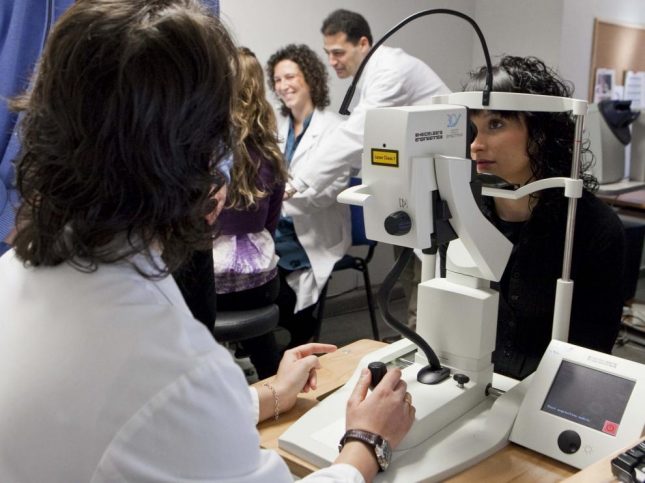
The Spanish Glaucoma Society awards an Aragonese research project
14 March, 2022
The coronavirus turns two years old and enters a new phase, on the way to normalization. However, scientists warn that the virus will not go away and that it still poses dangers.
The first case of covid officially registered in Aragon was a 79-year-old man who was admitted to the ICU of the Zaragoza Clinical Hospital with severe pneumonia. The 'last' is probably a person who took a self-test today at his house, who he has seen is positive and who overcomes the disease without hardly knowing it. Between them, the pandemic has infected – according to official figures – more than 400.000 Aragonese, and has caused almost 5.000 deaths in the Community.
On a day like this Monday, but two years ago, the government decreed a state of alarm and recorded March 14, 2020 as the day when almost everything changed. Life in Spain was conditioned by a pandemic that has marked the lives of all Aragonese, whether they want it or not. In these two years, the Community has gone through home confinements, perimeter closures of municipalities and provinces, curfews, business restrictions... Now, year 3 is faced with new airs, with important changes that lead us towards a normalization of the pandemic. The restrictions, limitations and protection measures are falling, and it has already been announced that the surveillance system will relax the close control it had until now. Everything is heading, thus, towards coexistence with a virus that - in case there was any doubt - is not going to disappear in the short, medium or -probably- long term. And neither do his threats.
"That the virus disappears completely is something that I don't even contemplate," says Juan José Badiola, director of the Center for Encephalopathies and Emerging Communicable Diseases at the University of Zaragoza. "The virus is going to be there, and no one has ruled out the possibility of a more aggressive variant appearing," adds veterinary epidemiologist Nacho de Blas. "It is not over and will not be over, the coronavirus will be part of the organisms we live with," confirms Enrique Bernal, IACS researcher and WHO collaborator. "Eliminating a virus completely is very difficult, almost impossible. We are going to have it here," says Alberto Jiménez Schuhmacher, Araid researcher at the Aragon Health Research Institute.
Once its eradication has been ruled out, we will have to continue living with covid. To do so, the wickers seem more solid than they did a few months ago. Vaccination, the immunity generated by the massive omicron infections and the rise in temperatures allow us to face the coming months with more guarantees. On the other side of the scale, the almost total fall of restrictions, the relaxation and boredom of the population threaten to stop the decline in infections, as has already been seen in some countries that have withdrawn – for example – the mandatory nature of wear the mask indoors.
"In the fall I wouldn't be surprised to see a new peak, but it will be counted in a different way, more focused on controlling vulnerable people"
The future of the pandemic in its year 3 will depend on this 'battle'. With the prudence recommended by the turbulent experience lived in these two years, these scientists believe that we are entering a new stage, but with the known risks still latent. "If we arrive at Easter with a low incidence, we could be fine, because summer is not usually a good time for coronaviruses. In autumn I would not be surprised to see a new peak, but it will be counted in a different way, more focused on controlling the vulnerable people. Hospitals have prepared themselves, they have a lot of knowledge, there are medications that control the disease, diagnostic tests, a spectacular tool like the vaccine... We are entering a new era," summarizes Jiménez Schuhmacher.
Although Juan José Badiola does not rule out the possibility of "some worrying variant," he also points out that now "we are not the same as we were before." "We have 90% of the population vaccinated, we hope for new sterilizing vaccines that prevent contagion... and when temperatures rise, the situation will be less conducive to the development of the virus, so we can foresee a favorable and calm stage until October. The key moment is the fall, then we will know the true situation of the pandemic, if it really is a virus that behaves like a flu... or not," he points out.
Enrique Bernal, for his part, hopes that the curve "continues to go down", although these days the decline is already slowing down. "We are going to have rebounds," he assumes. Although, as he adds, "another thing is that what the virus means will be different." "At Easter there will be a rebound, but it will be an assumed situation," he exemplifies. By then, it is expected that daily surveillance monitoring will have changed to "a sentinel network that will tell you if the circulating virus is increasing", to search for contacts "where there may be situations of vulnerability."
Nacho de Blas, on the other hand, warns that removing restrictions and relaxing monitoring "before time" can have "important consequences." "If we let the virus run wild, even asymptomatically, it can accumulate mutations," he highlights. This veterinary epidemiologist points out that "it has been assumed that this is a trivial disease, that nothing is happening," but in his opinion "this discourse that this is expired does not agree with the data on deaths that continue to arrive."
Life in the third year of the pandemic
Two years later, the question that many citizens are asking is not so much how the pandemic is going, but how it will affect their daily lives. The authorities direct the regulations towards an immediate future that will be the closest thing to the 'normal' life that we have had until now: bars, restaurants and nightclubs no longer have limitations, towns and cities prepare patron saint festivities like those before, The indoor mask seems to have its days numbered...
"My expectation is that of absolute coexistence with the virus, as we live with 'cousins' of this virus, or with the flu or with bronchiolitis... And we will notice that daily lives are less altered, because the restrictive measures are very unlikely to return, even with rebounds," says Bernal. In his opinion, people for whom Covid causes severe illness "will be treated", some "will have to be admitted to a hospital" but "the vast majority will survive."
The authorities direct the regulations towards an immediate future that will be the closest thing to the 'normal' life that we have had until now
Jiménez Schuhmacher points out that, being vaccinated, "normality can be returned", although "you must always calibrate the consequences of your actions." "If I relax and I am in risky situations, I have to protect people at risk if I later go to see them," he exemplifies. De Blas, for his part, considers that "forcing people to stay at home – in quarantine – is going to be impossible", so it will be time to "resort to common sense". "In class – he is a professor at the University of Zaragoza – I will continue wearing the mask, because I believe that in risk situations it is necessary," he predicts.
Source: Heraldo de Aragón