
How to protect your ears during the summer
August 26, 2021
If you have coronavirus, you better have a headache
August 27, 2021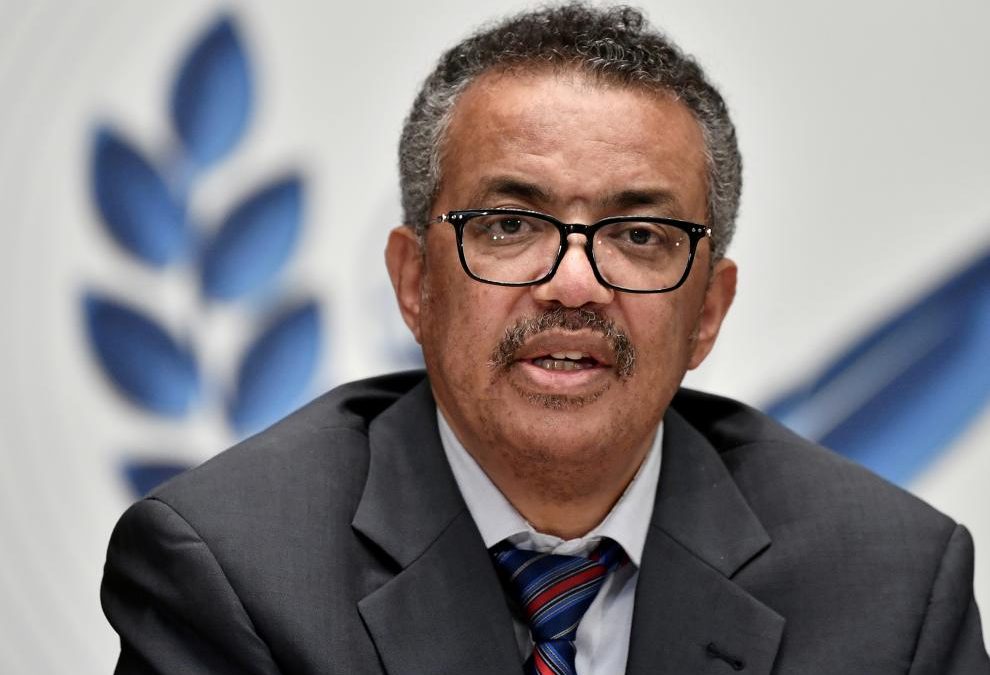
"The window of opportunity to carry out this crucial research is rapidly closing: any delay will make some of the studies biologically impossible," experts warn.
The director general of the World Health Organization (WHO), Tedros Adhanom Ghebreyesus, has recognized the need to accelerate new studies to find the origins of SARS-CoV-2, the virus that causes COVID-19.
This is what Tedros has said after the letter published in the journal 'Nature' by the authors of the March WHO report on how COVID-19 emerged, who warn that "a further delay hinders crucial research from a biological point of view." ".
"The window of opportunity to carry out this crucial research is rapidly closing: any delay will make some of the studies biologically impossible. Understanding the origins of a devastating pandemic is a global priority, based on science," they warn in their article.
In this sense, Tedros has assured that the WHO "is advancing its plans to understand its origins." Last Friday, the United Nations international health organization opened a call for scientists from around the world to submit their candidacy to the new Strategic Advisory Group on the Origins of Novel Pathogens (SAGO).
SAGO will be composed of experts acting in their personal capacity, not as representatives of Member States, and will play a key role in the study of the emergence of new pathogens, including the next phase of studies on the origins of SARS-CoV-2 . "We encourage all qualified professionals to apply. We need the best to be part of this new and important advisory group," said the top leader of the WHO.
In this regard, Tedros has defended that "SAGO will not delay the progress of studies on the origins of SARS-CoV-2." "The international team's report published in March outlined a series of studies that can be carried out without delay. We have encouraged all parties to continue these studies," he defended.
Maria Van Kerkhove, head of emerging diseases at the WHO, responded to the mission's team of scientists in China that "there is no deadline" for studies of the origins of SARS-CoV-2. "There is no deadline, there are many scientists and they will carry out the studies without delay because there is urgency. There are many studies in China and in other places in the world," she commented.
The director of the WHO Health Emergencies program, Mike Ryan, recalled that "the prospect of a leak in a Wuhan laboratory is a hypothesis." "What we're trying to do is set priorities. The most important thing is to identify the probability that there will be a transfer from an animal to a person, which is more likely than there will be a leak in a laboratory. Colleagues in China say the lab leak hypothesis is unfounded. "Some hypotheses are more likely than others, but everything is on the table and further investigation is necessary," he admitted.
On the other hand, Tedros has assessed the epidemiological situation of COVID-19 worldwide. "After increasing for almost two months, the global number of COVID-19 cases and deaths remained stable last week. But it remains stable at a very high level: more than 4,5 million cases and 68.000 deaths. As long as this virus circulates anywhere, it is a threat everywhere. There are no shortcuts," he stressed.





