
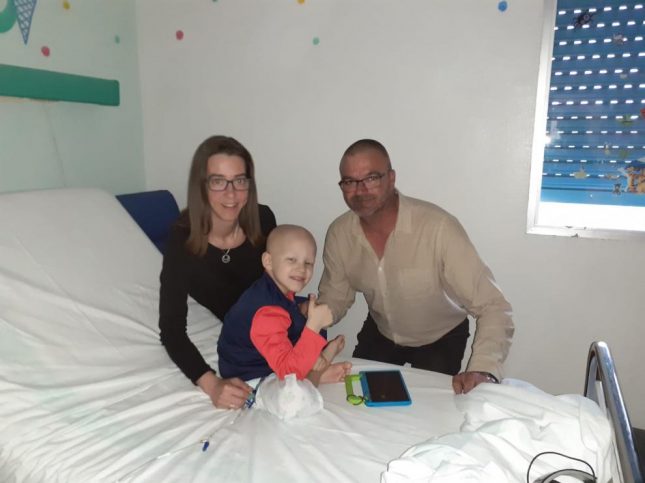
International Day of Children with Cancer. «The first thing you think is why he touched me and you don't accept it»
13 February, 2020Marie Curie Rise 2020 Call (MSCA-RISE RISE)
18 February, 2020
The medical community remembers that a code of ethics already exists and that a palliative care law is necessary.
The approval in Congress of the regulation by law of euthanasia has already generated a debate in different areas of society. Some health professionals assure that the group already has a code of ethics and specific treatments at the end of life for patients, and they are committed to developing a palliative care law as such. Meanwhile, the Right to Die with Dignity collective defends the need to have legislation specific to euthanasia so that it serves the 2% or 3% of the population that asks not to prolong their life.
The president of the Zaragoza College of Physicians, Concha Ferrer, explains that doctors already have their own code of ethics, a 'roadmap' that is reviewed frequently and is adapted to the care required by the patient, including of care at the end of life. "Right now, I think the law is not absolutely necessary, there is no real social pressure. We have the second or third best medicine in the world to live, but also to die, to offer care in the last moments of life," points out Ferrer. In fact, she recalls that the code of ethics advises how to treat the patient and offers the doctor the possibility of using conscientious objection if he does not agree with the treatment that the patient requires or requests. If she chooses this option, Ferrer points out, the doctor has the obligation to refer the case to another colleague to give her the treatment that she requires or requests.
He also highlights that the people of Aragon have the possibility of resorting to the advance directives document, about which, he acknowledges, there is still a lot of information missing. Currently, according to data from the Department of Health, from 2004 to 2019, 10.226 Aragonese have processed this possibility, 62% of whom are women. Through it, people give their choice on aspects such as organ donation, the option of being cremated, but it also includes the wish to die at home or in the hospital. In addition, up to 402 people have shown themselves in this same document to be in favor of euthanasia.





