
Fungal infections: the unknown pandemic
3 March, 2023
Untangling the wiring in our heads
3 March, 2023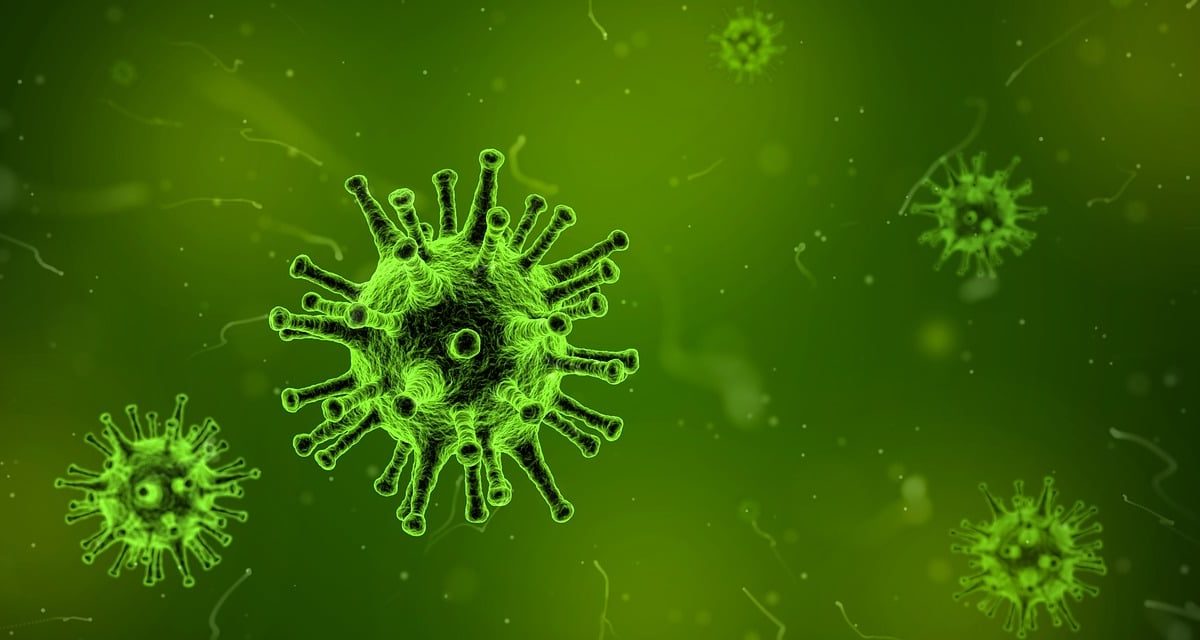
Every day, human beings defend themselves against harmful microorganisms in a “silent” way. These battles that we win – often inadvertently – are the result of a long history of coexistence and evolution with numerous pathogens. Exposure to them has educated our immune system to recognize and counteract infection and prevent disease.
Facing infectious agents is one of the stimuli that reinforces our defense capacity, sometimes beyond what we imagine. And what happens when the body fights the flu can serve as an example.
Immune training session
Influenza is a disease caused by four types of viruses, belonging to the Orthomyxoviridae family, which are classified according to the characteristics of their genome. Humans are mainly affected by type A and type B influenza viruses.
Despite its lethal risk, facing these viruses and defeating the disease can have a positive side.
Curing ourselves from the flu can be compared to doing training that helps us pass a specific test and know how to overcome it better in the future. But it will also train our immune system to face similar threats, such as other flu viruses, and quite different ones, such as other respiratory viruses or even cancer.
Training our defenses in a non-specific way is a concept known for a long time, but what determines its activation and its effects are currently the subject of study.
A bookmark in DNA
The immune system can be classified into two large groups, the adaptive and the innate. Through vaccines we preferably train the first one. On the other hand, to exercise the innate system it is necessary to activate the cells that compose it or their precursors: monocytes, NK cells, macrophages, innate lymphoid cells, dendritic cells and neutrophils. The instruction of these cells translates into innate immune memory or trained immunity.
Substances from microorganisms or compounds produced by our cells during an infection can stimulate innate immunity to react to what is perceived as aggression through the expression of certain genes. This stimulus leaves a mark on the DNA, as if it were a bookmark in a book that we have previously read.
“Bookmarks” occur in the form of methylations in the DNA of innate immune cells and modifications of histones, the proteins that package this DNA. They act as markers to more effectively locate certain genes in case our innate immune cells are stimulated again.
This labeling can facilitate a faster and more effective response to future infections, but it can also trigger an inflammatory over-response with harmful effects.
The antitumor effects of getting the flu (in mice)
An article recently published in the journal Nature described a trained immunity process induced by an infection. The researchers inoculated mice with a non-lethal flu virus. A month later, and after having recovered from the infection, the animals were treated to generate lung tumors.
And surprisingly, mice recovered from the flu developed tumors more slowly than those not infected beforehand.
The best antitumor protection is due to the stimulation of the trained immunity of a type of cells called alveolar macrophages. These cells are responsible for cleaning and eliminating particles or microorganisms that enter our lungs when we breathe, and control the inflammation that is generated when recognizing a foreign agent.
During an acute infection, many alveolar macrophages die, but we recover them later. This recovery is marked by the presence of “bookmarks” in some inflammatory genes.
The training of these macrophages depends on other partners, NK cells. These act as instructors during influenza virus infection by producing a cytokine (protein that regulates the immune response) called gamma interferon.
This cytokine is like a Fierabrás balm for alveolar macrophages: it stimulates their ability to engulf and digest to destroy tumor cells, something that could also improve the activation of the adaptive immune response.
This discovery does not represent a short-term solution to treat lung cancer, or tumors in general. However, it focuses on two ideas that can revolutionize the treatment of some tumors: viruses with oncolytic immunostimulatory activity – capable of activating the immune system to selectively destroy tumor cells – and the stimulation of innate anti-tumor immunity.
In the 50s and 60s, Dr. Alice Moore was a pioneer in studying oncolytic viruses in animal models. We are at the dawn of its use for the human immune system to specifically attack and destroy tumor cells. This challenge lies the next frontier of antitumor immunotherapy.
Read the article on the original website, clicking on the button below this text.
Source: The Conversation. Authorship:
Estanislao Nistal Villan
Virologist and professor of Microbiology at the Faculty of Pharmacy, CEU San Pablo University
Sara Cuadrado Castaño PhD
Research Assistant Professor, Icahn School of Medicine at Mount Sinai





