Aid for Ramón y Cajal contracts (RYC) 2026
November 4, 2026
Goat's milk formula could reduce the risk of atopic dermatitis in babies by up to 64%.
November 5, 2026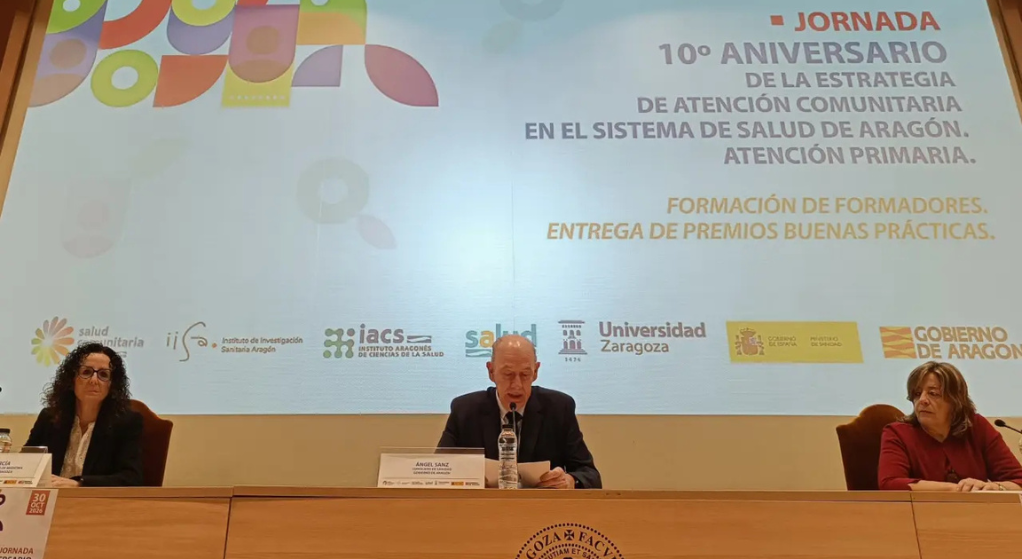
Health centers have promoted more than 400 community initiatives and projects, and more than 17.000 patients have received a recommendation for health assets from their consultation.
La The Community Care Strategy of Aragon has implemented community agendas throughout the Aragonese territory in its ten years of existence. Health centers have spearheaded more than 400 initiatives and projects in the community, benefiting over 17.000 patients. “This strategy has become one of the strongest lines of work within Primary Care in Aragon, setting a benchmark at the national and European levels,” stated the Minister of Health, Ángel Sanz, this Friday at the event organized by the Department of Health to celebrate this anniversary, which opened with A minute of silence for the Urda train accident.
Community care is the area of work of health centers that is developed beyond the consultation and in collaboration with the citizens. Primary care teams identify the main health problems in their area and the existing inequalities. Based on this analysis, and in collaboration with local councils, organizations, and citizens, they prioritize needs and implement actions to improve the health of the population, making the most of the resources available in each neighborhood or municipality. This work is documented in the community agenda of each Primary Care team.
These initiatives, aimed at promoting healthy lifestyles, preventing disease and improving the well-being of the population, primarily address physical activity and spaces for exercise; emotional well-being and mental health; support for caregivers, dementia and dependency; education, culture and community life; childhood, adolescence, parenting and family; disability and social and labor inclusion; active aging and cognitive stimulation; and unwanted loneliness and support networks. They reach both capital cities and small rural municipalitiesThese include physical activity, healthy walks, emotional well-being workshops, support groups for family members of people with dementia, and programs to combat unwanted loneliness, among others.
“The experience accumulated over these ten years demonstrates that when healthcare professionals work together with the community, more appropriate, more sustainable and closer responses to the real needs of the population are generated,” Sanz pointed out.
Health assets
One of the most innovative developments in the strategy is the health asset recommendation feature, integrated into the electronic health record since 2018. This tool allows healthcare professionals to recommend local resources to their patients that can improve their health and well-being, such as walking groups, cultural activities, associations, or mutual support groups. Since then, More than 17.000 patients have received a recommendation from their primary care clinic. In the follow-up of more than 7.000 people, more than 80% are satisfied with the recommended active ingredient and nearly 70% report an improvement in their health or well-being after participating in it.
Asset recommendations are especially useful for older people. By the end of 2025, 7.870 people aged 65 and over had received a recommendation, representing 56,5% of the total, and 74% of them were women. Promoting physical activity was a focus in over 70% of cases; improving social relationships and preventing loneliness was addressed in almost half; and strengthening self-care and emotional well-being was a focus in one out of every three older adults served.
The training of professionals has been another pillar of the strategy. Its own training program, integrated into the continuing education of the Aragonese Health Service since 2017, has offered more than 2.000 places. Between 2017 and 2022, 1.107 places were offered across 38 training activities, and the evaluation of that period has shown a significant correlation between the training received and the incorporation of community-based actions into clinical practice. The strategy has also fostered several national and international research projects and four doctoral theses, and has contributed to strengthening the Health Councils.
In January 2026, Aragon has adapted its primary care services portfolio to the state update in this area, which formally recognizes individual and group health education, the recommendation of health assets, and joint work with the community.
Source: Heraldo de Aragón