An international publication places Spain as one of the most advanced European countries in Psychosomatic and Liaison Psychiatry Units
August 28, 2019
The nightmare of the children who took the false omeprazole
August 29, 2019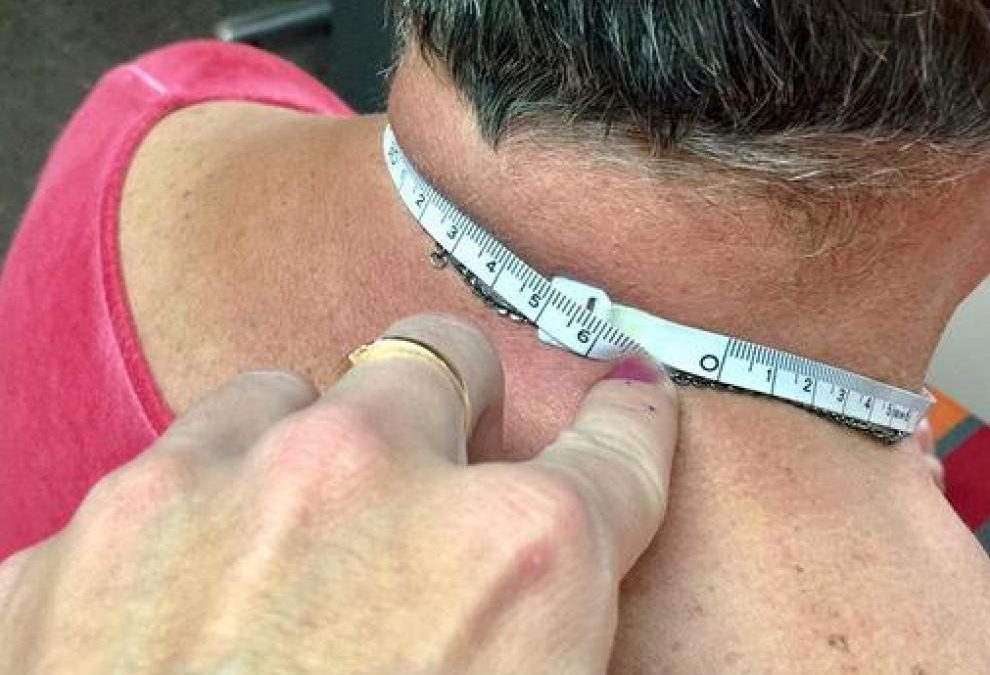
Researchers from the Miguel Servet University Hospital in Zaragoza have analyzed the relationship between the neck perimeter of people who live in nursing homes and the probability of malnutrition. Values below 37,8 cm in men and 35,2 cm in women indicate risk.
Professionals who work in nursing homes usually detect possible cases of malnutrition by measuring certain body circumferences of the elderly, such as the arm or calf. Now, a team of researchers from Zaragoza has found another part of the body that can serve as a reference: the neck.
To carry out their study, the authors cross-referenced the anthropometric data of 352 elderly people from five public residences in Zaragoza and with an average age of 83 years, with their results in a questionnaire called Mini Nutritional Assessment (MNA). This assessment tool is commonly used to identify elderly people who are malnourished or at risk of becoming malnourished.
Statistical methods were then applied to find the association between these two parameters, and the results, published in the journal 'Nutrition', confirm that the neck circumference – along with the calf circumference – presents the best predictive value when diagnosing the risk of malnutrition among residents.
“In our work, the cut-off point to detect the risk of malnutrition was 37,8 cm in men and 35,2 cm in women, a limit to be taken into account by nursing home staff,” says Beatriz Lardiés, researcher. from the Miguel Servet University Hospital and co-author of the study.
Once the risk of malnutrition is detected – which in this case affected 48,3% of the women and 45,5% of the men analyzed – it is necessary to carry out a complete nutritional assessment and consider other clinical and analytical parameters to verify if a patient is truly malnourished. If positive, the necessary measures would be immediately put in place to reverse this situation.
“The diagnosis of malnutrition cannot be made with a single anthropometric parameter, as occurs with the circumference of the calf or the circumference of the arm, but it can help identify it,” Lardiés emphasizes.
Results extrapolated to similar groups
The researcher points out that, as this study was carried out in nursing homes, “its results can be extrapolated to populations with similar characteristics, but we cannot ensure that the cut-off points detected are valid in other population groups.”
In any case, the authors conclude that anthropometry is an easy and non-invasive method to quickly evaluate the nutritional status of older people, a group that continues to grow throughout the world.