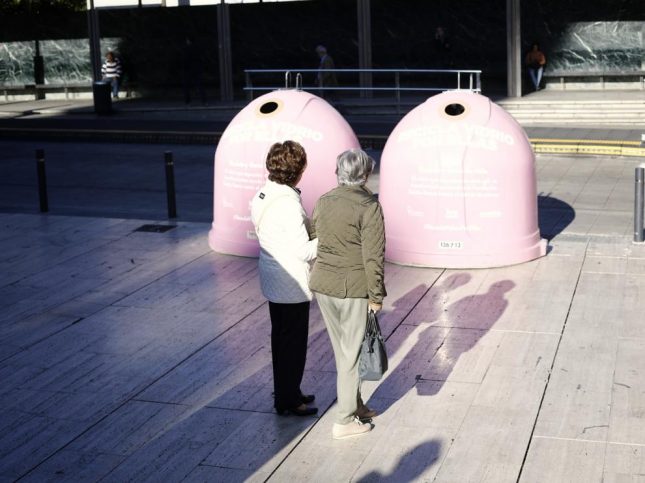
Pink containers will turn glass into donations against breast cancer
October 18, 2019
The conference “Patents, a key tool for research in the healthcare environment” was successfully held yesterday
October 18, 2019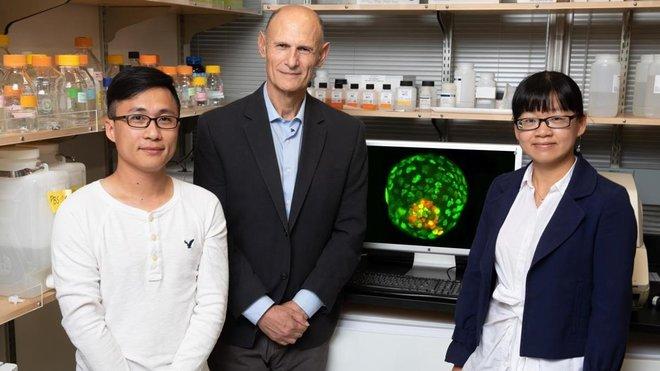
A team of scientists manages to convert a mouse ear cell into a complex structure. The milestone, led by the Spanish scientist Juan Carlos Izpisúa, opens the door to new research
Science has moved one step closer to creating artificial embryos. Researchers at the Salk Institute at the University of Texas, led by Spanish scientist Juan Carlos Izpisúa, have managed to convert a single cell from a mouse ear into a complex structure. The achievement might, at first glance, seem like a minor advance in research. But, according to specialists, we are facing a turning point. We are now closer than ever to 'manufacturing' organisms in which to investigate, for example, the effect of new medications or even the causes of a disease. New study models could, in fact, give rise to endless research possibilities.
The research, published on Wednesday in the scientific journal 'Cell', is presented to the scientific community as the first time that it has been possible to create an artificial embryo, also known as a blastoid, without the need for gametes (eggs and spermatoizes). It is the union of the first 100 cells of an organism, something that researchers explain is key to understanding multiple biological processes such as the first stages of a pregnancy, the formation of organs or even the development of a certain disease.
"These studies will help us better understand the beginnings of life; how early in life a single cell can give rise to millions of cells and how they assemble in space and time to give rise to a fully developed organism," explains Juan Carlos Izpisua Belmonte, researcher in the Salk gene expression laboratory and lead author of this new study. "It is important to highlight that this work avoids the use of natural embryos and is scalable," highlights the researcher.