
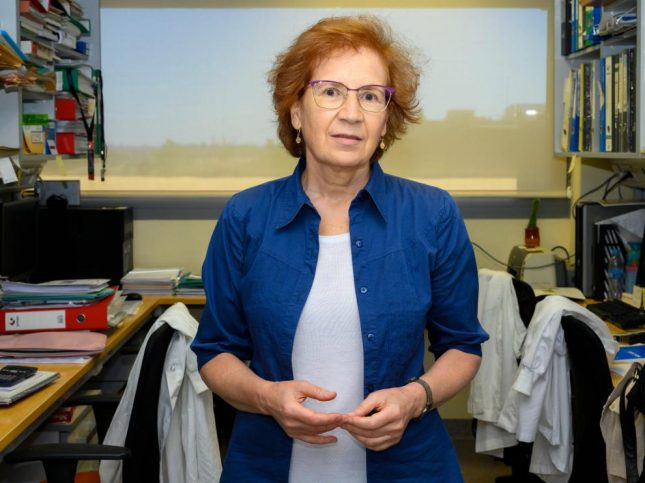
Margarita del Val affirms that although "we will all get infected", for those vaccinated it will be "a reinforcement of immunity"
November 12, 2021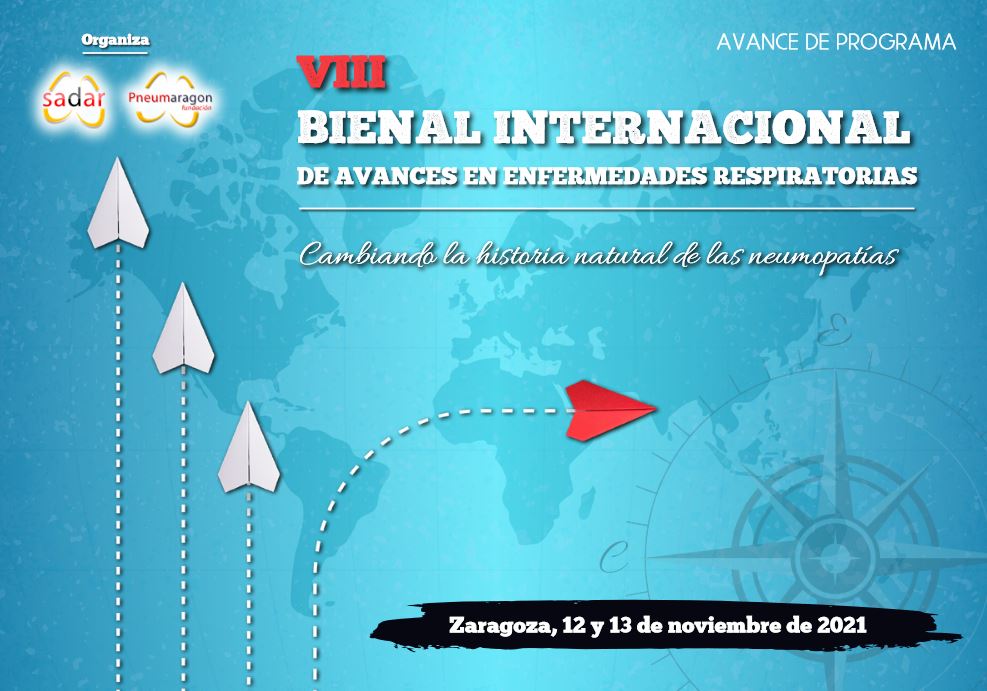
VIII International Biennial of Advances in Respiratory Diseases
November 12, 2021
More than 25 young cancer researchers from all over Spain will meet from this Saturday until the 14th at the First National Meeting to be held in the city of Bilbao.
More than 25 young cancer researchers from all over Spain They meet from tomorrow at the I National Meeting to be held in Calatayud (Zaragoza) until the 14th to share the most cutting-edge projects in the fight against this disease in which they work and establish ties that allow them to advance in this field.
The meeting is organized by the Spanish Association against Cancer (AECC), entity that has four young predoctoral students in Aragon and that also finances different projects against pancreatic, prostate and lung cancer in which researchers from the Health Research Institutes of Aragon (IIS), the Nanoscience and Materials Institute or the Hospital.
An example of the importance of oncological research has been highlighted by the president of the AECC in Zaragoza, José Luis Anso, according to whom "without research there is no cure and without cure there is no hope" and that is why the entity, as the mayor of Calatayud, José Manuel Aranda, destined 76 million euros to 400 projects in which more than 1.000 researchers work.
Eduardo Ruiz, biotechnologist for University of Zaragoza and master in genetics and cell biology, is one of the predoctoral fellows awarded by the Aragonese delegation of the AECC who researches virtual biopsy applied to gliobastoma, one of the most aggressive brain cancers and who has been in charge of launching this national meeting that was born with the intention of continuing.
Ruiz has highlighted the complexity that researchers face in trying to obtain funding for their projects when they finish training, something that in his case would not have been possible without the help of the AECC which, he has assured, is one of the entities that contribute the most money for this type of projects.
Their work is based on taking three-dimensional images of the tumor, which will make it possible to establish more personalized therapies adapted to each patient, said Ruiz, who pointed out the advances that are being produced in molecular biology "that 40 years ago could not be imagined could be applied" and in which "the big boom" is yet to come.
Hence the importance that, in his opinion, this meeting has to learn about the work carried out by young researchers in new diagnostic techniques, omics technologies and other advances, but also to create new links and synergies between this group whose members are "very proactive" and with many ideas to implement.
But they will also have training days to acquire communication skills that will help them disseminate their research, and workshops on managing emotions and stress with which they will be able to deal with the "frustration" that they often face after hours in the laboratory. Eduardo Ruiz has acknowledged.
The meeting will also offer two events open to the public, one this Friday morning in which more than one hundred high school students in science from different institutes in the region will participate in a talk about the work of researchers and will form work groups to carry out a more participatory day that aims to help them choose the student path.
On Sunday, November 14, at 12.30:XNUMX in the Claretian hall, a keynote lecture given by Dr. Manuel Valiente, leader of the brain metastasis group at the CNIO, and doctor Marta Puyol, director of biomedical research of the Scientific Foundation of the Spanish Association Against Cancer.





