

Mycotherapy: Could a fungus be the key to curing cancer?
29 April 2025
'I HumanizAR and CuidAR Awards for Aragon': recognition of the humanization of healthcare
30 April 2025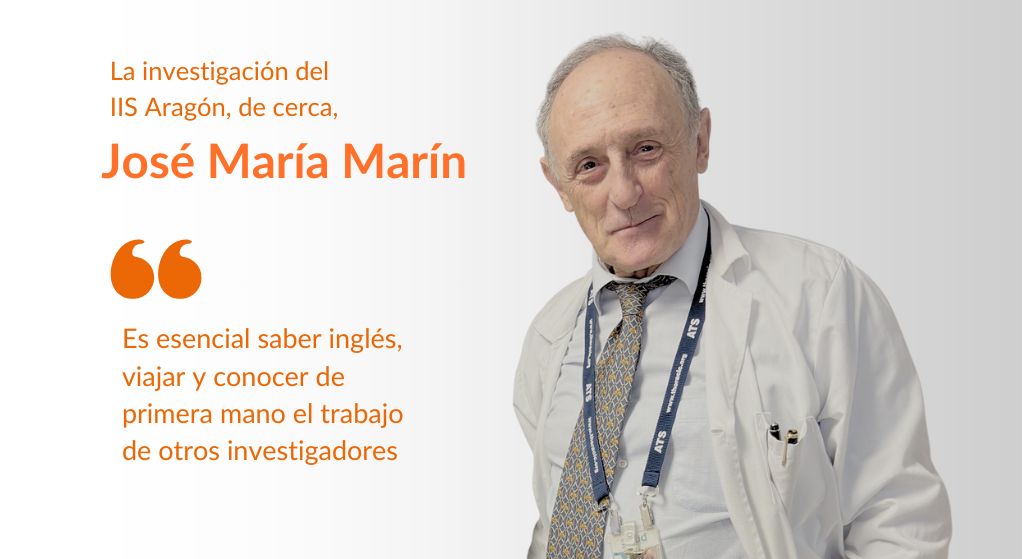
The IIS Aragón researcher talks in this interview about his work leading the 'Precision Medicine in Respiratory Diseases (PRES)' group (GIIS041) and its most notable projects
José María Marín, Professor of Medicine at the University of Zaragoza and specialist in Pulmonology at the Miguel Servet University Hospital, he is One of the world's most influential medical researchers in the field of obstructive sleep apnea. Carry 39 years in the Making dedicating himself to the investigation, although he assures that «No medical student begins their studies with the idea of becoming a researcher. The professors you meet during your undergraduate studies, and especially during your postgraduate studies, are essential for stimulating your curiosity and identifying the potential within you. gusanillo of the investigation.
«In my case, this happened during my resident resident (MIR) program. Later, during my time in Montreal, I was fortunate to work in an environment where research was integral to healthcare excellence. I was able to work and learn from the greats of my specialty there in the 80s, and I returned with the passion for research in my veins as part of my healthcare work.«
It is part of IIS Aragón since its creation"The Institute was created after I'd been conducting clinical research for years, so I've naturally seen it emerge and develop." He currently coordinates the group. Precision Medicine in Respiratory Diseases (PRES) (GIIS041), a multidisciplinary team that focuses on precision medicine applied to respiratory diseases.
What lines of research are being worked on in your group?
Since its inception in the early 90s, we have been working simultaneously on two lines of research related to two of the most prevalent respiratory diseases in the world: 2) obstructive sleep apnea (OSA) and 2) chronic obstructive pulmonary disease (COPD).
In both lines, the goal was to know their natural history from the beginning, that is to say To determine the clinical, pathophysiological, biological, genetic and epigenetic factors that influence the prognosis of both entities, establishing clinical phenotypes that allow for personalized therapies.
Many of these goals have already been met, and for several years now, we have been working on investigating the molecular mechanisms (endotypes) responsible for individual prognostic trajectories and personalizing available treatments. Specifically, we are investigating the role of circulating extracellular vesicles and lung parenchyma in the pathogenesis of OSA, COPD, and other diseases such as asthma and lung cancer.
What is the main challenge your research group is currently facing?
La Funding is always the main medium-long term problem for any established research group.The uncertainty surrounding the availability of sufficient funding to develop ongoing projects or answer research questions is always a concern that sometimes distracts us from our core work. We are also keeping an eye on the situation of our research collaborators in the U.S. who depend on funding from the National Institutes of Health.
By contrast, The group's continuity is guaranteed by the youth and enthusiasm of its members.
Any ongoing projects that you would like to highlight?
Among the dozen projects underway, I have to highlight:
1) Multicenter randomized studies, for which we are a reference center, aim to determine the role of noninvasive ventilation and aerosol therapy in reducing mortality and readmissions in patients with COPD.
2) Studies on the role of certain circulating exosomal mRNAs as diagnostic and prognostic biomarkers in patients with lung cancer.
3) Studies to determine the role of cardiorespiratory physiological changes during sleep studies in the development of atherosclerosis and survival of patients with OSA.
What profiles make up your research team?
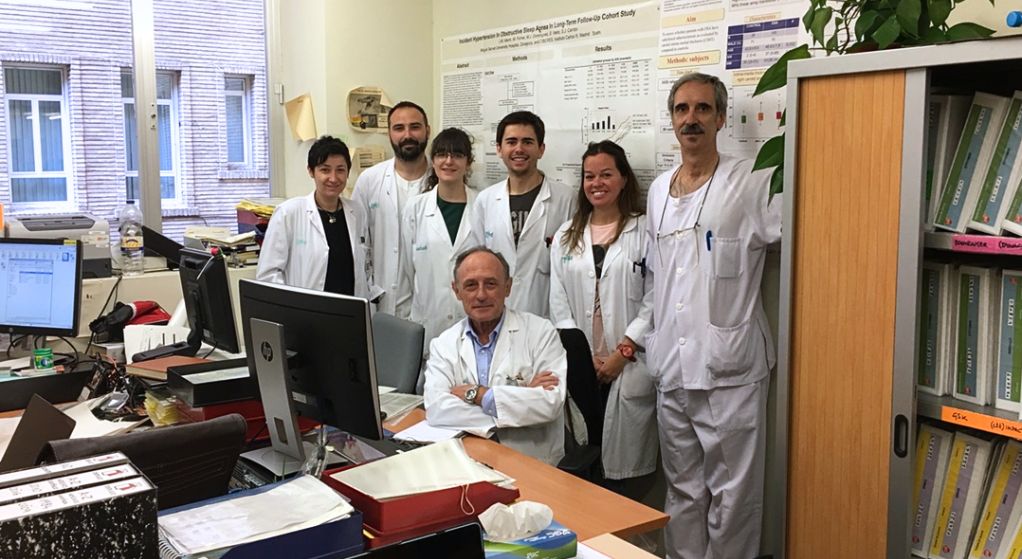
We are doctors from various specialties (pulmonologists, ENT, cardiologists, family), biochemists, nurses and laboratory technicians.
Why should companies invest in research, and specifically in your group?
In fact, they support and partially fund some of the lines mentioned above. However, the clinical translation of experimental results from our line of research with extracellular vesicles requires greater involvement from biomedical technology companies. We need these types of companies, which have a vision of the potential use of our results for clinical practice.
Do you think it is important to involve patients in research?
At least in our lines of research the patient is the center of our activityIn addition to being well-informed, our patients are committed to our work and show their trust in us every day. We do miss the presence of patient organizations or associations whose ideas reflect a greater awareness of biomedical research in general.
Advice for someone starting out in healthcare research?
Don't start or don't continue if you don't enjoy studying for hours on end. Be prepared for more frustration than success. Don't expect short-term, marvelous results. Be prepared to be subjected to criticism, both scientific and even personal. He should know English, travel, and learn firsthand about the work of other researchers.
Those who want more advice will find it in “Synopsis of RULES AND ADVICE ON SCIENTIFIC RESEARCH: TONICS OF THE WILL” by our great Ramón y Cajal.





