
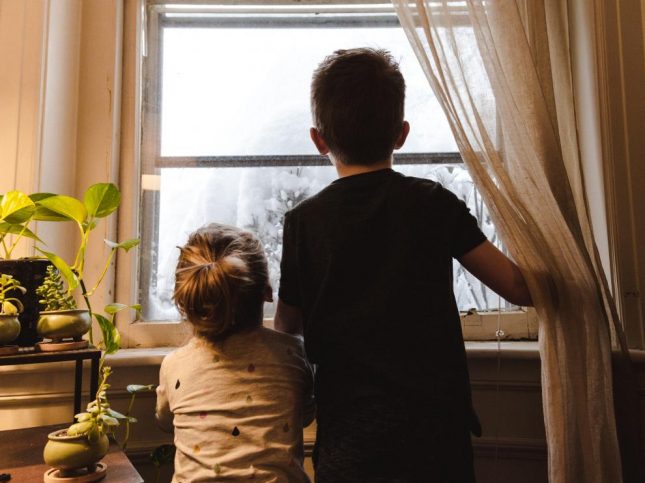
The pandemic crushes Spanish adolescents
16 July 2021Call for Personalized Precision Medicine Research Projects_ ISCIII
16 July 2021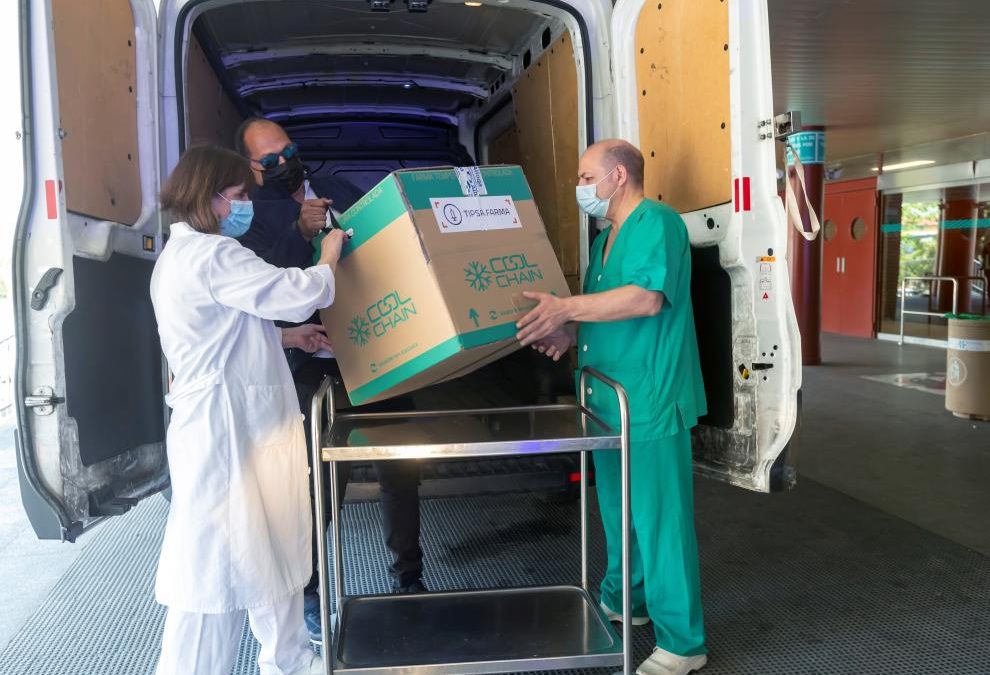
The medical director of the Clinic emphasizes the importance of receiving the doses, while doctors ask to inoculate in the afternoon to relieve pressure on health centers.
The sixth wave does not give respite to Primary Care professionals, where about 5.000 diagnostic tests are performed every day. A healthcare pressure that, thanks to the effects of vaccination, has not yet been transferred to hospitals, where there are currently 118 patients admitted for coronavirus. ""If the infection rate that exists now – with about 1.000 daily – had caught us without the vaccine, we would be overwhelmed," acknowledged Joaquín Costán, medical director of the Lozano Blesa University Clinical Hospital in Zaragoza.
For this reason, he stressed the importance of receiving the complete regimen and taking all preventive measures, with the aim that the cases detected, mainly in young people, are not transferred to the at-risk population. For now, Most of the people who come to the hospital are under 50 years old, with "milder" symptoms and "do not require admission." "Two days ago," he exemplified, "we had four admissions, but at the peak of the previous waves it reached 20 or 25 a day."
In any case – he pointed out – The percentage of inoculated patients, with a complete regimen, who have required admission is "anecdotal". In this sense, he recalled that no formula, for any pathology, gives 100% immunity. Even so, he advocated individually studying each of the cases detected of patients with a complete regimen who become infected and are admitted to see why "this gap in the vaccine" has occurred.
Among other issues, He recalled that there are older people who have received the two doses for more than half a year, so "effectiveness may be lost.". Therefore, "it is very important that the infection rate drops greatly among the population." "The more infected, the more people of likely entry age will be infected," she stressed, while recalling that 100% protection has not been reached in any age group. The most vulnerable – over 70 years old – have exceeded 90%; but in the rest it is slowly decreasing. "We must try to get everyone to do it. The last state study on the campaign in residences – the first spaces where the doses arrived – showed that more than 4.000 lives were saved in four months," she remarked.
A fundamental premise to assess the positive aspects of the injection. And even more so when the delta variant becomes predominant in the Aragonese community: "The new variants have that trick that the effectiveness of the vaccines can decrease a little." For this reason, he encouraged vaccination, since to achieve the long-awaited herd immunity, perhaps instead of needing 70% of the immunized population, a little more is necessary, close to 80%.
Vaccinations in the afternoon in Huesca
In the last few hours, hospital admissions in Aragon have increased from 108 to 118. The rebound has been especially noticeable in Huesca, the province with the highest cumulative incidence of covid in the Community. San Jorge has gone from five to nine patients and Barbastro, from five to six. However, the real pressure continues to be experienced in Primary Care. To relax you, the professionals of Alto Aragón They demand to alleviate the vaccination burden of health centers towards the spaces enabled for this purpose, and propose opening in the afternoon and even on weekends to absorb demand.
The one in Los Olivos administers about 200 vaccines daily, in three shifts during the morning, leaving nurses to carry out the tracings, now that the rate is skyrocketing. Ramón Boria, doctor at this center and delegate of the Cemsatse union, stated that with staff on vacation, without tracers and a flood of positives, the overload is brutal, "and we also have to give the vaccines." "They fired the tracers and now we have to call the positives (there are 186 cases since July 1), follow up, give instructions, trace contacts, set quarantines, do and repeat the tests... and attend to the rest of the patients having returned to in-person consultations," he explained. For this reason, the Administration has been asked to vaccinate in the afternoons and weekends in centers such as the one set up at the headquarters of the San Lorenzo neighborhood association. from the capital of Huesca.
The president of the Huesca College of Physicians, José Borrel, agreed with him, who complained about the lack of substitutes to cover vacations and proposed that, on a "voluntary and paid" basis, personnel could be available to extend the vaccination schedule, "with larger shifts as long as there are doses to speed up the process." "We have few staff and a lot is dedicated to vaccination and at the same time they follow up on positive cases and their contacts, and like this, I'm afraid, we will be there all summer," she said.
Borrel denounced the "absolute collapse" of health centers, where the situation is "very complicated," and he gave as an example the queues at the doors of clinics such as the one in Pirineos, where the Continuing Care Point is located that deals with emergencies in the city of Huesca. In addition, they have had to close local offices again to concentrate the task, "because there are no reinforcements and the work has to be distributed", not to mention, he added, the increase in work in rural centers during the tourist season.





