
The reality of covid-19 beyond the numbers
October 26, 2020
Differences between cold, flu and covid
October 27, 2020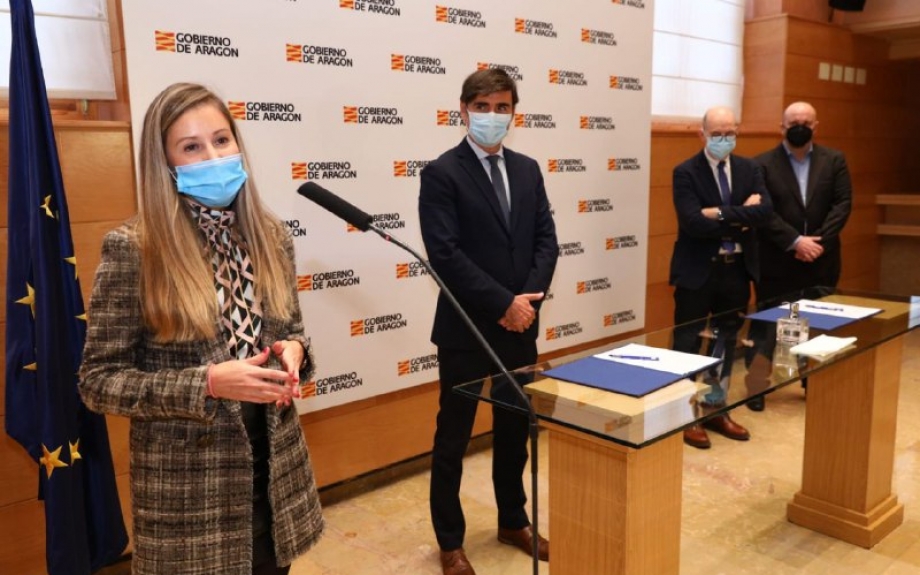
One of the joint projects develops a model, based on Big Data and Artificial Intelligence, that detects with more than 75% accuracy COVID-19 patients at risk of ending up in the ICU or dying
Both institutes have signed an agreement today to cooperate for the next four years, generate knowledge and launch new technological services with high added value in the health sector.
The ITAINNOVA Technological Institute of Aragon and the Aragon Health Research Institute will collaborate continuously to apply R&D&i to the health field, promote technological transfer to clinical practice and fight against the pandemic, as well as other diseases that affect the population. Both entities, attached to the Departments of Science and University, and Health, respectively, have signed an agreement today that consolidates the joint work that they have been carrying out for some time with excellent results and ensures its continuity over the next four years.
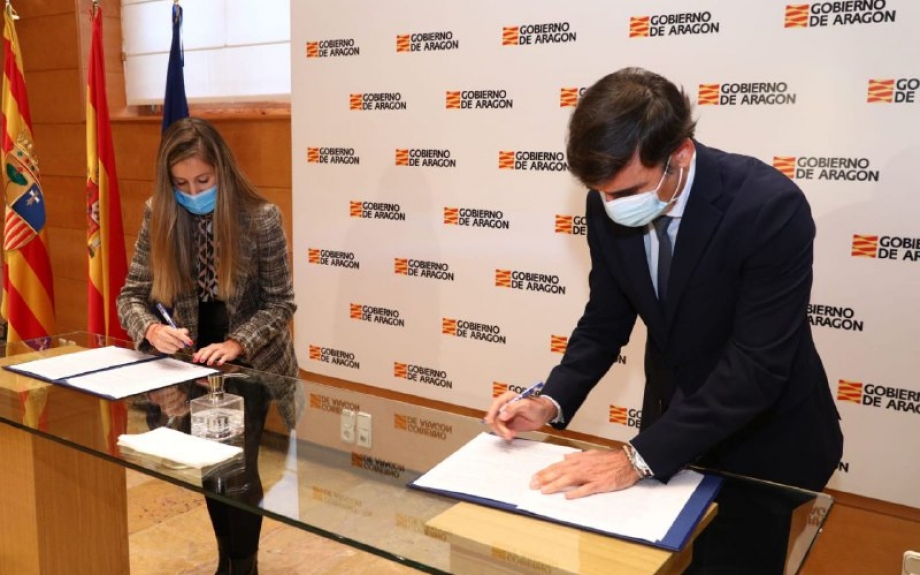
The opportunity for the agreement arises after the collaboration between both institutes has been reinforced in recent months as a result of the health crisis generated by COVID-19, which has highlighted the need to unite synergies to confront the pandemic. and to have all the tools that the most disruptive technology allows for this.
Artificial Intelligence and Big Data are two of them, as explained after the signing by the director of ITAINNOVA, Esther Borao, and the director of IIS Aragón, Óscar López. As an example of the possibilities offered by the agreement, both officials have detailed how two collaboration projects related to Covid19 and colon cancer are already being carried out.
The first - which involves ITAINNOVA technicians with researchers from the IIS Aragón, the Institute of Health Sciences, the Lozano Blesa University Clinical Hospital and the University of Zaragoza - seeks the design, validation and implementation of an algorithm, which facilitates the diagnosis of the future severity of patients with Covid19, in order to act as soon as possible and try to reduce mortality.
Thanks to artificial intelligence, and the joint work of doctors, engineers and mathematicians, it can be predicted as soon as they enter the emergency room door, which patients are most at risk of presenting an unfavorable outcome.
According to the head of AI at ITAINNOVA, Rafael del Hoyo, there is now a model with more than 75% accuracy. To do this, mountains of anonymized data from more than 10.000 patients and more than 3.000 variables have been analyzed, such as treatments, number of visits to primary care, hospitalization data... And soon, it is expected to have a deep learning tool (' deep learning) that draws conclusions for doctors.
In addition to improving treatments and helping to reduce mortality, this model would also allow the rapid provisioning of ICU beds and, therefore, manage resources in a more agile and optimal way.
A dashboard has also been developed to see the evolution and incidence of the disease in real time and to see how the most important patient variables are progressing. Among other aspects, you can view the impact of the virus by street and by district. In addition, the two waves that Aragon has suffered are being compared to analyze the changes of the virus and its effects.
Another of the joint projects is related to the colon cancer screening program, the second deadliest and in which early detection can make a big difference. In this case, as detailed by Ángel Lanas, scientific manager of the IIS Aragón, data from the program between 2014 and 2018 have been analyzed to try to optimize the available resources based on data on the population to be invited, the supply of available endoscopies and the point of the fecal occult blood test for the selection of patients who ultimately undergo a colonoscopy.
The study also includes the health consequences of the available options, so that the best possible decisions can be made based on the evidence available at the regional level of our own system.
It was precisely with this project, as the director of ITAINNOVA, Esther Borao, recalled, how the collaboration began. “We began joint work in Artificial Intelligence, but the institute is multidisciplinary and we want to explore and exploit all the technological possibilities in areas such as sensorization, new materials, robotics,” she advanced.
Borao has defended that "the potential to face the different challenges and needs of the health sector is enormous and there is no better ally than the IISA to achieve it", which has been demonstrated in recent months by also working together in the design and manufacturing. of respirators and masks.
A vision that has also been shared by the director of the Aragon Health Research Institute. Óscar López commented that both entities had already planned to launch this collaboration before the pandemic broke out, but that it was precisely the crisis generated by Covid19 that has reinforced the opportunity to work together. “The signing of this agreement will allow us to intensify innovation in health technologies for their direct application in our hospitals,” he assured.
In his opinion, “intelligent systems, automation and robotics or artificial intelligence” are some of the areas where there is “a great room for improvement through the development and implementation of technology.”
In this way, the strategic alliance between ITAINNOVA and the IIS Aragón "will facilitate greater and more effective interaction with the Aragonese industrial fabric aimed at the development of innovation and technology in the field of health."
The agreement, which will regulate the implementation of more joint projects of these characteristics, will last four years. It pursues the generation of knowledge, its transfer through the implementation of new technological services with high added value and the development of an integrated offer of R&D&I services and capabilities in the health field for Health services, companies in the sector and other entities in the health field.
All of this is aimed at developing scientific-technological knowledge of excellence that allows us to consolidate a vanguard position and its translation for the benefit of the entire society. It will be a joint joint commission that will be in charge of supervising and monitoring it.





