
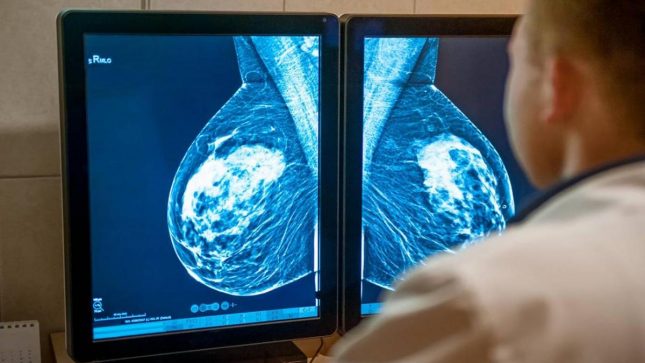
They find a possible key against breast cancer in male hormones
18 January 2021Call JPIAMR: One Health interventions to prevent or reduce the development and transmission of AMR
19 January 2021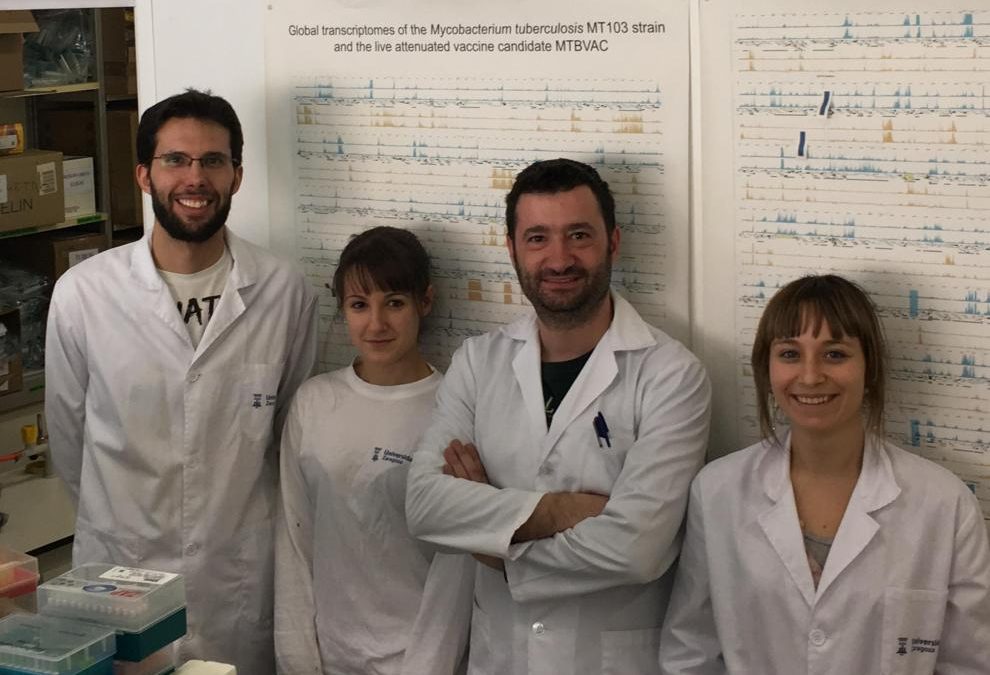
Nacho Aguiló and his team from the University of Zaragoza have managed to reverse the effects of the disease in different experimental models in mice, as published this Monday in the journal 'EBiomedicine' of the Lancet group.
Live attenuated vaccines against tuberculosis BCG and MTBVAC could be beneficial beyond the prevention of this disease. The work led by researcher Nacho Aguiló from the University of Zaragoza, the Network Biomedical Research Center for Respiratory Diseases (CIBERES) and the Aragón Health Research Institute (IIS-Aragón) has shown together with his team that these vaccines are capable of to reverse the effects of asthma, when administered directly into the lungs to mice in which an allergic response had previously been induced, according to the results of the research published this Monday in the journal 'EBiomedicine' of the Lancet group.
Asthma is characterized by an exacerbated inflammatory response at the lung level, which decreases its function and is reflected in a feeling of fatigue and shortness of breath, the University has explained. Currently, the incidence of asthma reaches pandemic levels, with more than 300 million cases worldwide, according to the World Health Organization. The incidence of this disease has increased in recent decades, mainly in the child population of developed countries, which among other things could be due to the change in lifestyle, which is much more urbanized and with less contact with nature.
Alternative
The study shows that BCG or MTBVAC could be a plausible alternative for the treatment of asthma. The fact that they are vaccines whose safety has been tested in humans and that they are produced at an industrial level would represent a great advantage for their possible application in the clinic.
However, more research remains to be done to make this possible. There is currently no treatment based on pulmonary administration of vaccines and therefore this represents a challenge. In this sense, an experiment is planned to test the administration of MTBVAC by aerosol in macaques, as part of a TRANSVAC project of the European Commission, in collaboration with the Macaque Biomedical Research Center (BPRC) of Rijswijk, the Netherlands.
The non-specific effect of live tuberculosis vaccines, such as BCG or MTBVAC, and their use to treat pathologies other than tuberculosis is "a hot topic, although it is not new," the research group highlights. The current BCG vaccine reduces childhood mortality and for more than 40 years, BCG has been the first-line treatment for non-invasive bladder cancer. Recently this effect has also been shown for MTBVAC in the mouse model (Alvárez et al 2018).
Se They are carrying out studies to try to exploit these characteristics of these vaccines for use against different diseases, such as cancer, diabetes or even covid-19.
In the last decade, decisive steps have been taken to understand the nonspecific beneficial effects of these vaccines, which appear to be based on their ability to "train" the innate immune system, which has been called "trained immunity."
In the case of the MTBVAC vaccine, the research group demonstrated in 2020, in collaboration with Mihai Netea's group at Radboud University, in the Netherlands, that MTBVAC induced a trained immune response similar to BCG, and that "it produced protection against "non-specific against a pneumococcus infection in mice (Tarancon et al 2020)."
Different research groups around the world are carrying out studies to try to exploit these characteristics of these vaccines "for use against different diseases, such as cancer, diabetes or even covid-19," says researcher Nacho Aguiló, member of the group. of Mycobacterial Genetics research, directed by Professor Carlos Martín.





