
The transmission of the coronavirus through the air, under debate and study
9 July 2020
Calatayud and Jiménez Schuhmacher advocate the union of researchers and clinicians to advance healthcare
10 July 2020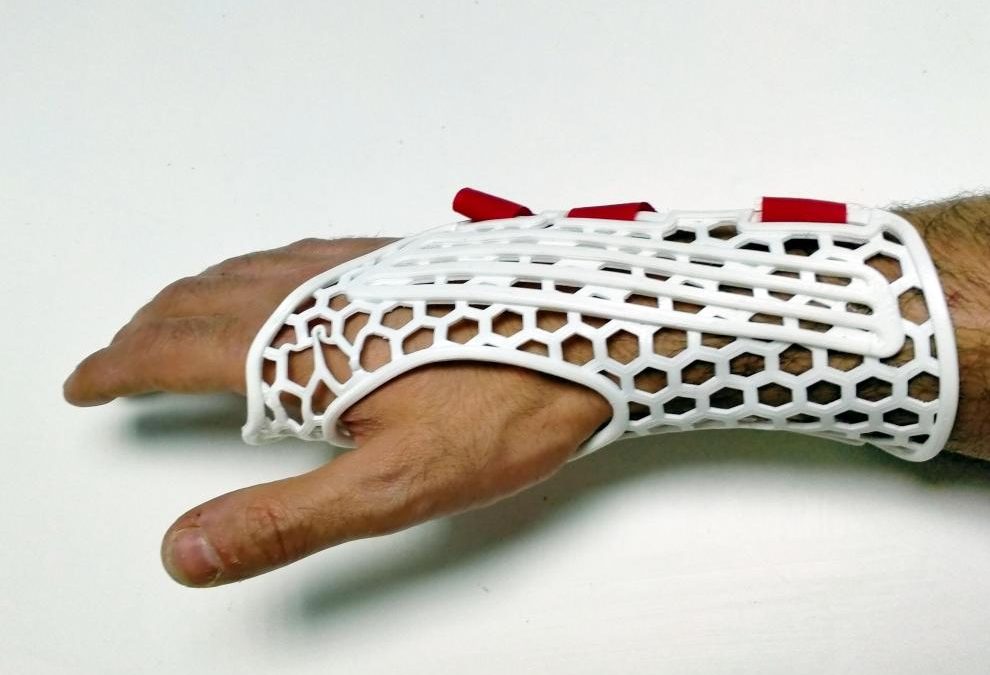
Four challenges suggested by personnel involved in special education centers will be put in the hands of multidisciplinary teams. You sign up?
People with special needs need equipment in their daily lives that has a high degree of adaptation and personalization with which to learn, cope with their environment, play and have fun. The Make It Special citizen science project encourages creating ties between the maker community and special education professionals, with the aim of customizing solutions that facilitate personal development in children with disabilities.
In its first edition, four ideas sent by staff involved in special education centers have already been selected and will be implemented by the maker community during a hackathon for which it is now possible to sign up.
The strength of the maker community
Around the popularization of the use of 3D printers, the birth of free hardware platforms or the advances in home automation and the Internet of Things, a community of professionals and fans of technology and its uses has been formed, who use their knowledge and tools to create, modify or adapt existing resources to help in the overall development of children with special needs.
The strength of the maker community has been evident during the recent crisis of shortage of protective material for health personnel due to the coronavirus. The 'makers' have made their knowledge, experience and resources available to citizens to provide, in record time and in a completely altruistic manner, thousands of masks and protective visors to healthcare workers, and several groups have been established to study the design of low-cost respirators that relieve pressure in ICUs in hospitals around the world.
To encourage collaboration between the maker community and professionals in the care and education of people with special needs, a hackathon format meeting will be held on September 5. This event is open to both technical and social profiles, including family members of children with disabilities and professionals and therapists from centers or associations with technological or pedagogical concerns who consider that they can contribute talent and innovation, in order to improve people's lives. with special needs.
Participation may be carried out individually or, preferably, in multidisciplinary teams that seek joint solutions. From July 8 to 22, the deadline to sign up for the hackathon for free through www.makeitspecial.es opens.
These are the four starting challenges awarded in the I Call for Ideas:
As Educational Material, Pilar Ibáñez Lorda proposes the development of multi-activity panels that promote the development of motor skills, cause and effect relationships, sensory and proprioceptive development, hand-eye coordination and that are related to the user's interests.
In the field of Accessibility and Environmental Control, Carlos Noguero Train proposes a location and signaling system, for example based on RFID and QR, for the signaling of rooms in the school and the orientation of people with visual disabilities or other groups of people. students who have problems with autonomy when traveling, access control to facilitate the opening of doors for people with reduced mobility, identification of materials and books, etc.
Regarding Prosthetics, Rosa Asín suggests developing adaptations to facilitate work methodology and daily life, for example a locking splint to facilitate restrictive therapy, a method of holding work on a table that prevents objects from falling to the ground and ' jiggers' or simple myofunctional therapy materials.
As Individual Protection elements, Belén Cuartero proposes adaptations to maintain a correct position in the work chair and PPE elements adapted for use at school given the current covid-19 situation.
There is a final category in free format for projects not previously contemplated in the field of special education.
Once developed, the solutions to real problems - which must be feasible, collaborative, open and low cost - will be available to everyone.
Make It Special is a citizen science project developed by the I3A (Institute of Engineering Research in Aragon of the University of Zaragoza) and the Ibercivis Foundation with the collaboration of the Spanish Foundation for Science and Technology (FECYT) – Ministry of Science and Innovation.
Enrique F. Torres Professor of the Department of Computer Science and Systems Engineering at the UZ and member of the Engineering Research Institute of Aragon (I3A). Responsible for the Make It Special project





