
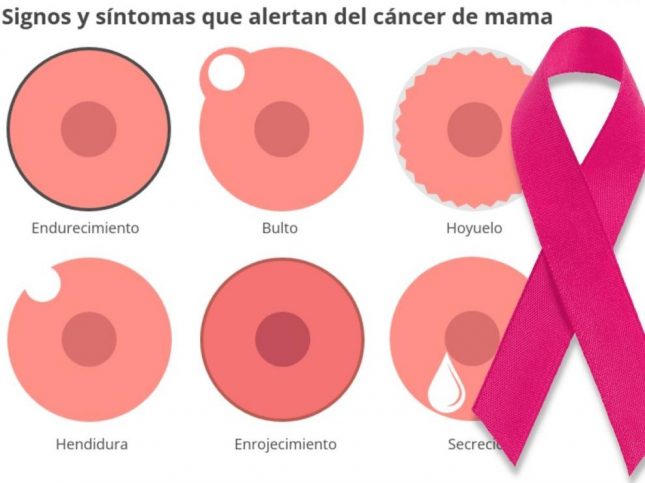
External signs that can reveal a tumor in the breast
October 19, 2021
«A cancer patient is a lifelong patient»
October 19, 2021
"This finding will allow us to improve the diagnostic accuracy of the preclinical phase of this dementia through a blood test," the experts explained.
Researchers from the Barcelonaßeta Brain Research Center (BBRC), the research center of the Pasqual Maragall Foundation, have identified a biomarker in the blood that allows detecting very precisely the initial phases of the disease Alzheimer.
The investigation has detected that glial fibrillary acidic protein (GFAP) is a very accurate biomarker for diagnosing the early stages of Alzheimer's disease in the blood.
The results of the trial, published in the journal 'JAMA Neurology', have been validated in nearly 900 participants from three cohorts dedicated to research into Alzheimer's prevention.
Suárez-Calvet has detailed that GFAP is a specific brain protein of astroglial cells, which are involved in different functional processes, such as supporting the activity of neurons and in the regulation of the blood-brain barrier.
When some type of brain damage occurs, a reaction of these cells takes place, the so-called astrogliosis, which tries to contain brain damage and increases the expression of GFAP and other markers.
In the case of Alzheimer's disease, GFAP is a biomarker that was usually measured in the cerebrospinal fluid, after performing a lumbar puncture on the patient.
The novelty that this study provides is that demonstrates that GFAP measured in blood plasma is better than that measured in cerebrospinal fluid to determine, more precisely and in a less invasive way, at what point in Alzheimer's disease the affected person is.
"We have seen that the levels of the GFAP biomarker are higher in people who are in the asymptomatic phase of Alzheimer's, and that They allow us to differentiate those who have or do not have amyloid pathology in the brain, which is the stage prior to the disease," added researcher Marta Milan-Alomà.
The results of the study have been confirmed in people who are in different phases of Alzheimer's disease, and who participate in three independent international cohorts.
First, the researchers analyzed blood samples from 387 people without cognitive alterations and with a certain risk of developing Alzheimer's, from the Alfa Study, launched in 2013 in Barcelona by the Pasqual Maragall Foundation and the "la Caixa" Foundation.
Likewise, investigated the plasma of 300 asymptomatic people with cognitive impairment who are part of the TRIAD study, led at McGill University in Montreal, and, finally, analyzed the samples of 187 patients with cognitive impairment from the Lariboisière Hospital in Paris.
The results of this international study add to the latest findings on blood biomarkers to detect Alzheimer's disease.
In November 2020, the same Suárez-Calvet team at the BBRC identified other biomarkers, in this case of the tau protein, to detect the initial phases.
According to Suárez-Calvet, "in just two years, research into Alzheimer's biomarkers in the blood is advancing so much that we are convinced that In the near future we will be able to detect the silent changes that occur in the brain with a simple blood test requested by the family doctor, which will allow us to test treatments before the neuronal damage is irreversible.
Currently, the Pasqual Maragall Foundation is launching a translational laboratory equipped with cutting-edge technologies to investigate the disease.
This research has had the collaboration of the University of Gothenburg, McGill University of Montreal, the University of Paris, the Lariboisière Fernand-Widal Hospital in Paris, the Hospital del Mar and Hospital del Mar Institute for Medical Research (IMIM), the CIBER of Fragility and Healthy Aging (CIBERFES) and the CIBER of Bioengineering, Biomaterials and Nanomedicine (CIBER-BBN).





